
Table of Contents
Introduction
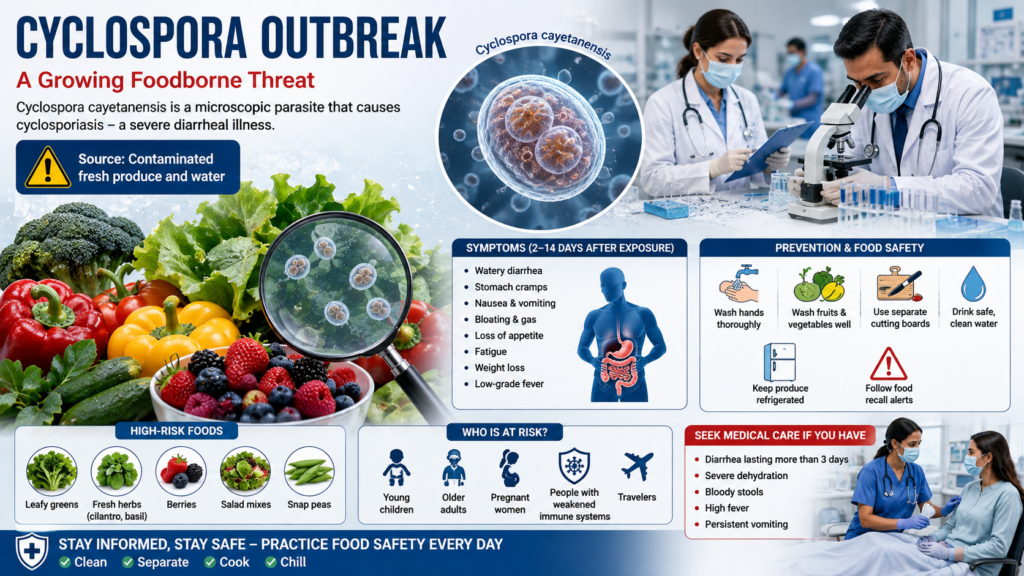
A Cyclospora outbreak occurs when many people become sick after eating food contaminated with the parasite Cyclospora cayetanensis. This microscopic parasite infects the small intestine and causes a disease known as cyclosporiasis (also called cyclosporiasis).
Unlike many types of food poisoning, Cyclospora infections often cause prolonged watery diarrhea, stomach cramps, nausea, fatigue, and weight loss. Without proper treatment, symptoms may last for several weeks or even return after improving.
Recent outbreaks have been linked to fresh fruits, leafy greens, herbs, and vegetables. Because many of these foods are eaten raw, preventing contamination is a major public health challenge.
In this guide, you’ll learn everything you need to know about Cyclospora outbreaks, including symptoms, causes, diagnosis, treatment, prevention, and practical food safety tips to help protect yourself and your family.
What Is a Cyclospora Outbreak?
A Cyclospora outbreak happens when multiple people become infected with the parasite Cyclospora cayetanensis from a common food source or contaminated water.
Cyclospora is a single-celled parasite (protozoan) that infects the digestive system. After entering the body, it damages the lining of the small intestine, reducing the body’s ability to absorb nutrients and leading to persistent digestive symptoms.
Unlike bacteria such as Salmonella or E. coli, Cyclospora requires time outside the human body before it becomes infectious. Because of this, direct person-to-person transmission is considered unlikely.
Quick Facts About Cyclospora
| Feature | Information |
|---|---|
| Parasite | Cyclospora cayetanensis |
| Disease | Cyclosporiasis |
| Main Target | Small intestine |
| Common Source | Contaminated fresh produce |
| Spread | Food or water contaminated with mature parasite |
| Person-to-Person Spread | Unlikely |
| Vaccine | No |
| Treatment | Prescription antibiotics (when appropriate) |
What Causes Cyclospora Infection?
Cyclospora infection is caused by swallowing mature Cyclospora oocysts present in contaminated food or water.
People become infected when they consume food that has been contaminated during:
- Farming
- Harvesting
- Washing
- Packaging
- Transportation
- Food preparation
The parasite is commonly associated with imported or locally grown fresh produce that is eaten raw.
Common Sources of Infection
Foods linked to past outbreaks include:
- Fresh cilantro
- Basil
- Lettuce
- Spinach
- Salad mixes
- Raspberries
- Blackberries
- Snow peas
- Sugar snap peas
- Fresh herbs
Note: Outbreak sources vary each year. Health authorities investigate specific foods during outbreaks.
How Does Cyclospora Spread?
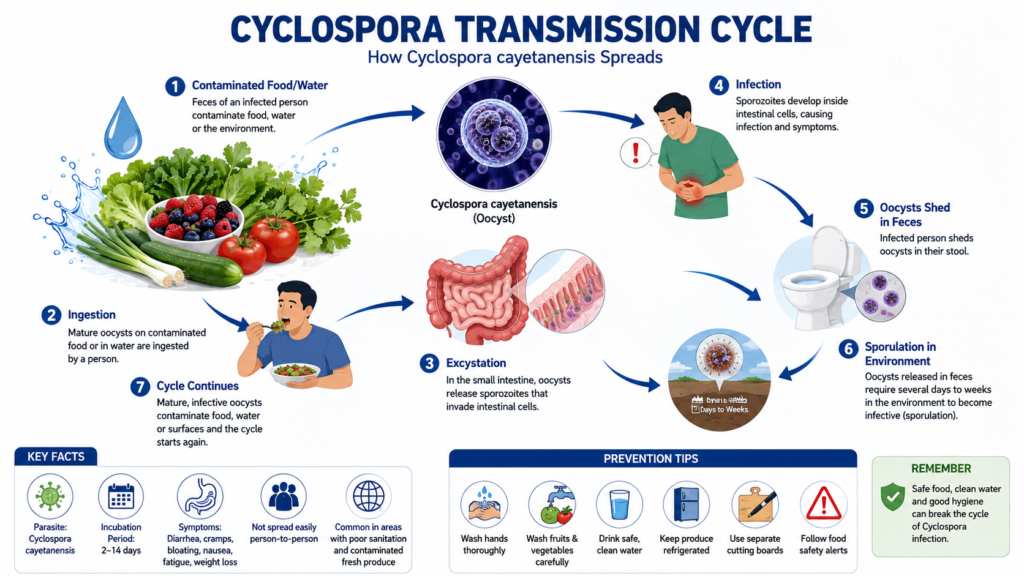
Cyclospora spreads through the fecal-oral route, but not in the same way as many other intestinal infections.
Freshly passed Cyclospora parasites are not immediately infectious. They must remain in the environment for days to weeks before they can infect another person.
This means infection usually occurs through contaminated food or water, rather than direct contact with someone who is sick.
Transmission Cycle
- An infected person sheds Cyclospora in stool.
- The parasite matures in the environment.
- Food or water becomes contaminated.
- A person consumes the contaminated food or water.
- The parasite infects the small intestine.
- Symptoms develop within about 2–14 days, commonly around 1 week after exposure.
Foods Commonly Linked to Cyclospora
Fresh produce is the most common source because it is often consumed without cooking.
High-Risk Foods
- Fresh herbs
- Cilantro
- Basil
- Parsley
- Leafy greens
- Romaine lettuce
- Spinach
- Mixed salads
- Berries
- Imported vegetables
- Fresh fruits
Cooking food thoroughly can kill many pathogens, but raw produce requires careful handling and washing. Washing alone may not completely remove Cyclospora from contaminated produce.
Who Is Most at Risk?
Anyone can become infected, but certain groups are more likely to develop severe or prolonged illness.
Higher-Risk Groups
- Young children
- Older adults
- Pregnant women
- People with weakened immune systems
- Organ transplant recipients
- Individuals receiving chemotherapy
- Frequent international travelers
- People who consume large amounts of raw produce
Symptoms of Cyclospora Infection
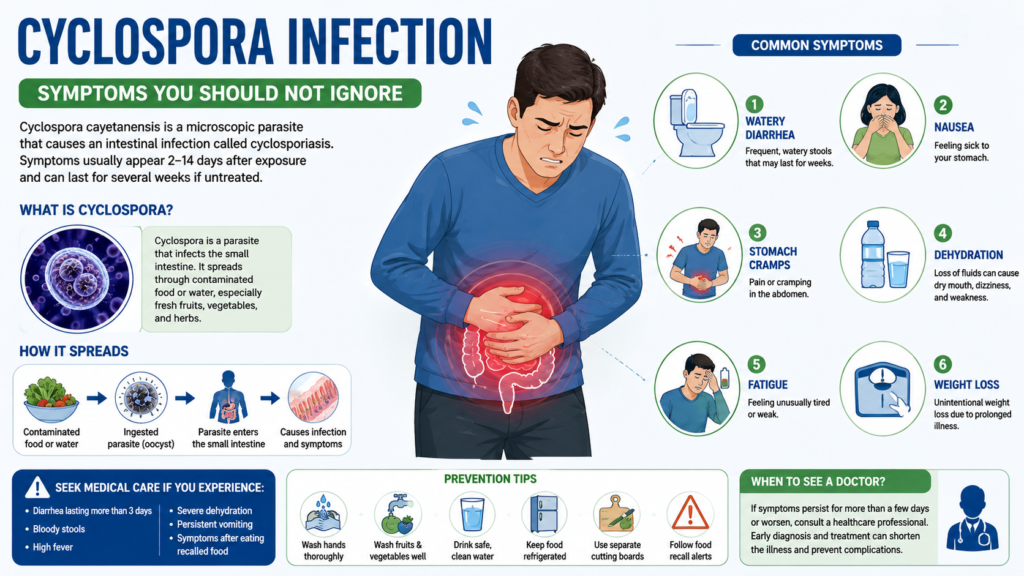
Symptoms usually begin 2 to 14 days after exposure.
Some infected people have mild symptoms, while others develop severe diarrhea lasting several weeks.
Early Symptoms
- Watery diarrhea
- Frequent bowel movements
- Stomach cramps
- Nausea
- Loss of appetite
- Fatigue
- Mild fever
- Bloating
- Gas
Advanced Symptoms
If untreated, symptoms may include:
- Persistent diarrhea
- Weight loss
- Dehydration
- Severe fatigue
- Vomiting
- Muscle aches
- Nutrient malabsorption
- Relapsing symptoms after initial improvement
Warning Signs
Seek medical attention immediately if you experience:
- Bloody diarrhea
- Severe dehydration
- High fever
- Persistent vomiting
- Inability to drink fluids
- Confusion or dizziness
- Symptoms lasting longer than one week
Cyclospora vs Common Food Poisoning
| Feature | Cyclospora | Bacterial Food Poisoning |
|---|---|---|
| Cause | Parasite | Bacteria |
| Incubation | 2–14 days | Hours to a few days |
| Main Symptom | Prolonged watery diarrhea | Vomiting, diarrhea |
| Duration | Weeks if untreated | Usually a few days |
| Antibiotics | Specific prescription antibiotic may be recommended | Depends on the bacteria |
| Person-to-Person Spread | Unlikely | Varies by organism |
Featured Snippet
What is a Cyclospora outbreak?
A Cyclospora outbreak occurs when multiple people become infected with the parasite Cyclospora cayetanensis after consuming contaminated food or water. The infection causes prolonged watery diarrhea, stomach cramps, nausea, fatigue, and weight loss. Early diagnosis and appropriate prescription treatment can shorten illness and help prevent complications.
Cyclospora Outbreak,
Cyclospora Symptoms,
Cyclospora Treatment,
Cyclospora Prevention,
Cyclospora,
Diagnosis of Cyclospora Infection
Diagnosing a Cyclospora outbreak can be challenging because its symptoms are similar to many other foodborne illnesses, such as Salmonella, E. coli, Giardia, Norovirus, and viral gastroenteritis.
Doctors usually consider:
- Recent travel history
- Consumption of fresh produce
- Persistent watery diarrhea
- Ongoing stomach cramps
- Community outbreak reports
- Duration of illness
Because Cyclospora is a microscopic parasite, routine stool tests may not always detect it. Specialized laboratory testing is often required.
Laboratory Tests
Healthcare providers may recommend the following tests:
| Test | Purpose |
|---|---|
| Stool Ova and Parasite (O&P) Exam | Detects intestinal parasites |
| Specialized Cyclospora Stool Test | Identifies Cyclospora cayetanensis |
| PCR (Polymerase Chain Reaction) Test | Detects parasite DNA with high accuracy |
| Multiplex Gastrointestinal PCR Panel | Detects multiple causes of diarrhea simultaneously |
| Blood Tests | Evaluates dehydration and electrolyte imbalance |
When Should You Get Tested?
You should contact a healthcare provider if you experience:
- Diarrhea lasting more than 3 days
- Severe abdominal pain
- Bloody stools
- Fever with persistent diarrhea
- Significant dehydration
- Symptoms after eating recalled or contaminated food
- Symptoms following international travel
Treatment of Cyclospora Infection
Unlike many viral stomach infections, Cyclospora infection can often be treated effectively with prescription antibiotics.
The standard treatment is trimethoprim-sulfamethoxazole (TMP-SMX), prescribed by a healthcare professional when appropriate.
Important: Never take antibiotics without medical advice. Treatment depends on your medical history, allergies, pregnancy status, and overall health.
Medical Treatment
A healthcare provider may recommend:
- Prescription antibiotics (when appropriate)
- Oral rehydration solutions (ORS)
- Intravenous (IV) fluids for severe dehydration
- Electrolyte replacement
- Nutritional support
- Rest and close monitoring
Most people begin to improve within a few days after starting appropriate treatment, although complete recovery may take longer.
Home Care Tips
If symptoms are mild and your healthcare provider advises home care:
- Drink plenty of clean fluids.
- Use oral rehydration solution if recommended.
- Eat small, bland meals.
- Avoid alcohol and caffeine.
- Get enough rest.
- Wash your hands frequently.
- Follow your doctor’s treatment plan.
Foods to Eat During Recovery
Eating gentle, easy-to-digest foods may help support recovery.
Recommended Foods
- Bananas
- Rice
- Applesauce
- Toast
- Plain oatmeal
- Boiled potatoes
- Plain yogurt (if tolerated)
- Clear soups
- Boiled vegetables
- Coconut water (if appropriate)
Foods to Avoid
Avoid foods that may worsen diarrhea or stomach irritation, including:
- Spicy foods
- Fried foods
- Fatty meals
- Unpasteurized dairy products
- Alcohol
- Sugary drinks
- Raw seafood
- Excess caffeine
Recovery Timeline
Recovery varies depending on the person’s health and whether treatment begins early.
| Stage | What to Expect |
|---|---|
| Days 1–3 | Watery diarrhea, stomach cramps, fatigue |
| Days 4–7 | Symptoms may worsen without treatment |
| Week 2 | Improvement often begins with appropriate treatment |
| Weeks 3–6 | Full recovery for many people, though fatigue may persist |
| Some Cases | Symptoms may relapse if untreated or incompletely treated |
Prevention of Cyclospora Infection
Preventing Cyclospora infection starts with practicing safe food handling and good hygiene.
Because the parasite is most commonly spread through contaminated fresh produce, proper food safety is essential.
Personal Prevention Tips
Protect yourself by:
- Washing hands with soap before eating and preparing food.
- Rinsing fruits and vegetables under running water.
- Avoiding produce involved in food recalls.
- Drinking safe, clean water.
- Keeping kitchen surfaces clean.
- Separating raw foods from ready-to-eat foods.
- Refrigerating perishable foods promptly.
Note: Washing produce helps reduce dirt and some contaminants, but it may not completely remove Cyclospora from contaminated produce.
Food Safety Tips
Reduce your risk by:
- Buying produce from trusted suppliers.
- Following food recall notices.
- Refrigerating fresh produce properly.
- Washing utensils after preparing raw vegetables.
- Avoiding cross-contamination in the kitchen.
- Checking expiration dates before consuming packaged salads.
Benefits of Early Treatment
Receiving timely medical care can:
- Reduce the duration of illness
- Lower the risk of dehydration
- Improve nutrient absorption
- Reduce fatigue
- Prevent severe complications
- Help people return to normal activities sooner
- Reduce the chance of prolonged or relapsing symptoms
Common Mistakes to Avoid
Avoid these common errors during a Cyclospora outbreak:
❌ Ignoring diarrhea that lasts several days.
❌ Assuming every case of diarrhea is “just food poisoning.”
❌ Self-medicating with antibiotics without medical advice.
❌ Not drinking enough fluids.
❌ Continuing to eat recalled food products.
❌ Returning to work or school before symptoms improve.
❌ Ignoring public health alerts.
Expert Tips
1. Stay Hydrated
Persistent diarrhea can quickly lead to dehydration. Drink water and oral rehydration solutions as advised.
2. Practice Safe Food Handling
Wash your hands, clean kitchen surfaces, and separate raw produce from ready-to-eat foods.
3. Follow Food Recall Notices
During outbreaks, health authorities may identify specific products linked to infections. Avoid consuming recalled items.
4. Complete Prescribed Treatment
If your healthcare provider prescribes antibiotics, complete the full course unless instructed otherwise.
5. Seek Medical Care Early
Early diagnosis and appropriate treatment can shorten illness and reduce complications.
Myth vs Fact
| Myth | Fact |
|---|---|
| Cyclospora spreads easily from person to person. | Direct person-to-person spread is considered unlikely because the parasite needs time to become infectious in the environment. |
| Washing vegetables always removes Cyclospora. | Washing helps but may not eliminate all Cyclospora parasites from contaminated produce. |
| Antibiotics should be taken without a prescription. | Antibiotics should only be used under medical supervision. |
| Symptoms disappear in one or two days. | Cyclospora illness often lasts much longer than common food poisoning if untreated. |
| Healthy people never get Cyclospora. | Anyone can become infected, although illness may be more severe in some individuals. |
When to Seek Emergency Medical Care
Seek immediate medical attention if you experience:
- Severe dehydration
- Bloody diarrhea
- Persistent vomiting
- High fever
- Extreme weakness
- Confusion
- Difficulty drinking fluids
- Signs of shock, such as dizziness or fainting
Prompt treatment can help prevent serious complications.
Conclusion
A Cyclospora outbreak is a serious public health concern because contaminated food can expose many people to the parasite Cyclospora cayetanensis. While the infection is usually not life-threatening in healthy individuals, it can cause prolonged diarrhea, dehydration, and significant discomfort if left untreated.
The best protection is a combination of safe food handling, good hygiene, awareness of food recalls, and early medical care when symptoms persist. If you develop prolonged watery diarrhea after eating fresh produce or after a known outbreak, contact a healthcare provider for evaluation and appropriate testing.
Staying informed and following food safety recommendations can help protect you and your family from Cyclospora infection.
Key Takeaways
- Cyclospora is a foodborne parasite that causes cyclosporiasis.
- Contaminated fresh produce is the most common source of infection.
- Symptoms typically begin 2–14 days after exposure.
- Persistent watery diarrhea is the most common symptom.
- Specialized stool testing may be needed for diagnosis.
- Prescription antibiotics are commonly used when appropriate.
- Good food hygiene and awareness of recalls are key preventive measures.
- Early diagnosis and treatment improve recovery and reduce complications.
Call to Action
If you found this guide helpful, share it with your family and friends to raise awareness about Cyclospora outbreaks and food safety.
For more expert health articles, disease prevention tips, nutrition advice, and the latest public health updates, explore Health Wealth With AI and stay informed with evidence-based wellness content.
Frequently Asked Questions (FAQs)
1. What is Cyclospora?
Cyclospora is a microscopic parasite called Cyclospora cayetanensis that infects the small intestine and causes a diarrheal illness known as cyclosporiasis. It is commonly spread through contaminated food or water.
2. What causes a Cyclospora outbreak?
A Cyclospora outbreak occurs when multiple people become infected after consuming food or water contaminated with Cyclospora cayetanensis. Fresh produce such as leafy greens, herbs, berries, and salad mixes has been linked to previous outbreaks.
3. What are the symptoms of Cyclospora infection?
Common symptoms include:
- Watery diarrhea
- Stomach cramps
- Nausea
- Vomiting
- Fatigue
- Loss of appetite
- Weight loss
- Bloating
- Gas
- Mild fever
Symptoms usually appear 2–14 days after exposure.
4. How long does Cyclospora infection last?
Without treatment, symptoms may last several weeks and can even return after temporarily improving. With appropriate medical treatment, many people recover more quickly.
5. Is Cyclospora contagious?
Direct person-to-person transmission is considered unlikely because the parasite needs time in the environment before it becomes infectious.
6. How is Cyclospora diagnosed?
Doctors diagnose Cyclospora using:
- Specialized stool tests
- PCR testing
- Stool ova and parasite (O&P) examination
- Gastrointestinal pathogen panels
Routine stool testing may not always detect Cyclospora.
7. What is the treatment for Cyclospora?
Healthcare providers commonly prescribe trimethoprim-sulfamethoxazole (TMP-SMX) when appropriate. Treatment also includes staying hydrated, resting, and replacing lost electrolytes.
8. Can Cyclospora go away without treatment?
Some people recover without antibiotics, but symptoms may last much longer and may relapse. Anyone with persistent diarrhea should seek medical advice rather than self-treating.
9. How can I prevent Cyclospora infection?
You can reduce your risk by:
- Washing your hands before eating.
- Rinsing fresh fruits and vegetables.
- Drinking safe water.
- Following food recall notices.
- Keeping kitchen surfaces clean.
- Avoiding cross-contamination during food preparation.
10. Who is most at risk?
Higher-risk groups include:
- Young children
- Older adults
- Pregnant women
- People with weakened immune systems
- Organ transplant recipients
- Travelers to areas where Cyclospora is more common
11. Which foods are commonly linked to Cyclospora?
Foods associated with previous outbreaks include:
- Cilantro
- Basil
- Lettuce
- Spinach
- Mixed salad greens
- Berries
- Fresh herbs
- Snow peas
- Sugar snap peas
12. When should I see a doctor?
Seek medical care if you have:
- Diarrhea lasting more than three days
- Severe dehydration
- Bloody stools
- High fever
- Persistent vomiting
- Significant weakness
- Symptoms after eating recalled food
Pingback: 10-Minute Morning Workout to Wake Up Your Body