
Why Do I Feel Dizzy When I Stand Up? 7 Common Causes and How to Prevent It
Why do I feel dizzy when I stand up? Have you ever stood up from your bed, chair, or sofa and suddenly felt dizzy, lightheaded, or slightly unsteady? Sometimes, your vision may become blurry or dark for a few seconds, making you feel as though you might faint.
If this happens to you, you are not alone. Many people experience dizziness when standing up, particularly after sitting or lying down for an extended period.
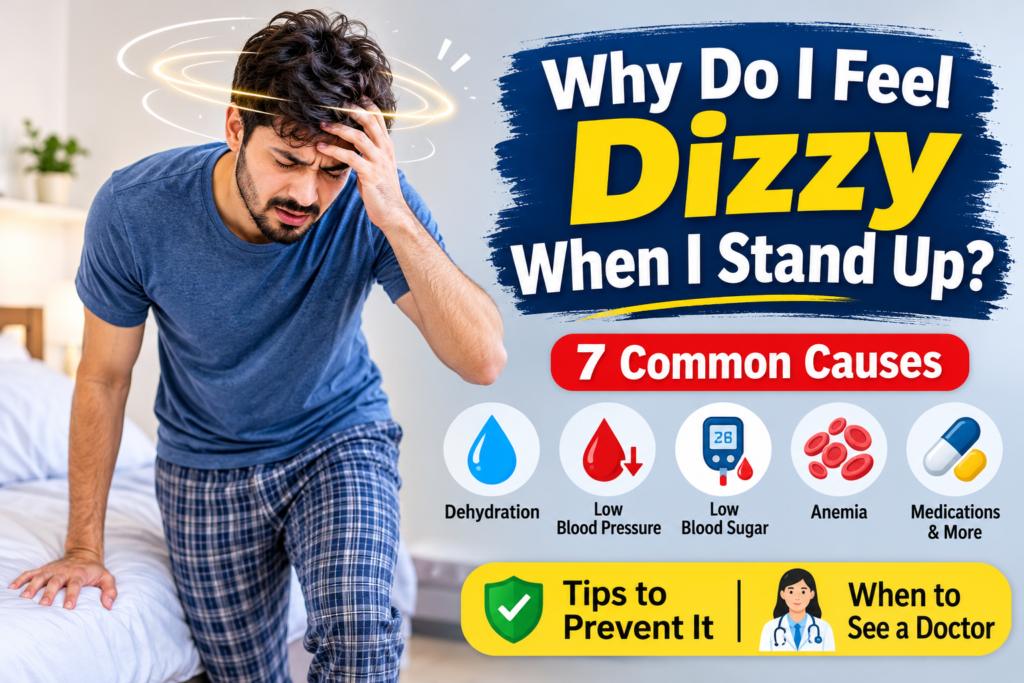
One common explanation is orthostatic hypotension, also known as postural hypotension. It occurs when your blood pressure drops after changing your body position, temporarily reducing blood flow to your brain.
Although occasional dizziness may not indicate a serious health problem, frequent or severe episodes should not be ignored.
In this article, we will explore why you feel dizzy when you stand up, the most common causes, warning signs, and practical ways to prevent it.
Table of Contents
What Happens When You Feel Dizzy After Standing Up?
When you stand up from a sitting or lying position, gravity naturally causes some blood to collect in your legs and lower body.
Normally, your body responds by slightly increasing your heart rate and tightening your blood vessels to maintain healthy blood pressure and ensure adequate blood flow to your brain.
However, if your body cannot adjust quickly enough, your blood pressure may temporarily drop.
This can cause symptoms such as:
- Lightheadedness or dizziness.
- Blurred or darkened vision.
- Feeling weak or unsteady.
- A sensation that you might faint.
- Temporary confusion.
- Nausea in some cases.
This condition is commonly called orthostatic hypotension.
Symptoms may last only a few seconds or longer, depending on the underlying cause.
7 Common Reasons Why You Feel Dizzy When You Stand Up
There are several possible reasons for experiencing dizziness after standing. Here are seven common causes to understand.
1. Dehydration
Dehydration is one of the common reasons for dizziness when standing up.
When your body does not receive enough fluids, the amount of circulating blood can decrease. This makes it harder for your body to maintain normal blood pressure when you change positions.
You may become dehydrated because of:
- Not drinking enough water.
- Excessive sweating.
- Fever.
- Vomiting or diarrhea.
- Spending too much time in hot weather.
- Intense physical activity.
What can help?
Drink enough water throughout the day and pay attention to your fluid intake, especially during hot weather or after exercise.
If you have a medical condition that requires fluid restriction, follow your healthcare provider’s advice.
2. Low Blood Pressure (Hypotension)
Low blood pressure means that the force of blood against your artery walls is lower than normal.
When blood pressure drops suddenly after standing, you may experience dizziness, weakness, or blurred vision.
Orthostatic hypotension is generally diagnosed when blood pressure falls by at least 20 mmHg in the systolic reading or 10 mmHg in the diastolic reading within three minutes of standing.
Common symptoms include:
- Feeling dizzy after standing.
- Blurred vision.
- Weakness or fatigue.
- Feeling faint.
- Occasionally losing consciousness.
If these symptoms happen regularly, consult a healthcare professional to identify the cause.
3. Low Blood Sugar
Low blood sugar, also called hypoglycemia, can sometimes cause dizziness and weakness.
Glucose is an important source of energy for your body, including your brain. When blood glucose levels become too low, you may experience several uncomfortable symptoms.
Common warning signs include:
- Dizziness or lightheadedness.
- Sweating.
- Shaking or trembling.
- Hunger.
- Headaches.
- Difficulty concentrating.
- A fast heartbeat.
Low blood sugar is particularly important for people with diabetes who use insulin or certain glucose-lowering medications.
If you have diabetes, monitor your blood glucose according to your treatment plan and seek medical advice about repeated episodes.
4. Standing Up Too Quickly
Have you ever jumped out of bed immediately after waking up and felt dizzy?
Standing up too quickly can temporarily affect your blood pressure.
Your cardiovascular system needs a moment to adjust when you move from a lying or sitting position to standing.
If this adjustment is delayed, you may experience a brief episode of dizziness.
How to prevent it:
- Sit on the edge of your bed for a few moments before standing.
- Move your feet and legs gently.
- Stand up slowly.
- Avoid sudden changes in body position.
- Hold onto a stable surface if you feel unsteady.
These simple habits may help reduce temporary dizziness.
5. Anemia or Iron Deficiency
Anemia occurs when your body does not have enough healthy red blood cells or sufficient hemoglobin to carry oxygen effectively.
Iron deficiency is one possible cause of anemia.
Some people with anemia experience dizziness, fatigue, weakness, headaches, and shortness of breath, particularly during physical activity.
Other possible symptoms include:
- Pale skin.
- Feeling unusually tired.
- Cold hands and feet.
- A fast heartbeat.
- Reduced exercise tolerance.
If you frequently feel dizzy and tired, your healthcare provider may recommend blood tests to check your hemoglobin and iron levels.
Do not start iron supplements without confirming whether you need them.
6. Certain Medications
Some medications can lower blood pressure or affect how your body regulates circulation.
Examples include:
- Blood pressure medications.
- Diuretics (water pills).
- Some antidepressants.
- Certain medications used for heart conditions.
- Some medicines used to treat Parkinson’s disease.
If dizziness started after beginning a new medication or changing a dose, discuss it with your healthcare provider.
Important: Never stop taking prescribed medication or change its dosage without medical advice.
7. Underlying Heart or Nervous System Conditions
Sometimes, dizziness when standing up may be associated with an underlying medical condition.
Certain heart conditions can affect how efficiently your heart pumps blood. Similarly, nervous system disorders can interfere with the signals that help regulate blood pressure.
Possible underlying conditions include:
- Heart rhythm problems.
- Heart failure.
- Diabetes-related nerve damage.
- Parkinson’s disease.
- Thyroid disorders.
- Autonomic nervous system disorders.
Repeated dizziness should be evaluated by a healthcare professional, particularly when accompanied by other unusual symptoms.
How to Stop Feeling Dizzy When You Stand Up
If you occasionally experience mild dizziness after standing, a few practical habits may help reduce episodes.
1. Drink Enough Water
Maintain adequate hydration throughout the day.
Your fluid requirements may vary depending on your activity level, environment, and health conditions.
2. Stand Up Slowly
Avoid getting out of bed or standing up suddenly.
First, sit upright, allow your body to adjust, and then stand slowly.
3. Eat Balanced Meals
Maintain regular meals containing carbohydrates, protein, healthy fats, vitamins, and minerals.
Avoid skipping meals, particularly if you are prone to low blood sugar.
4. Avoid Excessive Heat
Hot showers, hot weather, and overheating can worsen dizziness in some people.
Try to stay cool and avoid prolonged exposure to excessive heat.
5. Exercise Regularly
Regular physical activity can support cardiovascular health and improve overall circulation.
Start with manageable activities such as walking and gradually increase your activity level.
If exercise triggers dizziness, stop and discuss the symptoms with a healthcare professional.
6. Review Your Medications
If you regularly experience dizziness, ask your doctor whether any medication could be contributing to the problem.
Do not adjust medication doses yourself.
7. Sit or Lie Down When Dizziness Starts
If you suddenly feel dizzy after standing, sit down or lie down immediately to reduce the risk of falling.
Do not continue walking or driving while feeling lightheaded.
When Should You Worry About Dizziness When Standing Up?
Occasional, short-lived dizziness may have a relatively simple explanation, such as dehydration or a temporary blood pressure drop.
However, repeated episodes deserve medical attention.
Contact a healthcare professional if:
- You frequently feel dizzy after standing.
- Your dizziness is becoming more severe.
- You experience repeated blurred vision.
- You feel unusually weak or tired.
- You have frequent episodes of near-fainting.
- Your symptoms interfere with daily activities.
Seek emergency medical attention if dizziness occurs with chest pain, difficulty breathing, fainting, a sudden severe headache, new weakness or numbness, difficulty speaking, confusion, or a rapid or irregular heartbeat.
These symptoms may indicate a serious medical emergency.
How Do Doctors Diagnose Dizziness When Standing Up?
A healthcare professional may ask about your symptoms, medical history, medications, hydration habits, and when the dizziness occurs.
Depending on your symptoms, the evaluation may include:
1. Blood Pressure Measurement
Your blood pressure may be measured while lying down and again after standing to check for orthostatic hypotension.
2. Blood Tests
Blood tests may help identify anemia, blood sugar abnormalities, or other possible causes.
3. Heart Tests
An electrocardiogram (ECG or EKG) may be recommended to evaluate your heart rhythm.
4. Additional Tests
If necessary, your doctor may recommend further investigations, such as an echocardiogram or tilt-table test.
The tests depend on your symptoms and suspected underlying condition.
Frequently Asked Questions (FAQs)
1. Why do I feel dizzy when I stand up suddenly?
Standing up suddenly can cause a temporary drop in blood pressure because gravity pulls blood toward your lower body. This is sometimes called orthostatic hypotension.
2. Is it normal to feel dizzy for a few seconds after standing up?
Occasional, brief dizziness can happen, especially after standing up quickly. However, frequent or worsening episodes should be discussed with a healthcare professional.
3. Can dehydration cause dizziness when standing up?
Yes. Dehydration can reduce circulating blood volume, making it harder for your body to maintain blood pressure when you stand.
4. Can low blood pressure make you feel dizzy?
Yes. Low blood pressure, particularly a sudden drop when standing, can cause dizziness, blurred vision, weakness, and sometimes fainting.
5. Should I worry if I feel dizzy every morning?
Repeated morning dizziness should not be ignored. Dehydration, medication effects, blood pressure changes, and other health conditions may contribute. Consult a healthcare professional if it happens regularly.
6. How long does dizziness from standing up last?
Mild episodes may last a few seconds or a few minutes. Persistent, severe, or recurring dizziness needs medical evaluation.
7. Can a lack of sleep cause dizziness?
Poor sleep can contribute to fatigue and sometimes feelings of lightheadedness. However, repeated dizziness specifically triggered by standing should not automatically be blamed on a lack of sleep.
Final Thoughts
Feeling dizzy when you stand up can happen for several reasons, ranging from dehydration and temporary blood pressure changes to medication effects and underlying medical conditions.
In many cases, standing up slowly, maintaining adequate hydration, eating balanced meals, and avoiding sudden movements may help reduce occasional episodes.
However, dizziness that happens frequently, becomes severe, or occurs with other concerning symptoms should never be ignored.
Understanding the underlying cause is the most important step toward finding the right treatment and protecting your health.
Remember: Your body may be giving you an important signal. Pay attention to repeated symptoms and seek medical advice when necessary.
Medical Disclaimer: This article is intended for general educational and informational purposes only. It is not a substitute for professional medical advice, diagnosis, or treatment. Always consult a qualified healthcare professional regarding persistent or concerning symptoms.