
Why Do I Wake Up Tired Even After 8 Hours of Sleep?
Have you ever gone to bed on time, slept for a full eight hours, and still woken up feeling like you barely rested?
You are not alone.
Many people wake up feeling tired, heavy, sleepy, or completely drained even when they believe they are getting enough sleep. You may even think, “Why do I feel tired after sleeping?” or wonder why you have no energy in the morning.
Getting enough hours of sleep is important, but sleep duration is only one part of healthy sleep. The quality, timing, consistency, and continuity of your sleep also matter. Stress, an irregular sleep schedule, alcohol, caffeine, medications, poor sleep habits, and certain health conditions can all contribute to morning fatigue.
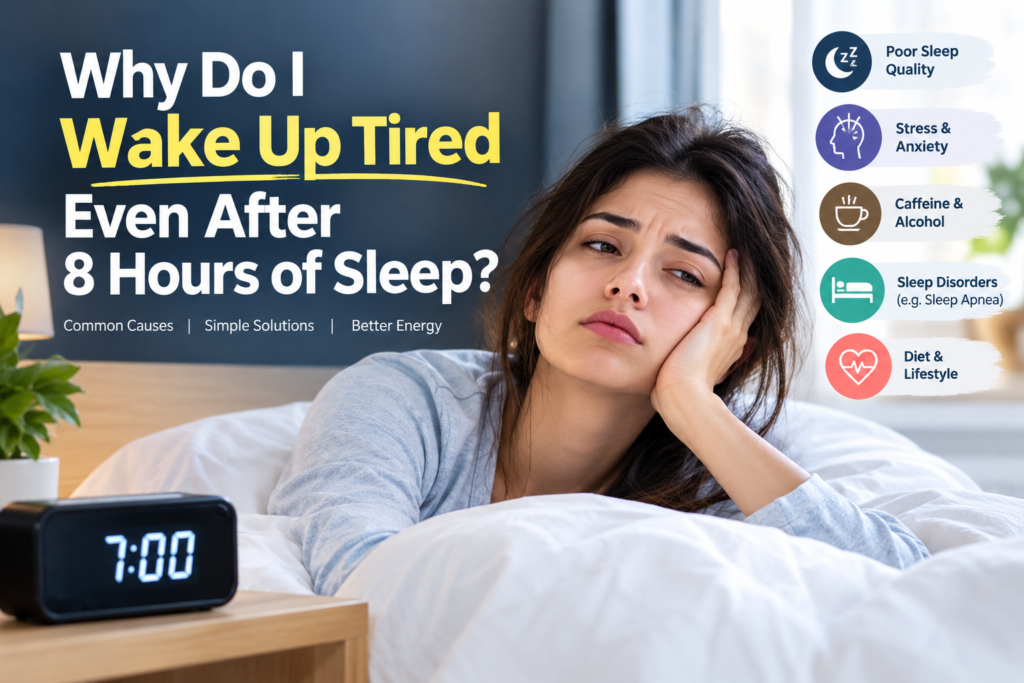
The good news is that occasional tiredness is usually not a reason to panic. However, if you regularly wake up tired after 8 hours of sleep, especially if the problem continues for weeks or affects your daily life, it is worth looking more closely at what may be happening.
In this guide, we will explore common reasons you may feel exhausted after a full night’s sleep, simple habits that may help, and when persistent tiredness deserves medical attention.
Table of Contents
Why Do I Wake Up Tired Even After 8 Hours of Sleep?
If you wake up tired after 8 hours of sleep, the problem may not be the number of hours you sleep. You can spend eight or nine hours in bed but still fail to get enough restorative sleep.
Several factors can contribute to this feeling, including:
- Frequent nighttime awakenings
- An inconsistent sleep schedule
- Stress or anxiety
- Sleep apnea or snoring
- Restless legs or other sleep disorders
- Excessive screen use before bed
- Alcohol consumption
- Too much caffeine, especially later in the day
- An uncomfortable bedroom
- Dehydration
- Poor diet
- Certain medications
- Low physical activity
- Some medical conditions
Your body normally moves through different stages of sleep throughout the night. Deep sleep and REM sleep are particularly important for physical and mental restoration.
If your sleep is repeatedly interrupted, you may not feel refreshed even though you technically spent eight hours sleeping.
Sleep Quantity vs. Sleep Quality
One of the biggest misconceptions about sleep is that more hours automatically mean better sleep.
Sleep quality matters just as much as sleep duration.
For example, imagine two people:
| Person | Time in Bed | Sleep Quality | Morning Feeling |
|---|---|---|---|
| Person A | 8 hours | Frequently interrupted | Tired |
| Person B | 7.5 hours | Mostly uninterrupted | Refreshed |
Person A technically spends more time sleeping but may feel worse in the morning.
Good-quality sleep generally means:
- Falling asleep without excessive difficulty
- Staying asleep for most of the night
- Getting enough deep and REM sleep
- Having relatively consistent sleep and wake times
- Waking without excessive exhaustion
So if you are tired after sleeping 8 hours, don’t only ask, “How long did I sleep?”
Also ask:
“How well did I sleep?”
Common Reasons You Wake Up Tired
Let’s look at some of the most common explanations for waking up exhausted.
1. Your Sleep Schedule Is Irregular
Going to bed at different times every night can make it harder for your body to maintain a consistent sleep-wake rhythm.
For example:
- Monday: Sleep at 10:30 PM
- Tuesday: Sleep at 1:00 AM
- Wednesday: Sleep at 11:30 PM
- Thursday: Sleep at 2:00 AM
Even if you eventually get eight hours, your body may not feel fully adjusted.
What can help?
Try to:
- Go to bed around the same time each night.
- Wake up around the same time every morning.
- Avoid dramatically changing your schedule on weekends.
- Give your body enough time to adjust to a new routine.
Consistency can be just as important as duration.
2. You Are Waking During the Wrong Part of Your Sleep Cycle
Sometimes you may wake up feeling extremely groggy because you are awakened during a deeper stage of sleep.
This temporary grogginess is often called sleep inertia.
You may experience:
- Heavy eyelids
- Brain fog
- Difficulty concentrating
- Low motivation
- A strong desire to go back to sleep
Sleep inertia can happen occasionally, especially if you are sleep deprived or your schedule is irregular.
However, if you feel severely exhausted every morning for a long period, there may be another reason behind it.
3. Stress Can Affect Your Sleep
You may be physically in bed while your brain is still working overtime.
Work pressure, financial concerns, relationships, family responsibilities, or constant worrying can make it difficult to achieve restful sleep.
You might:
- Fall asleep but wake repeatedly.
- Wake up very early.
- Have vivid or stressful dreams.
- Feel mentally exhausted in the morning.
- Start thinking about problems immediately after waking.
This is one reason someone may ask, “Why do I feel tired after sleeping?”
Your body needs sleep, but your brain also needs a chance to settle down.
Try a calming pre-bed routine
You could:
- Put your phone away 30–60 minutes before bed.
- Write down tomorrow’s tasks.
- Try gentle stretching.
- Read a relaxing book.
- Practice slow breathing.
- Keep your bedroom quiet and comfortable.
4. Sleep Apnea May Be Interrupting Your Sleep
One important cause of persistent morning exhaustion is sleep apnea.
Sleep apnea is a sleep disorder in which breathing repeatedly stops or becomes restricted during sleep.
A person may not remember waking up, but these repeated interruptions can affect sleep quality.
Possible warning signs include:
- Loud or frequent snoring
- Gasping or choking during sleep
- Morning headaches
- Dry mouth when waking
- Excessive daytime sleepiness
- Difficulty concentrating
- Feeling tired despite enough time in bed
If someone tells you that you stop breathing, gasp, or choke during sleep, talk with a healthcare professional.
Sleep apnea can require proper evaluation and treatment.
5. Your Bedroom Environment May Be Affecting Sleep
Your surroundings can have a surprisingly large impact on sleep quality.
Common sleep disruptors include:
- Excessive noise
- Bright lights
- A room that is too hot
- An uncomfortable mattress or pillow
- Poor ventilation
- Notifications from your phone
- Television playing throughout the night
Try to make your bedroom:
- Dark
- Quiet
- Comfortable
- Cool enough for you
- Free from unnecessary distractions
Small environmental changes can sometimes make a noticeable difference.
6. Late-Night Screen Time
Scrolling through social media, watching videos, gaming, or working on your laptop immediately before bed can make it harder to transition into sleep.
There are two potential issues.
First, stimulating content can keep your brain alert.
Second, bright light from electronic devices may interfere with your body’s natural sleep signals, especially when exposure occurs close to bedtime.
Instead of using your phone until the moment you fall asleep, try creating a short digital wind-down period.
For example:
- 10:00 PM — Put phone away
- 10:05 PM — Brush your teeth
- 10:15 PM — Light reading
- 10:30 PM — Lights out
You don’t have to make your routine perfect. Consistency matters more.
7. Caffeine May Be Staying in Your System
Coffee can help you feel more alert during the day, but caffeine can remain in your body for several hours.
If you consume caffeine late in the afternoon or evening, it may affect your ability to fall asleep or sleep deeply.
Common sources include:
- Coffee
- Tea
- Energy drinks
- Cola
- Pre-workout products
- Some medications
If you regularly struggle with sleep, consider reducing caffeine later in the day and see whether your sleep improves.
8. Alcohol Can Make You Sleepy but Not Necessarily Rested
Alcohol can make some people fall asleep faster, but that does not mean it improves sleep quality.
Alcohol may contribute to:
- More fragmented sleep
- Snoring
- Changes in normal sleep patterns
- Waking during the night
- Morning grogginess
If you frequently wake up exhausted after drinking alcohol, this could be one factor worth considering.
9. Dehydration Can Contribute to Low Energy
Not drinking enough fluids throughout the day may contribute to fatigue.
You can lose fluids through:
- Sweating
- Exercise
- Hot weather
- Illness
- Normal urination
If you wake up with a dry mouth or feel sluggish, consider whether you are drinking enough fluids during the day.
However, excessive fluid intake immediately before bed may cause frequent bathroom trips, which can also disturb sleep.
The goal is balanced hydration rather than drinking a large amount right before sleeping.
10. Your Diet May Affect Your Energy
Your body needs adequate nutrition to support normal energy production and overall health.
A diet that is consistently low in essential nutrients or overall calories may contribute to fatigue.
Depending on your individual situation, healthcare professionals may consider issues involving nutrients such as:
- Iron
- Vitamin B12
- Folate
- Vitamin D
However, tiredness alone does not prove that you have a nutrient deficiency.
Avoid taking high-dose supplements simply because you feel tired. If you suspect a deficiency, talk to a healthcare professional about whether testing is appropriate.
Why Am I So Sleepy All the Time?
If you’re asking “why am I so sleepy all the time?”, it is useful to look beyond your nighttime sleep.
Daytime sleepiness can be related to:
- Not getting enough sleep
- Poor sleep quality
- Sleep apnea
- An inconsistent sleep schedule
- Sedating medications
- Alcohol use
- Stress
- Depression or other mental health concerns
- Certain medical conditions
- Low physical activity
Pay attention to patterns.
For example:
Do you feel sleepy only in the morning?
Or:
Do you struggle to stay awake throughout the entire day?
Persistent or severe daytime sleepiness deserves more attention than occasional tiredness.
Why Do I Feel Tired During the Day?
Feeling tired during the day can happen even after a full night’s sleep.
Some possible reasons include:
Poor sleep quality
You may technically sleep eight hours but wake repeatedly without realizing it.
Sleep debt
If you have been sleeping too little for several days, one night of longer sleep may not immediately make you feel completely normal.
Lack of movement
Spending most of the day sitting can leave you feeling sluggish.
Stress
Mental exhaustion can feel like physical fatigue.
Poor eating habits
Irregular meals or a diet lacking adequate nutrition may contribute to low energy.
Medical or sleep-related problems
Persistent fatigue can sometimes be associated with an underlying condition and should be evaluated when appropriate.
Simple Ways to Wake Up Feeling More Rested
If you regularly wake up exhausted, start with simple changes rather than trying to completely transform your lifestyle overnight.
1. Keep a Consistent Sleep Schedule
Aim to go to bed and wake up at similar times each day.
2. Get Morning Light
Natural morning light can help reinforce your body’s sleep-wake rhythm.
Try spending some time outside after waking, when practical.
3. Move Your Body
A short walk, gentle stretching, or light exercise can help you transition into the day.
4. Avoid Repeatedly Hitting Snooze
Repeatedly returning to sleep can sometimes make morning grogginess worse.
Instead:
- Get out of bed.
- Open the curtains.
- Drink some water.
- Get some natural light.
- Start moving.
5. Create a Relaxing Night Routine
Give yourself time to slow down before bed.
6. Limit Caffeine Later in the Day
If caffeine affects your sleep, move your last caffeinated drink earlier.
7. Make Your Bedroom Sleep-Friendly
Keep it dark, quiet, and comfortable.
8. Track Your Sleep Patterns
For one or two weeks, note:
- Bedtime
- Wake-up time
- Nighttime awakenings
- Caffeine intake
- Alcohol intake
- Exercise
- Morning energy level
Patterns may become easier to recognize.
When Should You Talk to a Doctor?
Occasional tiredness is normal.
However, consider speaking with a healthcare professional if:
- You regularly wake up exhausted despite adequate time in bed.
- You have excessive daytime sleepiness.
- You frequently fall asleep unintentionally during the day.
- You snore loudly or gasp during sleep.
- Someone notices pauses in your breathing.
- Fatigue is interfering with work, school, exercise, or daily activities.
- You have unexplained changes in weight or appetite.
- You experience persistent weakness or other concerning symptoms.
- Your tiredness continues despite improving your sleep habits.
A healthcare professional can review your symptoms, medications, lifestyle, sleep patterns, and medical history and determine whether further evaluation is needed.
Important Q&A: Waking Up Tired After 8 Hours of Sleep
Q1. Why do I wake up tired after 8 hours of sleep?
You may wake up tired because sleep duration is only one part of healthy sleep. Poor sleep quality, frequent awakenings, an irregular sleep schedule, stress, sleep apnea, alcohol, caffeine, or other factors can leave you feeling unrefreshed.
Q2. Is it normal to feel tired after sleeping 8 hours?
Occasionally, yes. Everyone can have a bad night of sleep. But consistently feeling exhausted after getting enough sleep may be a sign that your sleep quality or another aspect of your health needs attention.
Q3. Why am I tired after sleeping?
You may be tired after sleeping because your sleep was interrupted, your sleep schedule is irregular, you are experiencing stress, or you have a sleep-related or medical issue affecting your energy.
Q4. Why am I so sleepy all the time?
Constant sleepiness can have many possible causes, including insufficient or poor-quality sleep, sleep apnea, medications, stress, an irregular schedule, or certain health conditions. Persistent excessive sleepiness should be discussed with a healthcare professional.
Q5. Why do I feel like I have no energy in the morning?
Morning low energy can be related to poor sleep quality, sleep inertia, dehydration, an inconsistent sleep schedule, stress, or other lifestyle and health factors.
Q6. Can you sleep for 8 hours and still be sleep deprived?
Yes. Spending eight hours in bed does not guarantee that you received enough restorative sleep. Repeated awakenings or disrupted sleep can reduce the quality of your rest.
Q7. Does sleeping more fix morning tiredness?
Not always. If the problem is caused by poor sleep quality, an irregular sleep schedule, sleep apnea, medication effects, or another underlying issue, simply sleeping longer may not solve it.
Q8. Does stress cause you to wake up tired?
Stress can interfere with falling asleep and staying asleep. Even if you spend enough hours in bed, poor-quality or fragmented sleep may leave you feeling tired the next morning.
Q9. Can dehydration make you feel tired?
Yes, inadequate fluid intake can contribute to fatigue. Maintaining balanced hydration throughout the day may help support normal energy and overall well-being.
Q10. When is tiredness a warning sign?
Tiredness deserves medical attention when it is persistent, severe, getting worse, affecting daily activities, or accompanied by other concerning symptoms. Loud snoring, gasping during sleep, or observed pauses in breathing are also reasons to seek professional advice.
A Simple Morning Routine for Better Energy
If you frequently wake up feeling tired, try this simple routine:
First 5 minutes
- Get out of bed.
- Open the curtains.
- Drink some water.
- Avoid immediately checking social media.
Next 10 minutes
- Get some natural light.
- Walk around your home or outside.
- Do gentle stretching.
Next 10 minutes
- Eat a balanced breakfast if you normally eat in the morning.
- Review your priorities for the day.
- Start your morning without rushing.
This routine isn’t a medical treatment, but it can help establish consistent morning habits.
Key Takeaways
If you wake up tired after 8 hours of sleep, remember these important points:
- Eight hours of sleep does not automatically mean high-quality sleep.
- Sleep interruptions can leave you exhausted even if you don’t remember waking up.
- An irregular sleep schedule can affect how rested you feel.
- Stress and mental overload can interfere with restorative sleep.
- Caffeine and alcohol can affect sleep quality.
- Your bedroom environment can influence your sleep.
- Sleep apnea is an important possible cause of persistent morning exhaustion.
- Dehydration and poor nutrition may contribute to low energy.
- Morning sunlight and regular physical activity can support healthy sleep-wake habits.
- Persistent or severe fatigue should not simply be ignored.
Conclusion
Waking up tired after getting eight hours of sleep can be frustrating, especially when you feel like you are doing everything right.
But sleep duration is only one piece of the puzzle.
If you regularly ask yourself, “Why do I feel tired after sleeping?”, start by looking at your sleep quality, schedule, stress levels, caffeine and alcohol habits, bedroom environment, physical activity, and overall lifestyle.
For occasional morning tiredness, simple changes such as keeping a consistent sleep schedule, getting morning light, moving your body, and creating a relaxing bedtime routine may help.
However, if you wake up exhausted day after day, feel sleepy throughout the day, or have symptoms such as loud snoring, gasping, or pauses in breathing during sleep, it is a good idea to speak with a healthcare professional.
The goal isn’t simply to spend eight hours in bed.
The goal is to wake up feeling rested, alert, and ready for the day.
Medical disclaimer: This article is for general educational purposes only and does not replace professional medical advice, diagnosis, or treatment. If persistent fatigue or excessive sleepiness is affecting your daily life, consult a qualified healthcare professional.
Pingback: Sleepy After Eating 10 amazing facts
Pingback: 10 means Why Do I Always Feel Hungry? Causes & How to Stop