
Can Walking 10,000 Steps a Day Really Change Your Health? Benefits, Weight Loss & Science
Can Walking 10000 steps every day can significantly improve your overall health, reduce disease risk, boost mental well-being, and help with weight management. However, the exact number isn’t a universal requirement.
Modern scientific studies suggest that even 7,000–8,500 daily steps provide major health benefits for many adults.
The key isn’t chasing the number—it’s staying consistently active.
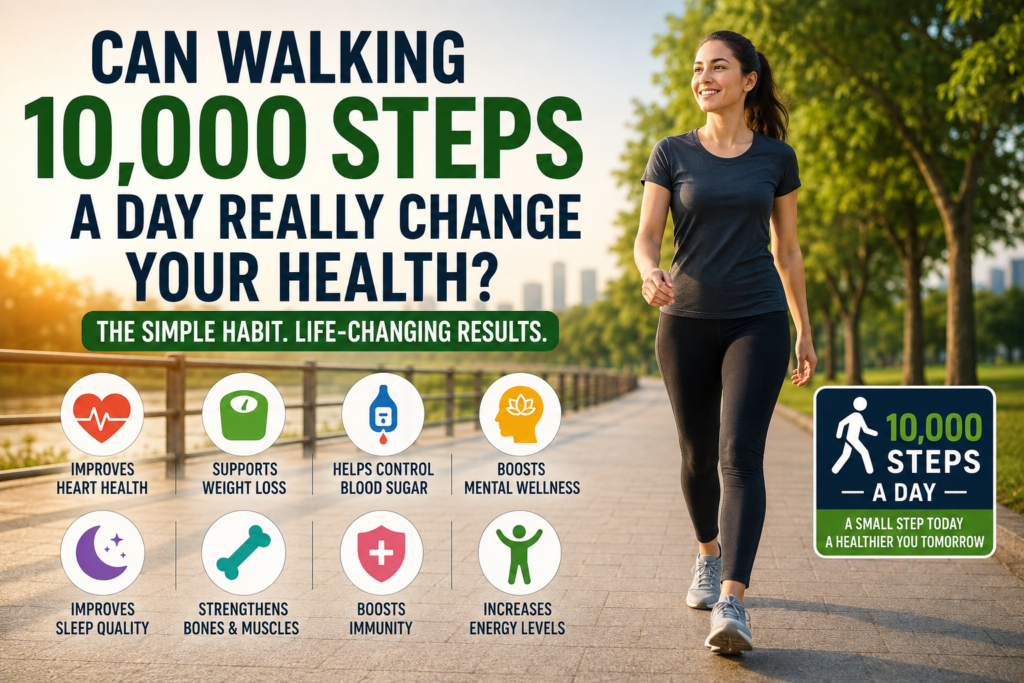
15 Amazing Benefits of Walking 10000 steps,
Walking vs Running,
Walking vs Gym,
Calories Burned by Walking,
Table of Contents
What Does 10,000 Steps Actually Mean?
For most adults,
| Measurement | Average |
|---|---|
| Steps | 10,000 |
| Distance | 7–8 km |
| Walking Time | 90–120 minutes |
| Calories Burned | 300–600 kcal |
Actual values depend on:
- Height
- Weight
- Walking speed
- Terrain
Where Did the 10,000-Step Rule Come From?
Surprisingly, the famous number didn’t originate from medical research.
It began in Japan during the 1960s when a company launched a pedometer called Manpo-kei, which literally means “10,000-step meter.”
The number was memorable and became a worldwide fitness goal.
Only later did researchers begin studying whether it actually benefits health.

15 Amazing Benefits of Walking 10000 steps,
Walking vs Running,
Walking vs Gym,
Calories Burned by Walking,
Does Science Support Walking 10,000 Steps?
Yes—but with important details.
Recent research shows that walking regularly lowers the risk of:
- Heart disease
- Stroke
- Type 2 diabetes
- High blood pressure
- Obesity
- Depression
- Anxiety
- Early death
Many health improvements begin around 6,000–8,000 steps, with additional benefits continuing as activity increases.
Consistency matters far more than reaching an exact number every day.
15 Amazing Benefits of Walking 10,000 Steps Daily
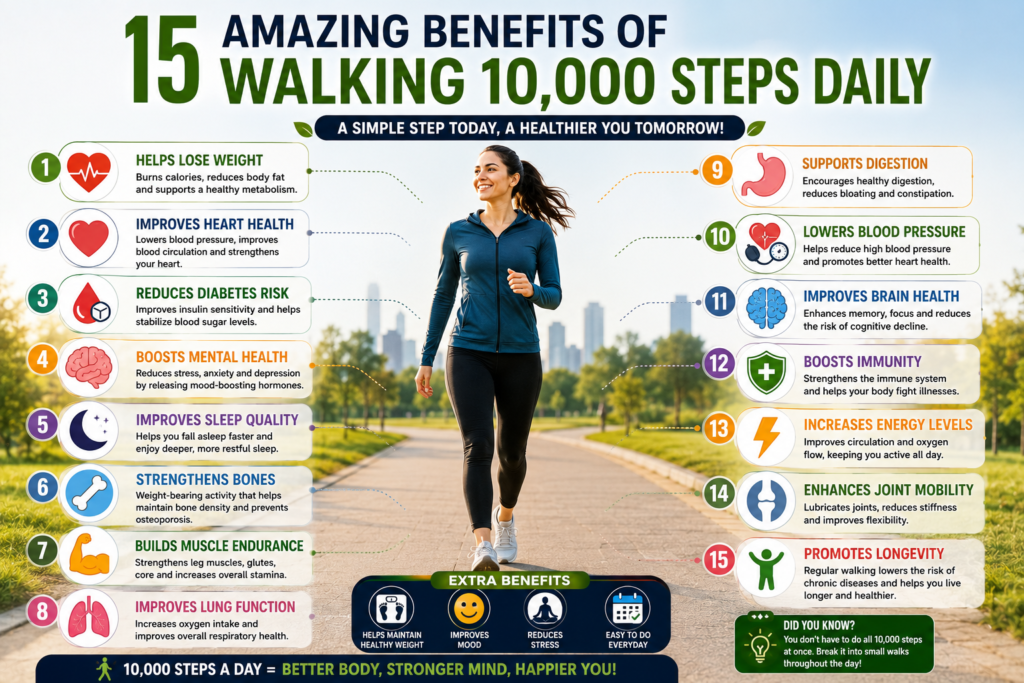
1. Helps Lose Weight
Walking burns calories without putting excessive stress on your joints.
When combined with a healthy diet, it supports sustainable fat loss.
2. Improves Heart Health
Daily walking helps:
- Lower blood pressure
- Improve blood circulation
- Reduce cholesterol
- Strengthen the heart
3. Reduces Diabetes Risk
Walking after meals improves insulin sensitivity and helps stabilize blood sugar levels.
4. Boosts Mental Health
Walking releases:
- Endorphins
- Dopamine
- Serotonin
These natural chemicals help reduce stress, anxiety, and symptoms of depression.
5. Improves Sleep
People who walk regularly often:
- Fall asleep faster
- Sleep more deeply
- Wake feeling refreshed
6. Strengthens Bones
Walking is a weight-bearing exercise that helps maintain bone density and reduce osteoporosis risk.
7. Builds Muscle Endurance
Daily walking strengthens:
- Legs
- Calves
- Glutes
- Core muscles
8. Improves Lung Function
Brisk walking increases oxygen intake and supports better respiratory fitness.
9. Supports Healthy Digestion
Walking after meals encourages healthy digestion and may reduce bloating.
10. Lowers Blood Pressure
Even moderate walking can help lower resting blood pressure over time.
11. Improves Brain Health
Research links regular walking with better memory, concentration, and a lower risk of cognitive decline.
12. Boosts Immunity
Moderate daily exercise like walking supports immune function and may reduce the frequency of common illnesses.
13. Increases Energy Levels
Walking improves circulation and oxygen delivery, helping reduce fatigue.
14. Enhances Joint Mobility
Regular movement lubricates joints and can ease stiffness, especially in the knees and hips.
15. Promotes Longevity
People who stay physically active tend to have a lower risk of premature death compared with sedentary individuals.
Walking vs Running
| Walking | Running |
|---|---|
| Low impact | High impact |
| Beginner friendly | Higher fitness required |
| Lower injury risk | Greater injury risk |
| Easier to sustain daily | More physically demanding |
| Burns fewer calories per minute | Burns more calories per minute |
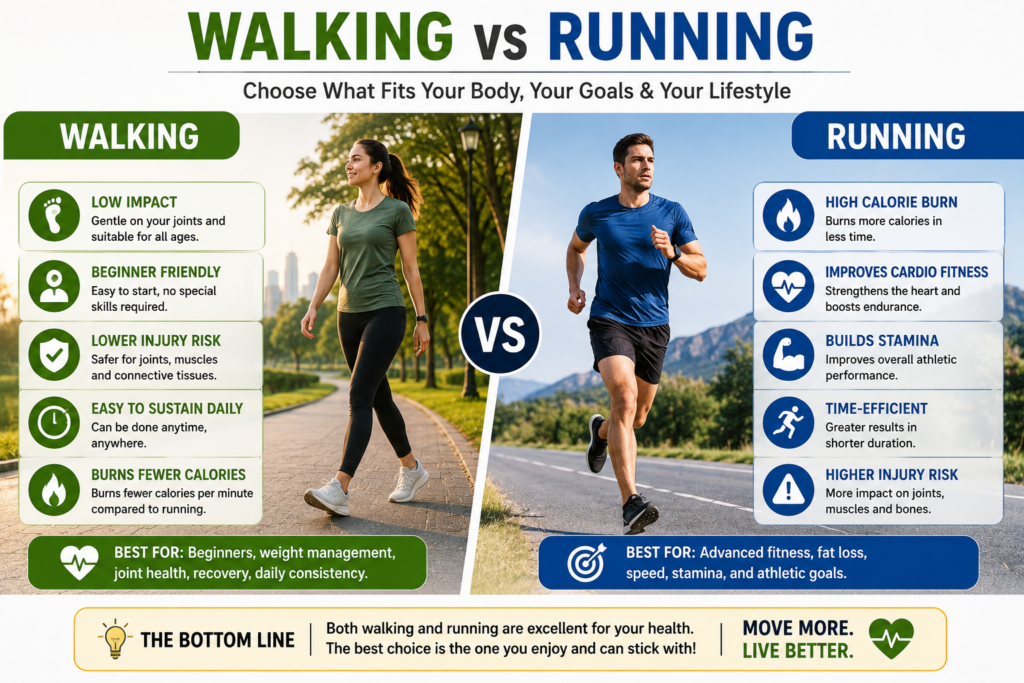
Both are beneficial—the best choice depends on your fitness level, goals, and health.
Walking vs Gym
| Walking | Gym |
|---|---|
| Free | Membership may be required |
| Suitable for all ages | May require guidance |
| Excellent for cardiovascular health | Better for strength training |
| Easy to start | Equipment often needed |
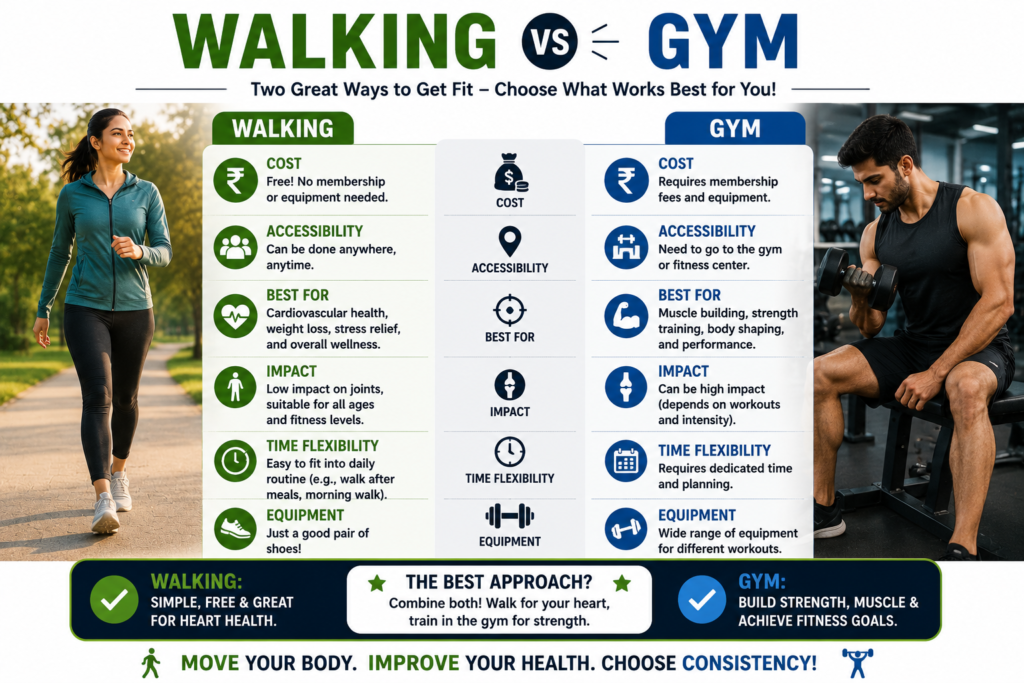
A balanced routine can include both walking and resistance training.
Is 10,000 Steps Necessary?
No.
If you’re currently inactive:
- 3,000 steps is better than none.
- 5,000 steps is an improvement.
- 7,000–8,000 steps can provide substantial health benefits.
- 10,000 steps is a practical goal for many healthy adults, but it is not a requirement.
Gradually increasing your activity level is more important than hitting an exact target.
Calories Burned by Walking
| Body Weight | Approximate Calories Burned (10,000 Steps) |
|---|---|
| 50 kg | 250–300 |
| 60 kg | 300–350 |
| 70 kg | 350–420 |
| 80 kg | 400–500 |
| 90 kg | 450–550 |
| 100 kg | 500–650 |
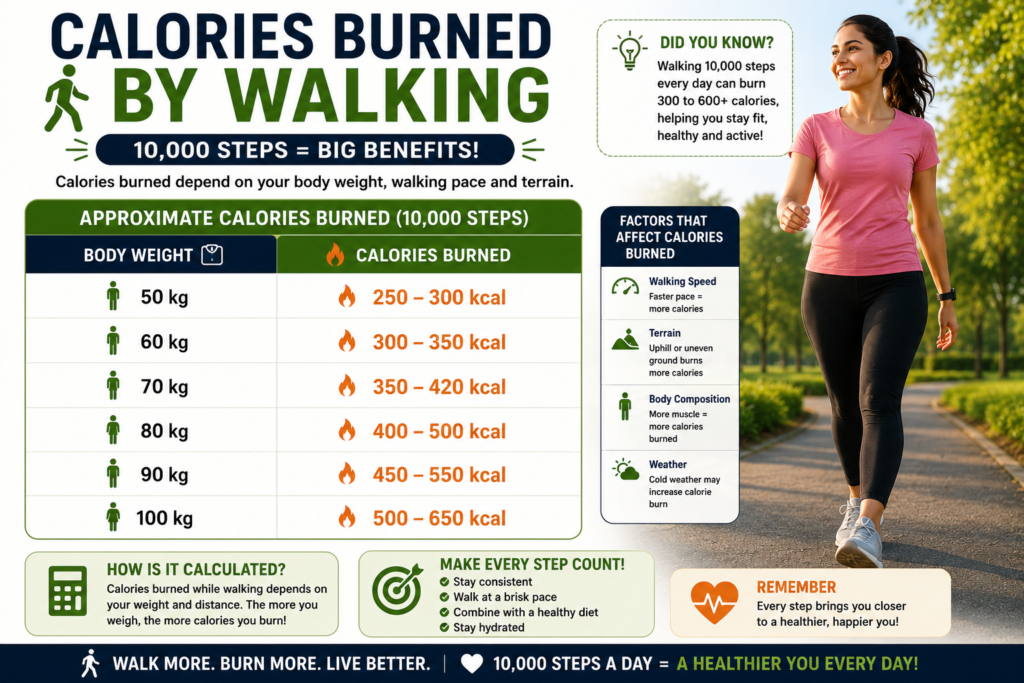
These are estimates and vary with pace and terrain.
Best Time to Walk
You can walk at any time that fits your schedule. Each option has benefits:
- Morning: Builds a routine and boosts alertness.
- After meals: May help with blood sugar control.
- Evening: Relieves stress and helps some people unwind.
The most effective time is the one you can maintain consistently.
Easy Ways to Reach 10,000 Steps
- Walk during phone calls.
- Take the stairs.
- Park farther away.
- Walk after each meal.
- Go for a short evening walk.
- Use a fitness tracker or smartphone app.
- Walk with friends or family.
- Break your steps into multiple sessions throughout the day.
Common Walking Mistakes
- Wearing uncomfortable shoes
- Walking with poor posture
- Increasing distance too quickly
- Ignoring hydration
- Walking only on weekends
- Skipping warm-up and cool-down
- Expecting immediate results
Weekly Walking Plan for Beginners
| Week | Daily Goal |
|---|---|
| Week 1 | 4,000 Steps |
| Week 2 | 5,500 Steps |
| Week 3 | 7,000 Steps |
| Week 4 | 8,500 Steps |
| Week 5 | 10,000 Steps |
Increase gradually to reduce the risk of injury and improve long-term adherence.
Frequently Asked Questions (FAQs)
Is walking 10,000 steps every day enough exercise?
For many adults, it provides excellent cardiovascular activity. However, adding strength training at least twice a week is recommended for overall fitness.
Can I lose belly fat by walking?
Walking helps reduce overall body fat when paired with a calorie-controlled diet. Spot reduction (losing fat from only one area) is not possible.
How long does it take to walk 10,000 steps?
Typically 90–120 minutes, depending on your pace and stride length.
Is 10,000 steps safe for seniors?
Many older adults can benefit from regular walking, but individual health conditions should be considered. A healthcare professional can provide personalized guidance if there are medical concerns.
Should I walk every day?
Yes, if your body tolerates it well. Rest or lighter activity may be appropriate if you’re recovering from illness, injury, or intense exercise.
Does walking build muscle?
Walking strengthens and improves endurance in the lower body, but it is not a substitute for progressive resistance training if muscle growth is your goal.
Is walking better than running?
Neither is universally better. Walking is lower impact and easier to sustain, while running burns more calories in less time.
What is the best speed for walking?
A brisk pace where you can talk but not sing is a good target for most adults.
Can walking reduce stress?
Yes. Regular walking has been associated with improved mood, reduced stress, and better mental well-being.
Is 10,000 steps mandatory?
No. The most important goal is to move more than you currently do and stay consistent.
Final Verdict
Walking is one of the simplest, most affordable, and most accessible forms of exercise. While the 10,000-step target is a useful benchmark for many people, meaningful health improvements often begin with fewer steps. The greatest benefits come from making walking a regular habit, progressing gradually, and combining it with a balanced diet, strength training, and adequate sleep.
If you’re looking for a sustainable way to improve your health, walking more each day is an excellent place to start.
Pingback: Signs of Stress You Ignore: 15 Hidden Symptoms That Damaging
Pingback: Which Is the Most Common Mistake to Start a Beginner Workout? 15 Beginner Workout Mistakes You Must Avoid
Pingback: Top 15 Omega-3 Benefits for Heart, Brain & Overall Health
Pingback: Best High Fiber Foods: Top 25 Foods Rich in Fiber for Better Health
Pingback: Healthy Carbs vs Bad Carbs: Key Differences, Best Foods
Pingback: How Exercise Improves Mood: 8 Science-Backed Mental Health
Pingback: Why You Need Healthy Fats: Bats 9 Foods Benefits, Sources, Myths & How to Add Them
Pingback: Why You Need Healthy Fats: Benefits, Best Food Sources
Pingback: Morning Habits for a Positive Mind: 7 Routines for Happiness
Pingback: Best Foods For High Iron: Top 25 Iron-Rich Foods List
Pingback: 15 Stretching Before Bed Benefits for Better Sleep & Health
Pingback: 15 Daily Foods for a Healthy Lifestyle: Science-Backed Guide
Pingback: 10 Min Walking vs Running: Which Is Better for Your Health?