
Healthy Carbs vs Bad Carbs: Key Differences, Best Foods, and Benefits for Better Health
Table of Contents
Healthy Carbs vs Bad Carbs: Understanding the Difference for Better Health and Weight Management
Introduction
Carbohydrates are one of the three major macronutrients your body needs, alongside protein and fat. However, carbs often get a bad reputation because of popular low-carb diets and misinformation on social media.
The truth is that not all carbohydrates are the same. Some carbohydrate-rich foods provide fiber, vitamins, minerals, and long-lasting energy, while others are heavily processed and offer little nutritional value.
Instead of avoiding carbs completely, learning to choose healthier carbohydrate sources can help improve energy, support digestion, maintain heart health, and even assist with weight management.
This guide explains the difference between healthy carbs and refined carbs, highlights the best carbohydrate-rich foods, and provides practical tips for building a balanced diet.
What Are Carbohydrates?
Carbohydrates are nutrients that your body breaks down into glucose, which serves as a primary source of energy for your brain, muscles, and other organs.
There are three main types of carbohydrates:
1. Sugars
Naturally found in fruits and dairy products, and also added to many processed foods.
2. Starches
Complex carbohydrates found in grains, legumes, potatoes, and other vegetables.
3. Fiber
A type of carbohydrate your body cannot fully digest. Fiber supports healthy digestion, helps control blood sugar, and promotes fullness.
Why Carbohydrates Are Important
Healthy carbohydrates help:
- Provide energy for daily activities
- Fuel exercise and sports performance
- Support brain function
- Promote digestive health
- Help regulate blood sugar when high in fiber
- Reduce hunger by increasing fullness
- Supply essential vitamins and minerals
Healthy Carbs vs Bad Carbs: What’s the Difference?
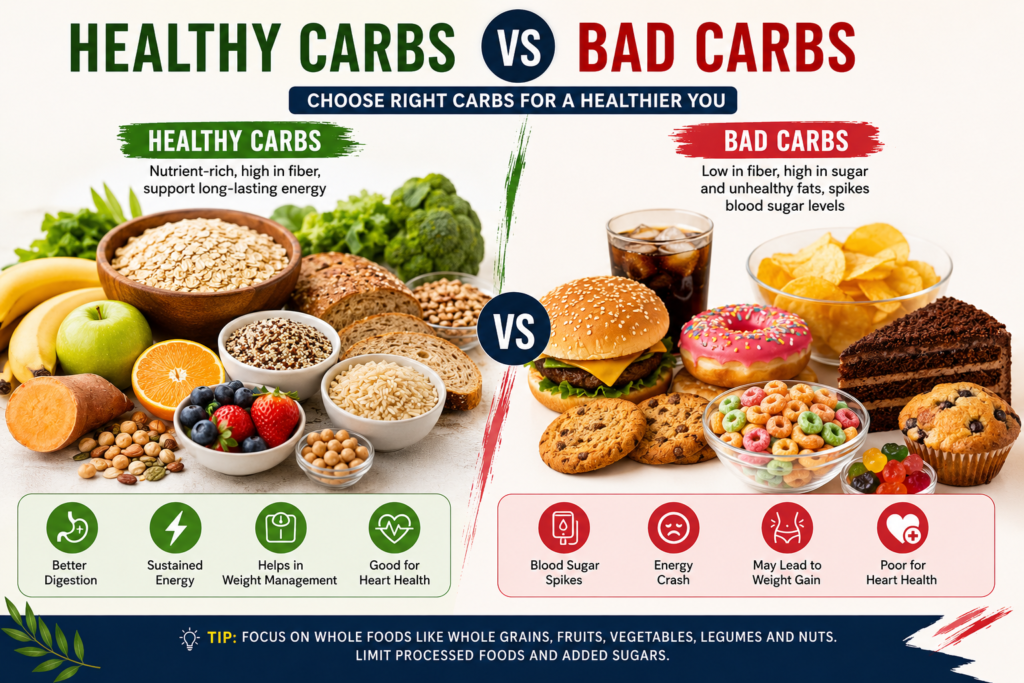
healthy carbohydrates,
good carbs,
best carbs for weight loss,
balanced diet,
| Healthy Carbohydrates | Refined / Less Healthy Carbohydrates |
|---|---|
| High in fiber | Low in fiber |
| Rich in vitamins and minerals | Often lower in nutrients |
| Digested more slowly | Digested quickly |
| Help maintain steady energy | May cause rapid blood sugar spikes |
| Promote fullness | May leave you hungry sooner |
| Usually minimally processed | Often highly processed |
Examples of Healthy Carbs
- Oats
- Brown rice
- Quinoa
- Sweet potatoes
- Fruits
- Vegetables
- Lentils
- Chickpeas
- Beans
- Whole-grain bread
Examples of Refined or Less Healthy Carb Choices
- Sugary soft drinks
- Candy
- Cakes
- Cookies
- Pastries
- White bread
- Sugary breakfast cereals
- Sweetened desserts
Note: Foods aren’t simply “good” or “bad.” The overall eating pattern, portion size, and frequency matter most.
Nutritional Comparison Table
| Feature | Healthy Carbs | Refined Carbs |
|---|---|---|
| Fiber | High | Low |
| Nutrient Density | High | Often Lower |
| Satiety | High | Lower |
| Energy Release | Gradual | Faster |
| Blood Sugar Impact | More Stable | May Rise Quickly |
| Processing | Minimal | Often Highly Processed |
Top Healthy Carbohydrate Foods
1. Oats
Benefits:
- High in soluble fiber
- Supports heart health
- Helps keep you full
2. Brown Rice
Provides:
- Complex carbohydrates
- Magnesium
- Fiber
3. Quinoa
A nutritious whole grain that also contains protein and essential minerals.
4. Sweet Potatoes
Rich in:
- Vitamin A
- Fiber
- Potassium
5. Fruits
Examples include:
- Apples
- Oranges
- Berries
- Bananas
- Pears
6. Vegetables
Especially:
- Broccoli
- Spinach
- Carrots
- Bell peppers
- Green peas
7. Lentils
High in both protein and fiber.
8. Chickpeas
Excellent for heart health and digestive health.
9. Beans
Nutritious, filling, and versatile.
10. Whole-Grain Bread
Choose products where whole grains are listed as the primary ingredient.
Foods Considered “Less Healthy” Carbohydrate Choices
Limit foods such as:
- Sugary beverages
- Candy
- Doughnuts
- White bread
- White pastries
- Sweet desserts
- Highly sweetened breakfast cereals
- Packaged snack cakes
These foods are often high in added sugars and low in fiber.
Benefits of Healthy Carbohydrates
1. Better Energy
Complex carbohydrates provide a steady source of fuel.
2. Improved Digestion
Fiber supports healthy bowel movements and gut health.
3. Better Heart Health
Whole grains and legumes are associated with improved cardiovascular health.
4. Weight Management
Fiber-rich foods help increase fullness and may reduce overeating.
5. Better Blood Sugar Control
High-fiber carbohydrate foods are generally digested more slowly.
Potential Drawbacks of Eating Too Many Refined Carbs
Regularly consuming large amounts of refined carbohydrates may:
- Increase hunger soon after eating
- Make it easier to consume excess calories
- Reduce overall diet quality
- Contribute to blood sugar fluctuations
Balance and moderation are key.
Which Carbs Are Best for Weight Loss?
Focus on:
- Oats
- Quinoa
- Brown rice
- Lentils
- Beans
- Sweet potatoes
- Apples
- Berries
- Vegetables
Pair these with protein and healthy fats for greater satisfaction.
Which Carbs Are Best Before and After Exercise?
Before Exercise
Choose easily digested carbohydrates such as:
- Banana
- Oatmeal
- Whole-grain toast
- Fruit
After Exercise
Combine carbohydrates with protein, for example:
- Greek yogurt with fruit
- Rice and beans
- Whole-grain sandwich with tofu or paneer
- Smoothie with milk and banana
How to Choose Better Carbohydrates
- Read nutrition labels.
- Choose whole grains more often.
- Eat more fruits and vegetables.
- Limit added sugars.
- Include legumes regularly.
- Watch portion sizes.
- Pair carbs with protein and healthy fats.
- Stay hydrated.
Sample Healthy Meal Plan
Breakfast
- Oatmeal with berries and chia seeds
Snack
- Apple with a handful of almonds
Lunch
- Brown rice
- Lentil curry
- Mixed vegetables
Snack
- Greek yogurt
Dinner
- Grilled paneer or tofu
- Quinoa
- Steamed broccoli
Common Mistakes to Avoid
- Eliminating all carbohydrates
- Choosing only refined grains
- Drinking sugary beverages daily
- Ignoring fiber intake
- Overeating “healthy” foods
- Skipping vegetables
- Not reading food labels
- Following fad diets without professional guidance
Frequently Asked Questions (FAQs)
1. Are all carbohydrates unhealthy?
No. Whole grains, fruits, vegetables, legumes, and other minimally processed carbohydrate foods are nutritious and can be part of a healthy diet.
2. Can I eat carbs while trying to lose weight?
Yes. Weight loss depends on your overall calorie balance and dietary pattern. High-fiber carbohydrate foods can fit well into a balanced eating plan.
3. Is white rice bad?
White rice can be included in moderation. Choosing whole grains more often may provide additional fiber and nutrients.
4. Which carbohydrate has the most fiber?
Foods such as oats, lentils, beans, chia seeds, fruits, vegetables, and whole grains are excellent fiber sources.
5. Should I avoid carbohydrates at night?
There is no strong evidence that eating carbohydrates at night alone causes weight gain. Total daily calorie intake and food quality are generally more important.
6. Are fruits high in sugar?
Fruits contain natural sugars along with fiber, vitamins, minerals, and antioxidants, making them a nutritious choice for most people.
Final Thoughts
Carbohydrates are not the enemy. Choosing the right types of carbohydrates can help you maintain energy, improve digestion, support heart health, and achieve your fitness goals.
Instead of eliminating carbs, focus on replacing refined, heavily processed options with whole grains, legumes, fruits, and vegetables. Combined with regular exercise, quality sleep, and a balanced diet, healthy carbohydrates can play an important role in long-term wellness.
Healthy eating is about balance—not fear of a single nutrient.
Pingback: 25+ Age Fitness Secrets: SRK-Inspired Habits for a Health
Pingback: Daily Habits for Mental Wellness: 10 Simple Practices
Pingback: Which 7 Foods Naturally Boost Gut Health? A Complete Guide.
Pingback: Late Night Eating Facts: How Eating Before Bed Affects
Pingback: How can you gain weight in a healthy way? 15 Best foods to eat for Healthy weight gain?
Pingback: Habits That Strengthen Immunity: Simple Daily Practices
Pingback: Why You Need Healthy Fats: Benefits, Best Food Sources
Pingback: Best High Fiber Foods: Top 25 Foods Rich in Fiber for Better Health
Pingback: Why You Need Healthy Fats: Bats 9 Foods Benefits, Sources, Myths & How to Add Them
Pingback: Top 15 Omega-3 Benefits for Heart, Brain & Overall Health
Pingback: Best Foods For High Iron: Top 25 Iron-Rich Foods List
Pingback: 15 Daily Foods for a Healthy Lifestyle: Science-Backed Guide
Pingback: How Exercise Improves Mood: 8 Science-Backed Mental Health
Pingback: 20 Best High-Protein Vegetarian Protein Sources for Health