
Table of Contents
Weight Loss Myths Busted: 15 Common Myths That Are Stopping You from Losing Weight
Introduction
If you’ve ever searched online for weight loss advice, you’ve probably come across conflicting information. One article tells you to cut carbs completely, while another says fat is the real problem. Some influencers promise that drinking lemon water or following a detox plan will magically melt away body fat.
The truth is that many popular weight loss tips are actually myths.
Believing these myths can slow your progress, damage your metabolism, and leave you feeling frustrated. Sustainable weight loss isn’t about quick fixes—it’s about developing healthy habits that you can maintain over time.
In this guide, we’ll separate facts from fiction by busting the most common weight loss myths using evidence-based nutrition and fitness principles.
Why Weight Loss Myths Are So Common
Weight loss is a billion-dollar industry. Every year, new diets, supplements, and “miracle” products are marketed as the fastest way to lose weight.
Many myths spread because:
- Social media trends go viral quickly.
- Celebrity endorsements influence public opinion.
- Marketing often exaggerates results.
- Personal experiences don’t always apply to everyone.
- Scientific research is sometimes oversimplified.
Understanding the facts helps you make informed decisions for your health.
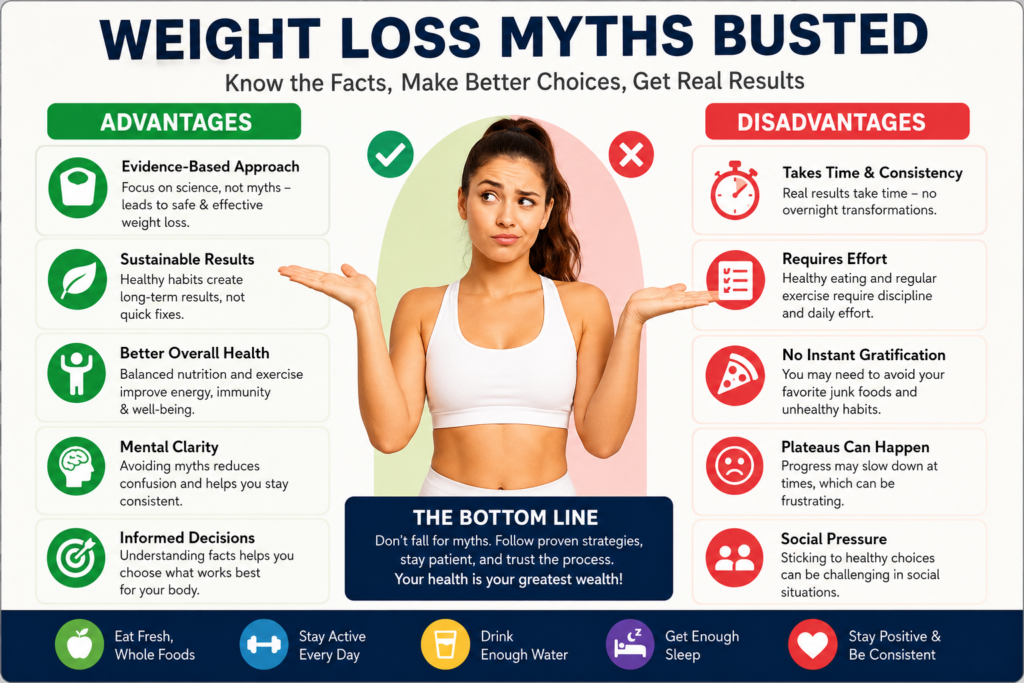
healthy weight loss tips,
best diet for weight loss,
weight loss mistakes,
Weight Loss Myths,
Myth #1: Skipping Meals Helps You Lose Weight Faster
The Myth
Eating fewer meals automatically leads to faster weight loss.
The Reality
Skipping meals often increases hunger later in the day, making overeating more likely. It can also reduce energy levels and make it harder to meet your daily nutrient needs.
Better Approach
Eat balanced meals with protein, fiber, and healthy fats to stay full and maintain consistent energy.
Myth #2: Carbohydrates Always Cause Weight Gain
The Myth
All carbs make you fat.
The Reality
Carbohydrates are your body’s preferred source of energy. Whole grains, fruits, vegetables, beans, and oats provide fiber, vitamins, and minerals that support overall health.
Weight gain is more closely related to consistently eating more calories than your body uses—not carbs alone.
Choose Healthy Carbs
- Oats
- Brown rice
- Quinoa
- Sweet potatoes
- Fruits
- Whole-grain bread
Myth #3: Eating Fat Makes You Fat
The Myth
Dietary fat directly turns into body fat.
The Reality
Healthy fats are essential for hormone production, brain function, and absorbing vitamins A, D, E, and K.
Focus on healthy sources such as:
- Avocados
- Olive oil
- Nuts
- Seeds
- Fatty fish
Myth #4: You Must Exercise Every Day to Lose Weight
The Myth
Missing one workout ruins your progress.
The Reality
Weight loss depends on your overall calorie balance and long-term consistency—not perfection.
Aim for:
- 150–300 minutes of moderate physical activity each week
- Strength training at least two days per week
- Daily movement such as walking and taking the stairs
Myth #5: Detox Diets Melt Belly Fat
The Myth
Juice cleanses and detox teas remove toxins and burn fat.
The Reality
Your liver and kidneys naturally detoxify your body. Detox products may lead to temporary water loss but don’t remove body fat.
Instead, focus on:
- Drinking enough water
- Eating fiber-rich foods
- Limiting ultra-processed foods
- Staying physically active
Myth #6: Eating After 8 PM Causes Weight Gain
The Myth
Late-night eating automatically leads to fat gain.
The Reality
Your total calorie intake throughout the day matters more than the clock.
Late-night snacking can contribute to weight gain if it results in consistently consuming excess calories.
Myth #7: Weight Loss Supplements Are the Best Solution
The Myth
Supplements can replace healthy eating and exercise.
The Reality
No supplement can consistently outperform a balanced diet, regular exercise, quality sleep, and healthy habits.
Be cautious of products promising rapid or effortless weight loss.
Myth #8: Drinking Lemon Water Burns Fat
The Myth
Lemon water melts body fat.
The Reality
Lemon water is a refreshing, low-calorie drink that can help you stay hydrated, but it doesn’t directly burn fat.
Replacing sugary beverages with water or lemon water may support weight management by reducing calorie intake.
Myth #9: You Can Spot Reduce Belly Fat
The Myth
Doing hundreds of crunches burns belly fat.
The Reality
Fat loss occurs throughout the body. Exercises strengthen muscles but don’t target fat loss in a specific area.
The best strategy combines:
- A calorie-controlled diet
- Cardio
- Strength training
- Consistent physical activity
Myth #10: Healthy Foods Can Be Eaten Without Limits
The Myth
Healthy foods contain no calories.
The Reality
Foods like nuts, peanut butter, avocados, and dried fruits are nutritious but also calorie-dense. Portion control still matters.
Myth #11: Sweating Means You’re Burning Fat
The Myth
The more you sweat, the more fat you lose.
The Reality
Sweating is your body’s cooling mechanism. Most weight lost through sweat is water weight, which returns when you rehydrate.
Myth #12: Crash Diets Work Best
The Myth
Eating extremely few calories is the fastest way to lose weight.
The Reality
Crash diets often lead to muscle loss, nutrient deficiencies, fatigue, and rapid weight regain.
Gradual weight loss is generally more sustainable.
Myth #13: Protein Alone Builds a Lean Body
The Myth
Eating lots of protein is enough.
The Reality
Protein is important, but it works best alongside strength training, balanced nutrition, adequate sleep, and recovery.
Myth #14: All Calories Are Exactly the Same
The Myth
Only calorie numbers matter.
The Reality
While calorie balance is important, food quality affects hunger, fullness, energy levels, and nutrient intake. A balanced diet rich in whole foods supports better health.
Myth #15: Weight Loss Is Only About Diet
The Myth
Exercise and lifestyle don’t matter.
The Reality
Successful weight management also depends on:
- Regular physical activity
- Strength training
- Quality sleep
- Stress management
- Consistency
Science-Backed Tips for Healthy Weight Loss
- Eat plenty of vegetables and fruits.
- Include lean protein at every meal.
- Choose whole grains over refined grains.
- Drink enough water daily.
- Limit sugary drinks.
- Build muscle through resistance training.
- Sleep 7–9 hours each night.
- Manage stress with meditation or deep breathing.
- Monitor portion sizes.
- Be patient and consistent.
Foods That Support Sustainable Weight Loss
Include these nutrient-rich foods in your diet:
- Oats
- Eggs
- Greek yogurt
- Chicken breast
- Fish
- Lentils
- Beans
- Broccoli
- Spinach
- Apples
- Berries
- Sweet potatoes
- Brown rice
- Quinoa
- Almonds
- Walnuts
- Chia seeds
- Flaxseeds
Mistakes to Avoid During Your Weight Loss Journey
- Skipping breakfast without a plan
- Drinking sugary beverages
- Eating too quickly
- Following fad diets
- Ignoring sleep
- Overtraining
- Underestimating portion sizes
- Depending only on supplements
- Expecting overnight results
- Comparing your progress to others
Frequently Asked Questions (FAQs)
1. What is the biggest weight loss myth?
One of the biggest myths is that skipping meals helps you lose weight faster. In reality, it can increase hunger and lead to overeating.
2. Are carbohydrates bad for weight loss?
No. Whole-food carbohydrates such as oats, fruits, vegetables, and whole grains can be part of a healthy weight-loss diet.
3. Does drinking water burn fat?
Water doesn’t directly burn fat, but staying hydrated may help control appetite and support normal metabolism.
4. Can I lose belly fat with sit-ups?
Sit-ups strengthen abdominal muscles but do not specifically burn belly fat. Overall fat loss requires a combination of healthy eating and regular physical activity.
5. Are cheat meals okay?
Occasional indulgences can fit into a balanced eating pattern if they don’t regularly lead to excessive calorie intake.
6. How much weight is safe to lose per week?
Many health professionals consider losing about 0.5–1 kg (1–2 pounds) per week to be a sustainable target for many adults, though individual needs vary.
7. Is cardio better than strength training?
Both have benefits. Cardio supports calorie expenditure and heart health, while strength training helps preserve muscle and maintain metabolism during weight loss.
Final Thoughts
Weight loss doesn’t have to be confusing. By ignoring myths and focusing on evidence-based habits, you can build a healthier relationship with food and exercise.
Instead of chasing quick fixes, prioritize nutritious meals, regular movement, sufficient sleep, and realistic goals. Small, consistent changes often lead to the most lasting results.
Remember, successful weight loss is not about perfection—it’s about making healthier choices consistently over time.
Pingback: How Much Water Helps Weight Loss? 5 tips for Water Fat Loss.
Pingback: 20 Best High-Protein Vegetarian Protein Sources for Health
Pingback: Which 7 Foods Naturally Boost Gut Health? A Complete Guide.
Pingback: Foods That Fight Inflammation: The Best Anti-Inflammatory
Pingback: How Exercise Improves Mood: 8 Science-Backed Mental Health
Pingback: Protein-Rich Foods for Fat Loss: 15 Best High-Protein Foods
Pingback: How to Lose Belly Fat Naturally: 5 Simple Exercises
Pingback: 25 Healthy Snacks Under 100 Calories for Weight Loss and Healthy Living
Pingback: How Does a Weak Immune System Affect Your Health?
Pingback: 10 Amazing Top Health Benefits of ginger tea
Pingback: Healthy Carbs vs Bad Carbs: Key Differences, Best Foods
Pingback: 20-Minute Workout at Home for Beginners Without Equipment:
Pingback: Why You Need Healthy Fats: Benefits, Best Food Sources
Pingback: 15 Daily Foods for a Healthy Lifestyle: Science-Backed Guide