
Protein-Rich Foods for Fat Loss: The Ultimate Guide to Losing Weight While Preserving Muscle
Table of Contents
How to find out Protein-Rich Foods for Fat Loss. Losing weight is one of the most common health goals, but many people struggle to find a diet that is both effective and sustainable. While cutting calories is important, the quality of the calories you consume matters just as much. One nutrient consistently stands out in weight-loss research: protein.
Protein-rich foods can help you lose fat, preserve lean muscle, reduce hunger, and improve your metabolism. Whether you’re trying to lose a few pounds or completely transform your lifestyle, increasing your protein intake can make your journey easier and more successful.
In this comprehensive guide, you’ll learn everything you need to know about protein-rich foods for fat loss, including the best foods to eat, meal planning tips, common mistakes, and frequently asked questions.
Why Protein Is Essential for Fat Loss
Protein is one of the three major macronutrients alongside carbohydrates and fats. Unlike carbs and fats, protein plays a vital role in building and repairing muscles, producing hormones, supporting the immune system, and maintaining overall health.
During weight loss, your body can lose both fat and muscle. Eating enough protein helps preserve lean muscle while encouraging your body to burn more fat.
Benefits include:
- Keeps you full longer
- Reduces cravings
- Supports muscle recovery
- Helps preserve lean muscle
- Boosts calorie burning through digestion
- Improves overall body composition
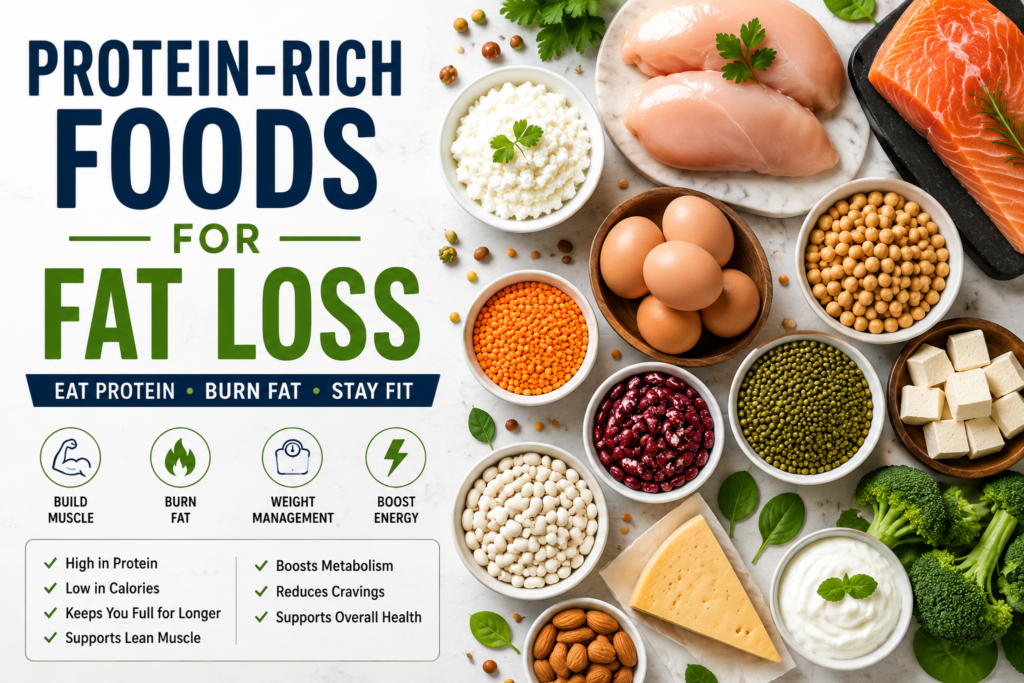
How Protein Helps Burn Fat
1. Increases Satiety
Protein is the most filling macronutrient. High-protein meals help reduce hunger hormones and increase fullness hormones, making it easier to avoid overeating.
2. Preserves Muscle Mass
When losing weight, maintaining muscle is essential because muscle burns more calories than fat. A protein-rich diet supports muscle maintenance while reducing body fat.
3. Boosts Metabolism
Protein has the highest thermic effect of food (TEF). Your body uses more energy digesting protein than carbohydrates or fats, slightly increasing daily calorie burn.
4. Supports Exercise Recovery
Protein repairs muscle tissue after workouts, helping you recover faster and perform better during exercise.
Top Benefits of a High-Protein Diet
- Supports healthy fat loss
- Helps maintain lean muscle
- Reduces unnecessary snacking
- Keeps blood sugar levels stable
- Improves workout recovery
- Enhances metabolism
- Promotes healthy aging
- Supports stronger bones
- Encourages healthier eating habits
- Makes long-term weight management easier
Best Protein-Rich Foods for Fat Loss
| Food | Protein (Approx.) | Benefits |
|---|---|---|
| Eggs | 6g each | Complete protein, filling |
| Chicken Breast | 31g per 100g | Lean, low in fat |
| Turkey | 29g per 100g | High-quality protein |
| Fish | 22g per 100g | Rich in omega-3 fats |
| Greek Yogurt | 10g per 100g | Supports gut health |
| Cottage Cheese | 11g per 100g | Slow-digesting protein |
| Paneer (Low-fat) | 18g per 100g | Great vegetarian option |
| Lentils | 9g per 100g cooked | Fiber + protein |
| Chickpeas | 9g per 100g cooked | Filling and nutritious |
| Kidney Beans | 9g per 100g cooked | Rich in fiber |
| Tofu | 15g per 100g | Excellent vegan protein |
| Tempeh | 20g per 100g | Fermented plant protein |
| Edamame | 11g per 100g | High-quality soy protein |
| Almonds | 21g per 100g | Healthy fats and protein |
| Pumpkin Seeds | 30g per 100g | High protein snack |
Animal-Based Protein Sources
Eggs
Eggs are one of the most nutritious foods available. They provide complete protein, healthy fats, vitamins, and minerals while keeping you full for longer.
Chicken Breast
Skinless chicken breast is one of the best lean protein sources. It is low in calories but high in protein, making it ideal for fat loss.
Fish
Fish such as salmon, tuna, cod, and sardines provide protein along with heart-healthy omega-3 fatty acids.
Greek Yogurt
Greek yogurt contains more protein than regular yogurt and can be enjoyed as breakfast or a healthy snack.
Cottage Cheese
Rich in casein protein, cottage cheese digests slowly, making it ideal before bedtime.
Plant-Based Protein Sources
Lentils
Packed with protein and fiber, lentils keep you full and support healthy digestion.
Chickpeas
Perfect for salads, curries, and snacks, chickpeas provide protein along with important minerals.
Kidney Beans
Kidney beans are rich in protein, fiber, and antioxidants that support overall health.
Tofu
Tofu is made from soybeans and provides complete plant protein while being low in calories.
Tempeh
Tempeh contains more protein than tofu and is also rich in probiotics due to fermentation.
Sample High-Protein Meal Plan
Breakfast
- 2 eggs
- Greek yogurt
- Oatmeal
- Berries
Protein: 30g
Morning Snack
- Handful of almonds
- Apple
Protein: 8g
Lunch
- Grilled chicken breast
- Brown rice
- Mixed vegetables
Protein: 40g
Afternoon Snack
- Cottage cheese
- Cucumber slices
Protein: 18g
Dinner
- Grilled salmon
- Broccoli
- Sweet potato
Protein: 35g
Evening Snack
- Protein smoothie with milk
Protein: 20g
Total Daily Protein: Approximately 150g
Common Mistakes to Avoid
1. Eating Too Little Protein
Many people consume plenty of carbohydrates but very little protein.
2. Ignoring Calories
Protein supports fat loss, but consuming excessive calories from any source can slow progress.
3. Skipping Strength Training
Combining resistance exercise with protein intake helps maintain muscle while losing fat.
4. Depending Only on Protein Supplements
Whole foods should remain your primary protein source.
5. Not Drinking Enough Water
Higher protein intake increases hydration needs, so drink plenty of water throughout the day.
Frequently Asked Questions (FAQ)
Is protein good for fat loss?
Yes. Protein helps reduce hunger, preserve muscle, and increase calorie burning during digestion.
How much protein should I eat daily?
Many active adults aiming for fat loss benefit from around 1.2–2.0 grams of protein per kilogram of body weight, depending on activity level and overall health.
Are eggs good for weight loss?
Yes. Eggs are nutrient-dense, filling, and high in quality protein.
Can vegetarians lose fat with a high-protein diet?
Absolutely. Lentils, beans, tofu, tempeh, paneer, and Greek yogurt are excellent vegetarian protein sources.
Should I drink protein shakes every day?
Protein shakes can be convenient when you struggle to meet your protein needs through food, but whole foods should make up most of your diet.
Which protein is best for belly fat?
No specific protein burns belly fat directly. Consistently eating enough protein while maintaining a calorie deficit and exercising helps reduce overall body fat, including abdominal fat.
Conclusion
Protein-rich foods are one of the most effective tools for healthy and sustainable fat loss. They help control hunger, preserve lean muscle, improve metabolism, and support long-term weight management.
Instead of following restrictive diets, focus on building balanced meals that include high-quality protein, vegetables, healthy fats, and whole grains. Pair your nutrition with regular exercise, strength training, quality sleep, and consistency to achieve the best results.
Remember that lasting fat loss is not about quick fixes—it’s about creating healthy habits you can maintain for life.
Pingback: How Does a Weak Immune System Affect Your Health?
Pingback: Which 7 Foods Naturally Boost Gut Health? A Complete Guide.
Pingback: How Much Water Helps Weight Loss? 5 tips for Water Fat Loss.
Pingback: Foods That Fight Inflammation: The Best Anti-Inflammatory
Pingback: Foods That Help Reduce Belly Fat
Pingback: How can you gain weight in a healthy way? 15 Best foods to eat for Healthy weight gain?
Pingback: Running vs Walking: Which Is Better for Fat Loss?
Pingback: Which Is the Best Breakfast for Weight Loss? A Complete Guide to Healthy Morning Meals
Pingback: How to Lose Belly Fat Naturally: 5 Simple Exercises
Hi,
Great article! I’ve been focusing on eating more protein-rich foods for fat loss, and pairing that with GLP-1 support has made a big difference for me. I also found this guide on saving money on GLP-1 medications really helpful: https://rolandmedicalweightloss.com/glp-1-pills-price-discount-codes/
Pingback: Shah Rukh Khan Morning Fitness Habits: 5 Healthy Ways
Pingback: Turmeric Daily Benefits: 10 Science Add Turmeric Your Diet
Pingback: Which is the best Healthy Snacks Under 100 Calories
Pingback: 20-Minute Workout at Home for Beginners Without Equipment:
Pingback: 10 Amazing Top Health Benefits of ginger tea
Pingback: 25+ Age Fitness Secrets: SRK-Inspired Habits for a Health
Pingback: Weight Loss Myths Busted: 15 Common Myths That Stopping
Pingback: Daily Habits for Mental Wellness: 10 Simple Practices
Pingback: 25 Healthy Snacks Under 100 Calories for Weight Loss and Healthy Living
Pingback: How Exercise Improves Mood: 8 Science-Backed Mental Health
Pingback: Habits That Strengthen Immunity: Simple Daily Practices
Pingback: 20 Best High-Protein Vegetarian Protein Sources for Health