
Foods That Fight Inflammation: The Best Anti-Inflammatory Foods for Better Health
Foods That Fight Inflammation Inflammation is a natural defense mechanism that helps the body fight infections, injuries, and harmful substances. However, when inflammation becomes chronic, it can contribute to serious health conditions such as heart disease, diabetes, arthritis, obesity, and even certain cancers.
The good news is that your diet can play a major role in reducing inflammation naturally. Many foods contain powerful antioxidants, vitamins, minerals, and healthy fats that help combat inflammation and support overall wellness.
In this comprehensive guide, we’ll explore the best foods that fight inflammation, how they work, and how you can incorporate them into your daily diet.
Table of Contents
- What Is Inflammation?
- Acute vs. Chronic Inflammation
- Why Reducing Inflammation Matters
- Top Foods That Fight Inflammation
- Fatty Fish
- Berries
- Leafy Green Vegetables
- Avocados
- Nuts
- Olive Oil
- Tomatoes
- Turmeric
- Ginger
- Green Tea
- Garlic
- Dark Chocolate
- Foods That Cause Inflammation
- Lifestyle Habits to Reduce Inflammation
- Frequently Asked Questions (Q&A)
- Conclusion
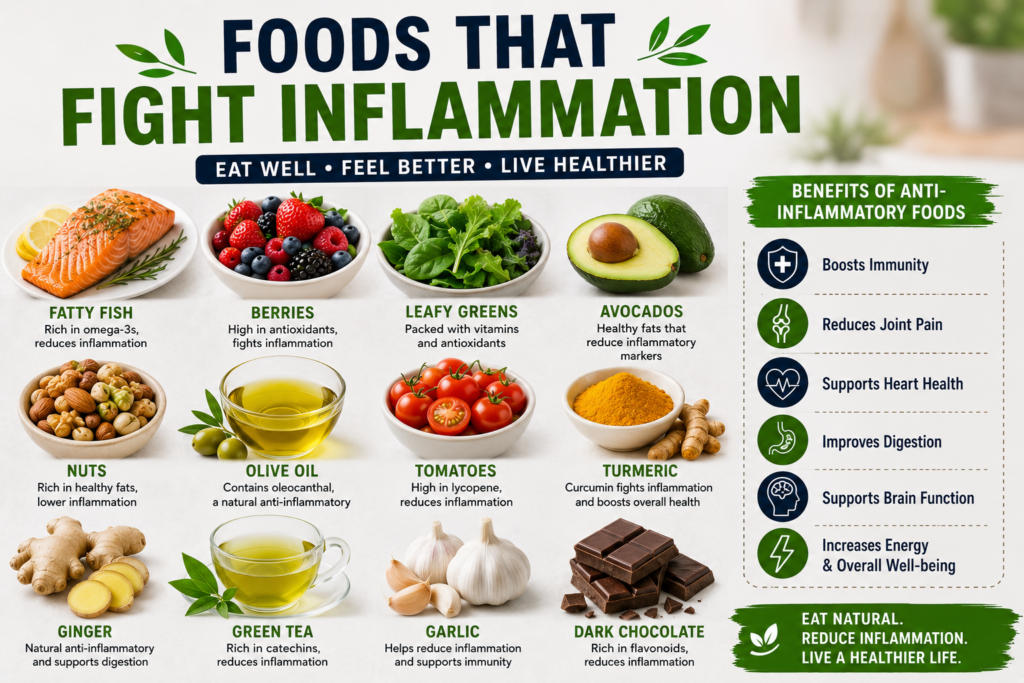
What Is Inflammation?
Inflammation is the body’s natural response to injury, infection, or harmful stimuli. It helps the immune system protect the body and begin the healing process.
Short-term inflammation is beneficial and necessary. However, chronic inflammation can silently damage tissues and organs over time.
Common signs of inflammation include:
- Swelling
- Redness
- Pain
- Fatigue
- Joint stiffness
Chronic inflammation may occur without noticeable symptoms, making prevention especially important.
Acute vs. Chronic Inflammation
Acute Inflammation
Acute inflammation is short-term and occurs when the body responds to injury or infection.
Examples include:
- Cuts and wounds
- Sprains
- Common infections
Chronic Inflammation
Chronic inflammation develops when the immune system remains active for extended periods.
It is linked to:
- Heart disease
- Type 2 diabetes
- Arthritis
- Alzheimer’s disease
- Obesity
- Certain cancers
Why Reducing Inflammation Matters
Managing inflammation can help:
- Improve heart health
- Reduce joint pain
- Support healthy aging
- Strengthen the immune system
- Improve digestion
- Lower disease risk
- Increase energy levels
One of the most effective ways to reduce inflammation is through nutrition.
Top Foods That Fight Inflammation
1. Fatty Fish
Fatty fish are among the most powerful anti-inflammatory foods available.
Best Choices
- Salmon
- Sardines
- Mackerel
- Tuna
Why They Help
These fish contain omega-3 fatty acids, which help reduce inflammatory markers in the body.
Health Benefits
- Supports heart health
- Improves brain function
- Reduces joint inflammation
- Supports healthy cholesterol levels
Recommended Intake
Consume fatty fish at least two times per week.
2. Berries
Berries are packed with antioxidants called anthocyanins.
Best Berries
- Blueberries
- Strawberries
- Blackberries
- Raspberries
Benefits
- Reduce oxidative stress
- Support immune health
- Protect cells from damage
- Promote healthy aging
How to Eat
- Smoothies
- Yogurt bowls
- Oatmeal toppings
- Healthy snacks
3. Leafy Green Vegetables
Leafy greens are rich in vitamins, minerals, and antioxidants.
Best Options
- Spinach
- Kale
- Swiss Chard
- Collard Greens
Benefits
- Reduce inflammation naturally
- Support detoxification
- Improve digestive health
- Strengthen immunity
Try including greens in salads, soups, and smoothies.
4. Avocados
Avocados are loaded with healthy monounsaturated fats.
Benefits
- Reduce inflammatory markers
- Support heart health
- Improve cholesterol levels
- Promote skin health
Nutrients
- Fiber
- Potassium
- Vitamin E
- Healthy fats
5. Nuts
Nuts are rich in healthy fats, protein, and antioxidants.
Best Choices
- Almonds
- Walnuts
- Pistachios
Benefits
- Support heart health
- Reduce inflammation
- Help control blood sugar
- Provide lasting energy
A small handful daily is usually sufficient.
6. Extra Virgin Olive Oil
Olive oil is a cornerstone of the Mediterranean diet.
Why It Works
It contains oleocanthal, a compound with anti-inflammatory properties similar to certain pain-relief medications.
Benefits
- Supports cardiovascular health
- Reduces inflammation
- Improves cholesterol levels
Use it in salads and cooking whenever possible.
7. Tomatoes
Tomatoes contain lycopene, a powerful antioxidant.
Benefits
- Protect cells from damage
- Support heart health
- Help reduce inflammation
Cooked tomatoes often provide more absorbable lycopene than raw tomatoes.
8. Turmeric
Turmeric is one of the most researched anti-inflammatory spices.
Active Compound
Curcumin
Benefits
- Reduces inflammation
- Supports brain health
- Helps relieve joint discomfort
How to Use
- Golden milk
- Curries
- Soups
- Smoothies
Combining turmeric with black pepper improves absorption.
9. Ginger
Ginger has been used in traditional medicine for centuries.
Benefits
- Reduces inflammation
- Supports digestion
- Helps relieve nausea
- Supports immune health
Fresh ginger tea is an excellent daily choice.
10. Green Tea
Green tea contains powerful antioxidants called catechins.
Benefits
- Reduces inflammation
- Supports metabolism
- Protects against oxidative stress
- Supports brain function
Enjoy 2-3 cups daily for maximum benefits.
11. Garlic
Garlic contains sulfur compounds that help strengthen the immune system.
Benefits
- Supports heart health
- Reduces inflammation
- May help lower blood pressure
Fresh garlic provides the greatest health benefits.
12. Dark Chocolate
High-quality dark chocolate contains flavonoids that may help reduce inflammation.
Benefits
- Supports heart health
- Provides antioxidants
- May improve mood
Choose dark chocolate containing at least 70% cocoa.
Foods That Cause Inflammation
Limiting certain foods can help reduce chronic inflammation.
Foods to Avoid
- Sugary drinks
- Processed foods
- Refined carbohydrates
- Excessive alcohol
- Deep-fried foods
- Processed meats
- Trans fats
Replacing these foods with whole, nutrient-dense options can significantly improve health.
Lifestyle Habits to Reduce Inflammation
Along with diet, these habits can help:
Exercise Regularly
Aim for at least 150 minutes of moderate activity per week.
Get Quality Sleep
Adults should aim for 7-9 hours of sleep nightly.
Manage Stress
Meditation, yoga, and deep breathing can help lower inflammation.
Stay Hydrated
Proper hydration supports every system in the body.
Avoid Smoking
Smoking contributes significantly to chronic inflammation.
Frequently Asked Questions (Q&A)
Q1. What is the best food for reducing inflammation?
Fatty fish rich in omega-3 fatty acids are among the most effective anti-inflammatory foods.
Q2. Can inflammation be reduced through diet alone?
Diet can significantly reduce inflammation, but exercise, sleep, and stress management are also important.
Q3. Is coffee inflammatory?
Moderate coffee consumption may actually provide anti-inflammatory benefits for many people.
Q4. How quickly can an anti-inflammatory diet work?
Some people notice improvements within a few weeks, while long-term benefits develop over months.
Q5. Is turmeric really effective for inflammation?
Yes. Curcumin, the active compound in turmeric, has been extensively studied for its anti-inflammatory properties.
Q6. Are fruits anti-inflammatory?
Many fruits, especially berries, cherries, and oranges, contain antioxidants that help fight inflammation.
Conclusion
Inflammation is a natural part of the body’s defense system, but chronic inflammation can contribute to numerous health problems. Fortunately, making smart dietary choices can help reduce inflammation naturally.
Foods such as fatty fish, berries, leafy greens, avocados, nuts, olive oil, turmeric, ginger, and green tea provide powerful anti-inflammatory benefits that support overall health and wellness.
By combining an anti-inflammatory diet with healthy lifestyle habits, you can improve your long-term health, boost energy levels, and reduce the risk of chronic disease.
Pingback: Foods That Help Reduce Belly Fat
Pingback: Which is the best Healthy Snacks Under 100 Calories
Pingback: Which Is the Best Breakfast for Weight Loss? A Complete Guide to Healthy Morning Meals
Pingback: What Are the Top 7 Health Benefits of Garlic?
Pingback: Which Foods That Burn Fat Naturally and Support Healthy.
Pingback: 3 Weight loss Mistakes Slowing Down Your Weight Loss
Pingback: Best Vitamin C Rich Foods for Strong Immunity
Pingback: Signs Your Immune System Is Weak: 10 Warning Signs
Pingback: The Importance of Health Awareness - Health With AI
Pingback: How Much Water Helps Weight Loss? 5 tips for Water Fat Loss.
Pingback: Habits That Strengthen Immunity: Simple Daily Practices
Pingback: Morning Drink for Better Immunity: Benefits, Recipe & Daily Health Tips
Pingback: How can you gain weight in a healthy way? 15 Best foods to eat for Healthy weight gain?
Pingback: Running vs Walking: Which Is Better for Fat Loss?
Pingback: Turmeric Daily Benefits: 10 Science Add Turmeric Your Diet
Pingback: 10 Amazing Top Health Benefits of ginger tea
Pingback: 5 Foods That Boost Immunity Naturally | Best Foods for a Strong Immune System
Pingback: How Does a Weak Immune System Affect Your Health?
Pingback: Healthy Breakfast, Lunch, and Dinner to Lose Weight
Pingback: Which 7 Foods Naturally Boost Gut Health? A Complete Guide.
Pingback: Weight Loss Myths Busted: 15 Common Myths That Stopping
Pingback: Protein-Rich Foods for Fat Loss: 15 Best High-Protein Foods
Pingback: How to Lose Belly Fat Naturally: 5 Simple Exercises
Pingback: 25 Healthy Snacks Under 100 Calories for Weight Loss and Healthy Living
Pingback: 25+ Age Fitness Secrets: SRK-Inspired Habits for a Health
Pingback: How Exercise Improves Mood: 8 Science-Backed Mental Health
Pingback: 10 Min Walking vs Running: Which Is Better for Your Health?