
Have you been getting sick more often than usual? Do you constantly feel tired, even after getting enough sleep? These could be signs your immune system is weak.
Your immune system is your body’s natural defense mechanism against viruses, bacteria, and other harmful pathogens. When it becomes weakened, your body struggles to fight infections effectively, making you more vulnerable to illness.
In this article, you’ll discover the most common signs of a weak immune system, what causes low immunity, and how to strengthen your immune system naturally.
What Does the Immune System Do?
The immune system is a complex network of cells, tissues, and organs that work together to protect your body from harmful invaders. A healthy immune system identifies and destroys bacteria, viruses, fungi, and toxins before they can make you sick.
However, factors such as stress, poor nutrition, lack of sleep, and unhealthy lifestyle habits can weaken your immune response over time.
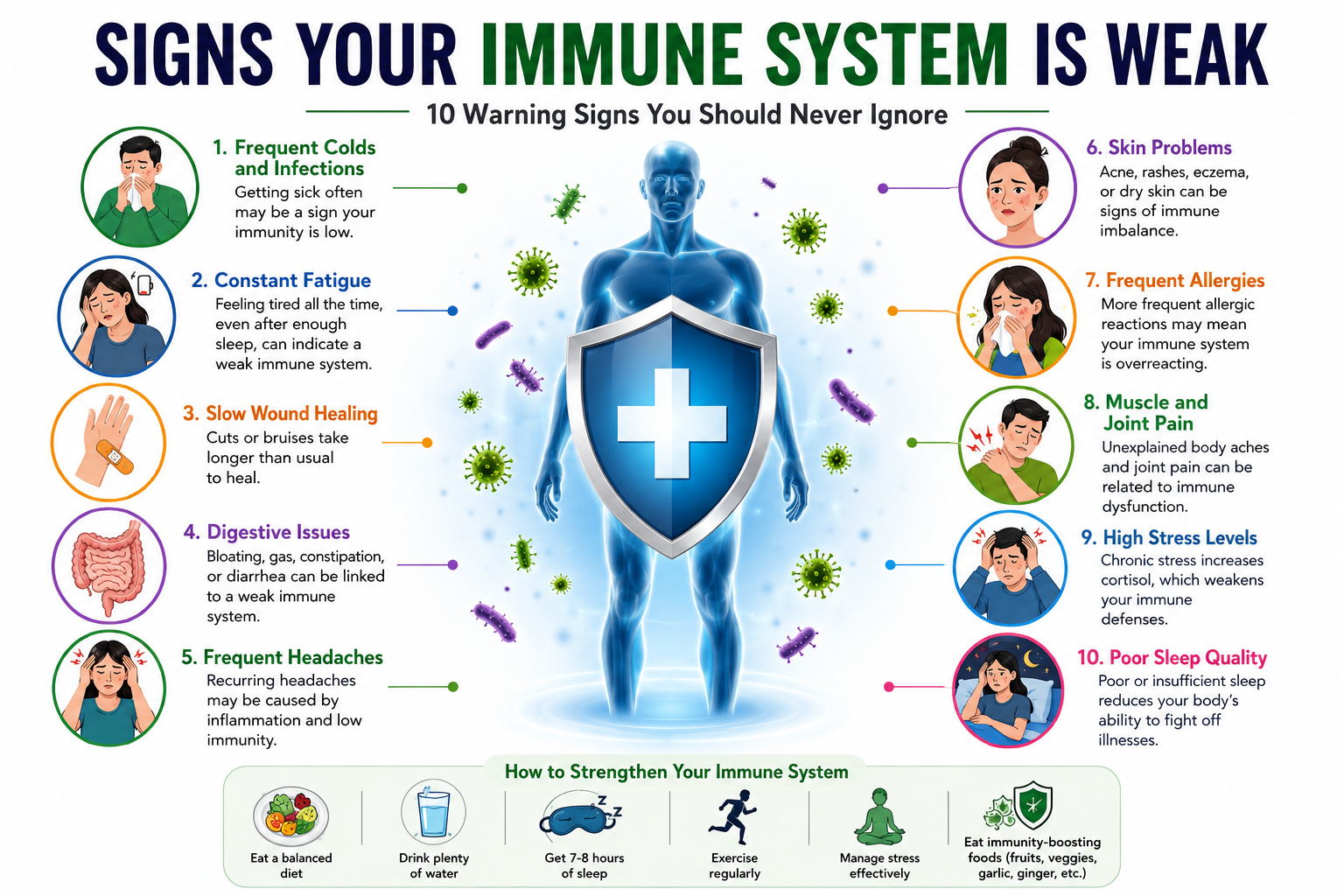
10 Signs Your Immune System Is Weak
1. You Frequently Catch Colds and Infections
One of the most common signs your immune system is weak is getting frequent colds, flu, or infections. If you find yourself constantly battling illnesses throughout the year, your immune defenses may not be functioning properly.
2. Constant Fatigue and Low Energy
Feeling tired all the time, even after a full night’s sleep, can indicate that your body is using extra energy to fight off infections and maintain immune function.
3. Slow Wound Healing
Cuts, bruises, and minor injuries should heal within a reasonable amount of time. If your wounds take longer than usual to recover, it could be a sign that your immune system is struggling.
4. Digestive Problems
Did you know that a large portion of your immune system is located in your gut?
Frequent bloating, constipation, diarrhea, or stomach discomfort may suggest poor gut health, which can negatively impact immunity.
5. Frequent Headaches
Recurring headaches may sometimes be linked to chronic inflammation, stress, infections, or an overworked immune system.
6. Skin Problems
Skin conditions such as eczema, rashes, acne, and excessive dryness can sometimes signal immune system imbalances.
7. Frequent Allergies
If your allergies seem worse than normal or occur more frequently, your immune system may be reacting improperly to harmless substances.
8. Muscle and Joint Pain
Unexplained body aches, stiffness, or joint discomfort can be associated with inflammation and immune dysfunction.
9. High Stress Levels
Chronic stress increases cortisol production, which can suppress immune function and reduce your body’s ability to fight infections.
10. Poor Sleep Quality
Sleep and immunity are closely connected. If you struggle with insomnia or poor sleep quality, your immune system may not have enough time to repair and regenerate.
What Causes a Weak Immune System?
Several lifestyle and environmental factors can weaken immunity over time:
Poor Nutrition
A diet lacking vitamins, minerals, antioxidants, and protein can negatively affect immune cell production and function.
Lack of Sleep
Adults generally need 7–9 hours of quality sleep each night for optimal immune health.
Chronic Stress
Long-term stress can suppress immune responses and increase inflammation throughout the body.
Lack of Physical Activity
Regular exercise helps improve circulation and supports healthy immune function.
Smoking and Excessive Alcohol Consumption
These habits can damage immune cells and make it harder for your body to fight infections.
Dehydration
Water supports nutrient transport, toxin removal, and overall immune system performance.
How to Strengthen Your Immune System Naturally
If you recognize several of the warning signs above, there are simple steps you can take to improve your immune health.
Eat Immune-Boosting Foods
Focus on nutrient-rich foods such as:
- Citrus fruits
- Garlic
- Ginger
- Turmeric
- Spinach
- Yogurt
- Almonds
- Berries
Prioritize Quality Sleep
Aim for 7–9 hours of uninterrupted sleep every night to help your body repair and strengthen immune defenses.
Stay Physically Active
Regular exercise improves blood circulation and supports healthy immune responses.
Manage Stress
Meditation, yoga, deep breathing exercises, and spending time outdoors can help reduce stress levels.
Drink Plenty of Water
Hydration supports every system in the body, including your immune system.
Avoid Smoking
Eliminating tobacco products can significantly improve immune function and overall health.
When Should You See a Doctor?
While occasional illness is normal, consult a healthcare professional if you experience:
- Frequent infections
- Persistent fatigue
- Unexplained weight loss
- Chronic digestive issues
- Slow wound healing
- Symptoms that continue for several weeks
A doctor can help identify underlying causes and recommend appropriate treatment.
Final Thoughts
Quick Overview: Signs Your Immune System Is Weak
| Warning Sign | What It May Indicate |
|---|---|
| Frequent Colds & Infections | Your body struggles to fight viruses and bacteria effectively. |
| Constant Fatigue | Your immune system may be working overtime to protect your body. |
| Slow Wound Healing | Reduced ability to repair damaged tissues efficiently. |
| Digestive Problems | Poor gut health can negatively affect immune function. |
| Frequent Headaches | Chronic inflammation or immune system imbalance. |
| Skin Problems | Eczema, acne, rashes, or irritation linked to immunity issues. |
| Frequent Allergies | Overactive or poorly regulated immune responses. |
| Muscle & Joint Pain | Inflammation caused by immune dysfunction. |
| High Stress Levels | Increased cortisol can suppress immune defenses. |
| Poor Sleep Quality | Lack of sleep reduces immune cell production and recovery. |
Common Causes of a Weak Immune System
| Cause | Impact on Immunity |
|---|---|
| Poor Diet | Lack of essential vitamins and minerals weakens immune cells. |
| Sleep Deprivation | Reduces the body’s ability to repair and regenerate. |
| Chronic Stress | Suppresses immune response and increases inflammation. |
| Lack of Exercise | Decreases circulation and immune efficiency. |
| Smoking | Damages immune cells and increases infection risk. |
| Excessive Alcohol Consumption | Weakens the body’s defense mechanisms. |
| Dehydration | Slows down nutrient transport and toxin removal. |
Best Foods to Boost Immunity
| Food | Key Nutrient | Benefit |
|---|---|---|
| Oranges | Vitamin C | Supports immune cell function. |
| Garlic | Allicin | Helps fight infections naturally. |
| Ginger | Antioxidants | Reduces inflammation. |
| Yogurt | Probiotics | Improves gut health and immunity. |
| Almonds | Vitamin E | Protects immune cells from damage. |
| Turmeric | Curcumin | Supports healthy inflammatory response. |
| Spinach | Iron & Vitamin C | Strengthens immune defenses. |
| Berries | Antioxidants | Helps protect cells from oxidative stress. |
Recognizing the signs your immune system is weak is the first step toward improving your overall health. Frequent illnesses, constant fatigue, slow wound healing, digestive problems, and poor sleep should never be ignored.
The good news is that healthy lifestyle habits such as eating nutritious foods, exercising regularly, managing stress, and getting enough sleep can significantly strengthen your immune system over time.
Small daily improvements can lead to a healthier body, stronger immunity, and a better quality of life.
Pingback: Morning Drink for Better Immunity: Benefits, Recipe & Daily Health Tips
Pingback: Best Vitamin C Rich Foods for Strong Immunity
Pingback: 3 Weight loss Mistakes Slowing Down Your Weight Loss
Pingback: Which Foods That Burn Fat Naturally and Support Healthy.
Pingback: How Much Water Helps Weight Loss? 5 tips for Water Fat Loss.
Pingback: What Are the Top 7 Health Benefits of Garlic?
Pingback: 10 Amazing Top Health Benefits of ginger tea
Pingback: 20-Minute Workout at Home for Beginners Without Equipment:
Pingback: Which 7 Foods Naturally Boost Gut Health? A Complete Guide.
Pingback: Daily Habits for Mental Wellness: 10 Simple Practices
Pingback: Healthy Breakfast, Lunch, and Dinner to Lose Weight
Pingback: Shah Rukh Khan Morning Fitness Habits: 5 Healthy Ways
Pingback: Foods That Fight Inflammation: The Best Anti-Inflammatory
Pingback: Turmeric Daily Benefits: 10 Science Add Turmeric Your Diet
Pingback: How Exercise Improves Mood: 8 Science-Backed Mental Health
Pingback: How to Lose Belly Fat Naturally: 5 Simple Exercises
Pingback: 25 Healthy Snacks Under 100 Calories for Weight Loss and Healthy Living