
Turmeric Daily Benefits: 10 Science-Backed Reasons to Add Turmeric to Your Diet
Introduction
Turmeric has been used for thousands of years in traditional medicine and cooking, especially in India and other parts of Asia. Known for its bright yellow color and distinctive flavor, turmeric is much more than just a spice. It contains powerful natural compounds that may support overall health and wellness.
The most important active ingredient in turmeric is curcumin, a natural compound known for its antioxidant and anti-inflammatory properties. Modern research suggests that regular consumption of turmeric may help support immunity, joint health, heart health, brain function, and overall well-being.
In this article, we’ll explore the daily benefits of turmeric, how it works, the best ways to consume it, potential side effects, and answers to common questions.
Table of Contents
- What Is Turmeric?
- Key Nutrients Found in Turmeric
- Top Daily Benefits of Turmeric
- How Turmeric Supports Overall Health
- Best Ways to Consume Turmeric Daily
- How Much Turmeric Should You Take?
- Potential Side Effects and Precautions
- Frequently Asked Questions (Q&A)
- Conclusion
What Is Turmeric?
Turmeric is a flowering plant from the ginger family. The root of the plant is dried and ground into the bright yellow spice commonly used in curries and traditional remedies.
Turmeric contains several beneficial compounds called curcuminoids, with curcumin being the most studied.
For centuries, turmeric has been used in Ayurveda and traditional medicine to support digestion, reduce discomfort, and promote overall wellness.
Key Nutrients Found in Turmeric
Turmeric contains several beneficial nutrients and plant compounds, including:
These nutrients contribute to turmeric’s reputation as a powerful health-supporting spice.
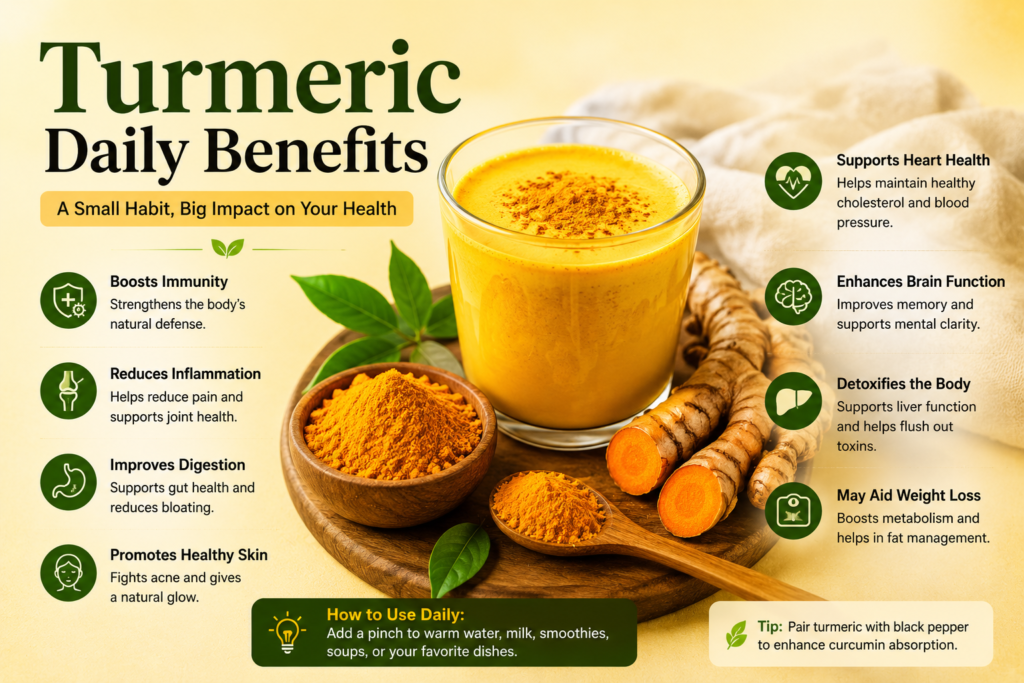
Top Daily Benefits of Turmeric
1. Helps Reduce Inflammation
One of turmeric’s most well-known benefits is its ability to help reduce inflammation.
Why This Matters
Chronic inflammation has been linked to:
- Heart disease
- Arthritis
- Type 2 diabetes
- Obesity
- Certain cancers
Curcumin may help support the body’s natural inflammatory response, making turmeric a popular addition to a healthy lifestyle.
2. Rich in Powerful Antioxidants
Turmeric contains compounds that help protect the body against oxidative stress.
Benefits of Antioxidants
- Protect cells from damage
- Support healthy aging
- Promote overall wellness
- Support immune function
Antioxidants play an important role in maintaining long-term health.
3. Supports Immune Health
A healthy immune system is essential for protecting the body from illness.
How Turmeric Helps
Turmeric’s antioxidant and anti-inflammatory properties may help support normal immune function and overall health.
Adding turmeric to your diet can be part of a balanced approach to wellness.
4. Promotes Joint Health
Many people use turmeric to support joint comfort and mobility.
Benefits for Joints
- Supports healthy movement
- Helps maintain joint flexibility
- Supports an active lifestyle
This is one reason turmeric supplements have become increasingly popular among adults.
5. Supports Heart Health
Heart health is a major concern worldwide.
Potential Benefits
Turmeric may help support:
- Healthy blood vessel function
- Normal cholesterol levels
- Overall cardiovascular health
When combined with a healthy diet and exercise, turmeric can be part of a heart-friendly lifestyle.
6. May Support Brain Function
Researchers continue to study curcumin’s role in brain health.
Possible Benefits
- Supports memory
- Promotes healthy cognitive function
- Helps protect brain cells from oxidative stress
Although more research is needed, early findings are promising.
7. Supports Healthy Digestion
Turmeric has traditionally been used to support digestive health.
Benefits
- Supports digestion
- Helps maintain gut health
- Supports normal digestive function
Many people enjoy turmeric tea after meals for digestive support.
8. May Support Healthy Skin
Healthy skin starts from within.
Benefits
- Antioxidant support
- Helps combat oxidative stress
- Supports overall skin wellness
Turmeric is often included in skincare products and wellness routines.
9. Supports Exercise Recovery
People with active lifestyles often seek foods that support recovery.
Benefits
- Helps support muscle recovery
- Supports overall physical wellness
- Complements an active lifestyle
Turmeric is frequently included in post-workout nutrition plans.
10. Easy to Add to Your Daily Diet
One of turmeric’s greatest advantages is its versatility.
Ways to Use Turmeric
- Golden milk
- Smoothies
- Soups
- Curries
- Rice dishes
- Herbal teas
Even small amounts can easily fit into a balanced diet.
How Turmeric Supports Overall Health
Turmeric works through multiple mechanisms, including:
- Antioxidant activity
- Support for the body’s natural inflammatory response
- Cellular protection
- Immune system support
This combination makes turmeric one of the most researched spices in the world.
Best Ways to Consume Turmeric Daily
Golden Milk
A traditional drink made with:
- Milk or plant-based milk
- Turmeric
- Black pepper
- Cinnamon (optional)
Turmeric Tea
A warm and soothing way to enjoy turmeric.
Smoothies
Add a small amount of turmeric to fruit smoothies.
Cooking
Use turmeric in:
- Curries
- Soups
- Vegetables
- Rice recipes
Why Black Pepper Matters
Curcumin is not easily absorbed by the body.
Black pepper contains a compound called piperine, which may significantly improve curcumin absorption.
For this reason, many experts recommend consuming turmeric with black pepper.
How Much Turmeric Should You Take?
For general dietary use:
- ½ to 1 teaspoon of turmeric powder daily is commonly used in cooking.
The ideal amount varies depending on individual needs, health conditions, and dietary habits.
Always consult a healthcare professional before taking high-dose supplements.
Potential Side Effects and Precautions
Turmeric is generally considered safe when consumed in food amounts.
However, excessive consumption may cause:
- Upset stomach
- Nausea
- Digestive discomfort
People taking blood-thinning medications or managing medical conditions should consult a healthcare professional before using turmeric supplements.
Frequently Asked Questions (Q&A)
Q1. Is it safe to consume turmeric every day?
Yes. Most people can safely consume turmeric daily as part of a balanced diet.
Q2. What is the best time to take turmeric?
Turmeric can be consumed with meals, in tea, or as part of a healthy daily routine.
Q3. Does turmeric boost immunity?
Turmeric may support normal immune function because of its antioxidant properties.
Q4. Can turmeric help with inflammation?
Curcumin, the active compound in turmeric, is widely studied for its role in supporting the body’s natural inflammatory response.
Q5. Should turmeric be taken with black pepper?
Yes. Black pepper may improve the absorption of curcumin.
Q6. Can turmeric support weight management?
Turmeric is not a weight-loss solution, but it can be part of a healthy diet and active lifestyle.
Conclusion
Turmeric is one of the most powerful and well-researched spices available today. From supporting immune health and joint function to providing antioxidant protection and promoting overall wellness, turmeric offers numerous potential benefits when consumed regularly.
While turmeric is not a miracle cure, incorporating it into a balanced diet may help support long-term health. Whether enjoyed in golden milk, tea, smoothies, or everyday meals, turmeric is an easy and natural way to add more nutrition to your daily routine.
As with any health practice, consistency and a healthy lifestyle are key to experiencing the greatest benefits.
Pingback: Foods That Fight Inflammation: The Best Anti-Inflammatory
Pingback: How can you gain weight in a healthy way? 15 Best foods to eat for Healthy weight gain?
Pingback: Habits That Strengthen Immunity: Simple Daily Practices
Pingback: What Are the Top 7 Health Benefits of Garlic?
Pingback: Which Foods That Burn Fat Naturally and Support Healthy.
Pingback: Best Vitamin C Rich Foods for Strong Immunity
Pingback: Morning Drink for Better Immunity: Benefits, Recipe & Daily Health Tips
Pingback: 5 Foods That Boost Immunity Naturally | Best Foods for a Strong Immune System
Pingback: 10 Amazing Top Health Benefits of ginger tea
Pingback: Which Is the Best Breakfast for Weight Loss? A Complete Guide to Healthy Morning Meals
Pingback: 3 Weight loss Mistakes Slowing Down Your Weight Loss
Pingback: Signs Your Immune System Is Weak: 10 Warning Signs
Pingback: Foods That Help Reduce Belly Fat
Pingback: Which 7 Foods Naturally Boost Gut Health? A Complete Guide.
Pingback: 20-Minute Workout at Home for Beginners Without Equipment:
Pingback: How Does a Weak Immune System Affect Your Health?
Pingback: 25+ Age Fitness Secrets: SRK-Inspired Habits for a Health
Pingback: Healthy Breakfast, Lunch, and Dinner to Lose Weight
Pingback: How Much Water Helps Weight Loss? 5 tips for Water Fat Loss.
Pingback: How Exercise Improves Mood: 8 Science-Backed Mental Health
Pingback: Protein-Rich Foods for Fat Loss: 15 Best High-Protein Foods
Pingback: Weight Loss Myths Busted: 15 Common Myths That Stopping
Pingback: 25 Healthy Snacks Under 100 Calories for Weight Loss and Healthy Living
Pingback: 20 Best High-Protein Vegetarian Protein Sources for Health