
Late-Night Eating Facts: How Eating Before Bed Affects Sleep, Weight & Health
Introduction
Lets learn about Late night eating Facts. It is a common habit in today’s fast-paced world. Whether it’s due to work commitments, binge-watching favorite shows, studying late, or simply craving a midnight snack, many people eat close to bedtime without considering its effects on their health.
While having an occasional late-night snack may not seem harmful, regularly eating late at night can impact digestion, sleep quality, metabolism, weight management, and overall well-being. Understanding the science behind late-night eating can help you make smarter dietary choices and improve your long-term health.
In this article, we’ll explore the most important late-night eating facts, discuss the potential risks and benefits, and provide practical tips to help you maintain a healthier eating schedule.
What Is Considered Late-Night Eating?
Late night eating facts are generally refers to consuming meals or snacks within two to three hours before bedtime. For example, if you usually go to sleep at 11 PM, eating after 8 PM may be considered late-night eating.
However, the impact of late-night eating depends on several factors, including:
- Meal size
- Food quality
- Individual metabolism
- Physical activity level
- Sleep schedule
- Overall daily calorie intake
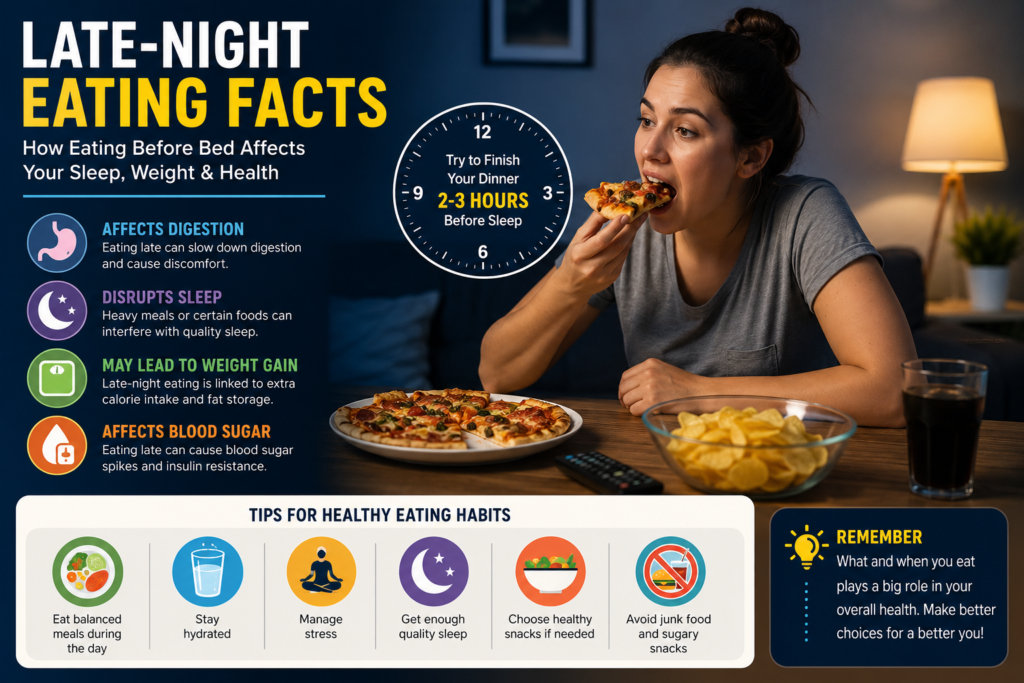
Key Late-Night Eating Facts
1. Late Night Eating Can Affect Digestion
When you lie down shortly after eating, your digestive system continues working while your body prepares for sleep. This can lead to:
- Indigestion
- Acid reflux
- Heartburn
- Stomach discomfort
Many people experience digestive issues because food remains in the stomach longer when the body is inactive.
2. Eating Late May Disrupt Sleep Quality
Late night eating is Certain foods and large meals can interfere with your ability to fall asleep.
Common sleep-disrupting foods include:
- Spicy foods
- High-fat meals
- Sugary desserts
- Caffeinated beverages
Poor sleep quality can result in:
- Fatigue
- Reduced concentration
- Mood swings
- Lower productivity
3. Late-Night Eating Can Contribute to Weight Gain
One of the most discussed late night eating facts is its connection to weight gain.
While calories matter more than timing alone, late-night eaters often:
- Consume extra calories
- Choose unhealthy snacks
- Eat larger portions
- Engage in emotional eating
Over time, these habits may increase body weight.
Effects of Different Late-Night Foods
| Food Type | Impact on Sleep | Impact on Weight | Impact on Digestion |
|---|---|---|---|
| Fruits | Positive | Low Risk | Easy to Digest |
| Vegetables | Positive | Low Risk | Easy to Digest |
| Fast Food | Negative | High Risk | Difficult to Digest |
| Sugary Snacks | Negative | High Risk | Moderate |
| Protein Snacks | Moderate | Low Risk | Good Option |
| Fried Foods | Very Negative | High Risk | Difficult |
The Relationship Between Late-Night Eating and Metabolism
Many people believe that food automatically turns into fat if eaten at night. This is a myth.
The truth is:
- Your metabolism continues working while you sleep.
- Total daily calorie intake matters more than meal timing.
- However, late-night eating often leads to excess calorie consumption.
Research suggests that eating large meals late in the evening may affect blood sugar regulation and metabolic efficiency.
How Late Night Eating Affects Blood Sugar Levels
Blood sugar management is important for overall health.
Late-night meals high in:
- Sugar
- Refined carbohydrates
- Processed foods
can cause blood sugar spikes before sleep.
Potential consequences include:
- Increased insulin production
- Greater fat storage
- Poor energy regulation
- Increased hunger the next day
Healthy vs. Unhealthy Late Night Eating Snacks
Healthy Choices
- Greek yogurt
- Banana
- Apple slices
- Cottage cheese
- Nuts
- Whole-grain crackers
- Herbal tea
Unhealthy Choices
- Chips
- Pizza
- Ice cream
- Candy
- Sugary cereals
- Fried foods
- Soft drinks
Comparison Table: Healthy vs Unhealthy Late Night Eating
| Factor | Healthy Snack | Unhealthy Snack |
|---|---|---|
| Calories | Moderate | High |
| Sugar | Low | High |
| Digestion | Easy | Difficult |
| Sleep Quality | Better | Worse |
| Weight Management | Supports Goals | May Cause Weight Gain |
| Energy Levels | Stable | Fluctuating |
Why Do People Crave Food at Night?
Why Do People Crave Food at Night? Lets learn it.
Several factors contribute to nighttime cravings.
Stress
Stress increases the desire for comfort foods.
Boredom
People often snack while watching TV or browsing social media.
Skipping Meals
Missing meals during the day can lead to intense nighttime hunger.
Poor Sleep Habits
Sleep deprivation affects hunger hormones and increases cravings.
The Science Behind Nighttime Hunger Hormones
Two hormones play a major role:
Ghrelin
Known as the hunger hormone.
Leptin
Known as the fullness hormone.
Poor sleep can:
- Increase ghrelin
- Decrease leptin
This combination makes you feel hungrier and less satisfied after eating.
Benefits of Avoiding Late-Night Eating
People who avoid eating close to bedtime often experience:
- Better digestion
- Improved sleep quality
- Better weight control
- Reduced acid reflux
- Improved energy levels
- Better blood sugar regulation
Best Time to Eat Dinner
Most nutrition experts recommend:
- Finishing dinner 2–3 hours before sleep.
- Eating balanced meals throughout the day.
- Avoiding large portions late at night.
For someone sleeping at 11 PM:
Ideal dinner time: 7 PM to 8 PM
Tips to Stop Late-Night Eating
1. Eat Balanced Meals During the Day
Include:
- Protein
- Healthy fats
- Fiber
- Complex carbohydrates
2. Stay Hydrated
Sometimes thirst is mistaken for hunger.
3. Manage Stress
Try:
- Meditation
- Deep breathing
- Walking
- Reading
4. Improve Sleep Habits
Aim for 7–9 hours of quality sleep.
5. Remove Tempting Snacks
Keep unhealthy foods out of easy reach.
Common Myths About Late-Night Eating
| Myth | Reality |
|---|---|
| Eating after 8 PM always causes weight gain | Total calories matter most |
| All late-night snacks are unhealthy | Healthy snacks can be beneficial |
| Metabolism stops at night | Metabolism continues during sleep |
| Fruit at night causes fat gain | Fruit can be a healthy option |
| Skipping dinner is healthier | Balanced meals are important |
Who Should Be Most Careful About Late-Night Eating?
Certain groups should pay extra attention:
- People with acid reflux
- Individuals with obesity
- Diabetics
- People with sleep disorders
- Individuals with digestive problems
Consulting a healthcare professional may be helpful if symptoms persist.
Frequently Asked Questions (FAQ)
Q1. Is eating late at night bad for you?
Not always. Occasional late-night eating is generally fine, but frequent large meals before bed may affect digestion, sleep, and weight management.
Q2. What is the best snack before bed?
Healthy options include yogurt, bananas, nuts, cottage cheese, and whole-grain crackers.
Q3. Does eating at night automatically cause weight gain?
No. Weight gain occurs when you consistently consume more calories than your body burns.
Q4. How long should I wait to sleep after eating?
Ideally, wait at least 2–3 hours after a large meal before going to bed.
Q5. Can late-night eating affect sleep?
Yes. Heavy, spicy, or sugary foods can interfere with sleep quality.
Q6. Is fruit a good late-night snack?
Yes. Most fruits are nutritious, easy to digest, and relatively low in calories.
Q7. Why do I get hungry before bed?
Possible reasons include stress, poor sleep, boredom, dehydration, or insufficient food intake during the day.
Q8. Can late-night eating increase acid reflux?
Yes. Lying down soon after eating can increase the risk of acid reflux and heartburn.
Final Thoughts
Late-night eating is not necessarily harmful, but the type of food, portion size, and frequency matter significantly. Consistently eating large, unhealthy meals before bedtime can negatively impact digestion, sleep quality, blood sugar levels, and weight management.
The best approach is to maintain a balanced eating schedule, consume nutrient-dense foods throughout the day, and finish your last major meal at least two to three hours before sleep. If you need a nighttime snack, choose healthy options that support your overall wellness goals.
By understanding these late-night eating facts, you can make informed choices that improve both your health and quality of life.
Pingback: 10 Amazing Top Health Benefits of ginger tea
Pingback: Healthy Breakfast, Lunch, and Dinner to Lose Weight
Pingback: 20-Minute Workout at Home for Beginners Without Equipment:
Pingback: Which 7 Foods Naturally Boost Gut Health? A Complete Guide.
Pingback: Turmeric Daily Benefits: 10 Science Add Turmeric Your Diet
Pingback: Daily Habits for Mental Wellness: 10 Simple Practices
Pingback: How to Lose Belly Fat Naturally: 5 Simple Exercises
Pingback: Protein-Rich Foods for Fat Loss: 15 Best High-Protein Foods
Pingback: Weight Loss Myths Busted: 15 Common Myths That Stopping
Pingback: 20 Best High-Protein Vegetarian Protein Sources for Health
Pingback: 25 Healthy Snacks Under 100 Calories for Weight Loss and Healthy Living
Pingback: How Exercise Improves Mood: 8 Science-Backed Mental Health
Pingback: 15 Daily Foods for a Healthy Lifestyle: Science-Backed Guide