
Why You Need Healthy Fats: Benefits, Best Food Sources, and Daily Intake Guide
Introduction
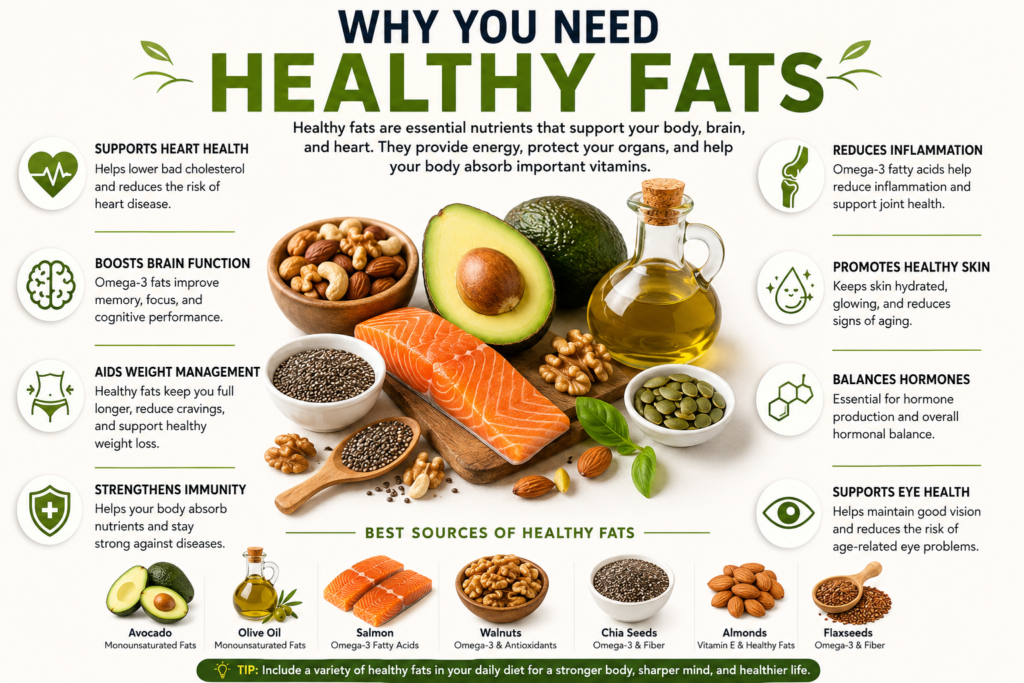
For years, many people believed that eating fat was unhealthy and led directly to weight gain. However, modern nutrition research has proven that healthy fats are an essential part of a balanced diet. They support brain function, improve heart health, help absorb vitamins, keep hormones balanced, and even assist with healthy weight management.
The key isn’t avoiding fat—it’s choosing the right kinds of fats.
In this complete guide, you’ll learn everything you need to know about healthy fats, including their benefits, the best food sources, how much you should eat, and common myths surrounding dietary fat.
Table of Contents
What Are Healthy Fats?
Healthy fats are dietary fats that provide essential nutrients your body cannot produce on its own.
They:
- Provide energy
- Protect organs
- Build healthy cells
- Support hormone production
- Improve brain function
- Help absorb vitamins A, D, E, and K
Without enough healthy fats, your body cannot function optimally.
why healthy fats are important,
benefits of healthy fats,
healthy fats for weight loss,
healthy fats for heart health,
Types of Dietary Fats
1. Unsaturated Fats (Healthy)
These are considered heart-friendly fats.
Monounsaturated Fats
Found in:
- Avocados
- Olive oil
- Almonds
- Cashews
- Peanuts
Benefits:
- Reduce bad cholesterol (LDL)
- Improve heart health
- Help control blood sugar
- Reduce inflammation
Polyunsaturated Fats
Include:
- Omega-3 fatty acids
- Omega-6 fatty acids
Sources:
- Salmon
- Sardines
- Tuna
- Walnuts
- Chia seeds
- Flaxseeds
- Sunflower seeds
Benefits:
- Brain development
- Heart protection
- Reduced inflammation
- Better joint health
2. Saturated Fats
Found in:
- Butter
- Cheese
- Whole milk
- Coconut oil
- Red meat
These can be part of a balanced diet when consumed in moderation, but excessive intake may increase LDL cholesterol in some individuals.
3. Trans Fats (Avoid)
Usually found in:
- Packaged snacks
- Fried foods
- Margarine (partially hydrogenated)
- Processed baked goods
These fats:
- Increase bad cholesterol
- Lower good cholesterol
- Increase heart disease risk
Why Your Body Needs Healthy Fats
Healthy fats are essential because they:
✔ Supply long-lasting energy
✔ Build healthy brain cells
✔ Produce important hormones
✔ Support immune function
✔ Maintain healthy skin
✔ Protect internal organs
✔ Improve nutrient absorption
✔ Reduce inflammation
Top Health Benefits of Healthy Fats
1. Improve Heart Health
- Lower LDL cholesterol
- Raise HDL cholesterol
- Improve blood circulation
- Reduce blood pressure
- Lower heart disease risk
2. Support Brain Function
Nearly 60% of the brain consists of fat.
Omega-3 fatty acids help:
- Improve memory
- Increase concentration
- Reduce brain fog
- Support learning
- Lower depression risk
3. Help With Weight Management
Many people think fat causes obesity.
Actually, healthy fats:
- Keep you full longer
- Reduce hunger
- Prevent overeating
- Balance blood sugar
- Reduce unhealthy cravings
4. Reduce Inflammation
Chronic inflammation is linked to:
- Diabetes
- Arthritis
- Heart disease
- Cancer
- Obesity
Omega-3 fats help fight inflammation naturally.
5. Improve Skin Health
Healthy fats help maintain:
- Moisturized skin
- Reduced wrinkles
- Better elasticity
- Faster healing
- Healthy glow
6. Support Eye Health
Omega-3 fats help maintain:
- Retina health
- Better vision
- Reduced dry eyes
- Lower risk of age-related eye diseases
7. Hormone Production
Hormones require healthy fats for production.
Healthy fat intake supports:
- Thyroid function
- Testosterone
- Estrogen
- Cortisol balance
8. Better Vitamin Absorption
Without dietary fat, your body cannot effectively absorb:
| Vitamin | Function |
|---|---|
| Vitamin A | Vision |
| Vitamin D | Bone health |
| Vitamin E | Antioxidant protection |
| Vitamin K | Blood clotting |
Best Sources of Healthy Fats
| Food | Healthy Fat Type |
|---|---|
| Avocado | Monounsaturated |
| Olive Oil | Monounsaturated |
| Salmon | Omega-3 |
| Tuna | Omega-3 |
| Sardines | Omega-3 |
| Chia Seeds | Omega-3 |
| Flaxseeds | Omega-3 |
| Walnuts | Polyunsaturated |
| Almonds | Monounsaturated |
| Pistachios | Healthy fats |
| Pumpkin Seeds | Healthy fats |
| Peanut Butter (Natural) | Healthy fats |
| Eggs | Healthy fats |
| Greek Yogurt | Healthy fats & protein |
Healthy Fats for Weight Loss
Healthy fats increase satiety, helping you eat less overall.
Examples:
- Avocado with toast
- Nuts as snacks
- Olive oil dressing
- Peanut butter with apples
- Chia pudding
Avoid combining healthy fats with excessive sugar and refined carbohydrates.
Healthy Fats for Brain Health
Omega-3 fats help:
- Build neurons
- Improve cognitive performance
- Reduce anxiety
- Lower depression risk
- Improve memory
Best foods:
- Salmon
- Sardines
- Walnuts
- Chia seeds
- Flaxseeds
Healthy Fats for Heart Health
Heart-friendly foods include:
- Olive oil
- Avocados
- Almonds
- Walnuts
- Fatty fish
They improve cholesterol levels and reduce cardiovascular risk.
Healthy Fats and Hormonal Balance
Hormones control:
- Sleep
- Mood
- Metabolism
- Energy
- Reproductive health
Healthy fats provide the building blocks for hormone production.
Healthy Fats for Skin and Hair
Benefits include:
- Hydrated skin
- Stronger hair
- Reduced dandruff
- Better collagen support
- Healthy scalp
Signs You’re Not Eating Enough Healthy Fat
Possible signs include:
- Dry skin
- Brittle hair
- Constant hunger
- Fatigue
- Mood swings
- Brain fog
- Poor concentration
- Vitamin deficiencies
If these symptoms persist, consult a healthcare professional for evaluation.
Foods to Avoid
Limit:
- Deep-fried foods
- Packaged chips
- Fast food
- Donuts
- Processed pastries
- Frozen fried snacks
- Foods containing partially hydrogenated oils
Daily Recommended Intake
According to general dietary guidelines:
- 20–35% of your daily calories should come from healthy fats.
For a 2,000-calorie diet, this equals approximately 44–78 grams of total fat per day, with an emphasis on unsaturated fats.
Individual needs vary based on age, activity level, and health conditions.
Easy Ways to Add Healthy Fats to Your Diet
- Add avocado to sandwiches
- Cook with olive oil
- Sprinkle chia seeds on yogurt
- Eat a handful of almonds
- Add walnuts to oatmeal
- Include salmon twice a week
- Use natural peanut butter
- Add flaxseed to smoothies
- Snack on mixed nuts
- Toss pumpkin seeds into salads
Sample One-Day Healthy Fat Meal Plan
| Meal | Foods |
|---|---|
| Breakfast | Oatmeal with chia seeds, walnuts, and berries |
| Morning Snack | Almonds and an apple |
| Lunch | Grilled chicken salad with avocado and olive oil dressing |
| Evening Snack | Greek yogurt with flaxseeds |
| Dinner | Grilled salmon, quinoa, and steamed vegetables |
| Dessert | A small serving of mixed berries |
Common Myths About Fat
Myth 1: Fat makes you fat.
Truth: Excess calories—not fat alone—lead to weight gain. Healthy fats can actually support appetite control.
Myth 2: Low-fat foods are always healthier.
Truth: Many low-fat products contain added sugar, refined starches, or sodium to improve taste.
Myth 3: All saturated fat is harmful.
Truth: Saturated fat doesn’t need to be eliminated entirely, but moderation is important, and unsaturated fats should make up most of your fat intake.
Myth 4: You should avoid fat if you want to lose weight.
Truth: Healthy fats can help you stay full and maintain a balanced diet during weight loss.
Frequently Asked Questions (Q&A)
1. What are healthy fats?
Healthy fats are primarily unsaturated fats found in foods such as avocados, olive oil, nuts, seeds, and fatty fish that support overall health.
2. Are healthy fats good for weight loss?
Yes. They help increase fullness, reduce cravings, and support a balanced eating pattern when consumed in appropriate portions.
3. Which foods contain Omega-3?
Salmon, sardines, mackerel, chia seeds, flaxseeds, and walnuts are excellent sources.
4. How much fat should I eat daily?
Generally, 20–35% of daily calories should come from fats, with most coming from healthy unsaturated sources.
5. Can healthy fats improve brain health?
Yes. Omega-3 fatty acids are important for memory, learning, and overall brain function.
6. Are eggs a healthy source of fat?
Yes. Eggs contain healthy fats along with high-quality protein and essential vitamins.
7. Is olive oil healthier than butter?
Extra virgin olive oil is generally considered a healthier everyday choice because it is rich in monounsaturated fats and beneficial plant compounds.
8. Can children eat healthy fats?
Yes. Healthy fats are important for children’s growth, brain development, and overall health. Portion sizes should be age-appropriate.
Final Thoughts
Healthy fats are not something to fear—they’re an essential part of a nutritious diet. From supporting your heart and brain to helping you manage your weight and maintain healthy skin, choosing the right fats can make a significant difference in your overall well-being.
Focus on replacing processed and trans fats with nutrient-rich sources like avocados, olive oil, nuts, seeds, and fatty fish. Combined with regular exercise, whole foods, and a balanced lifestyle, healthy fats can help you build a stronger, healthier future.
Pingback: Healthy Carbs vs Bad Carbs: Key Differences, Best Foods
Pingback: Best High Fiber Foods: Top 25 Foods Rich in Fiber for Better Health
Pingback: How to Lose Belly Fat Naturally: 5 Simple Exercises
Pingback: Why You Need Healthy Fats: Bats 9 Foods Benefits, Sources, Myths & How to Add Them
Pingback: Top 15 Omega-3 Benefits for Heart, Brain & Overall Health
Pingback: Signs of Stress You Ignore: 15 Hidden Symptoms That Damaging
Pingback: Weight Loss Myths Busted: 15 Common Myths That Stopping
Pingback: 15 Daily Foods for a Healthy Lifestyle: Science-Backed Guide
Pingback: Best Foods For High Iron: Top 25 Iron-Rich Foods List
Pingback: 25 Healthy Snacks Under 100 Calories for Weight Loss and Healthy Living