
Foods That Help Anxiety: 15 Science-Backed Foods to Reduce Stress and Calm Your Mind Naturally
Mental health is just as important as physical health. While eating healthy won’t completely cure anxiety, research shows that the right Foods That Help Anxiety can support your brain, balance your mood, and reduce stress over time.
If you’ve been searching for foods that help anxiety, you’re in the right place.
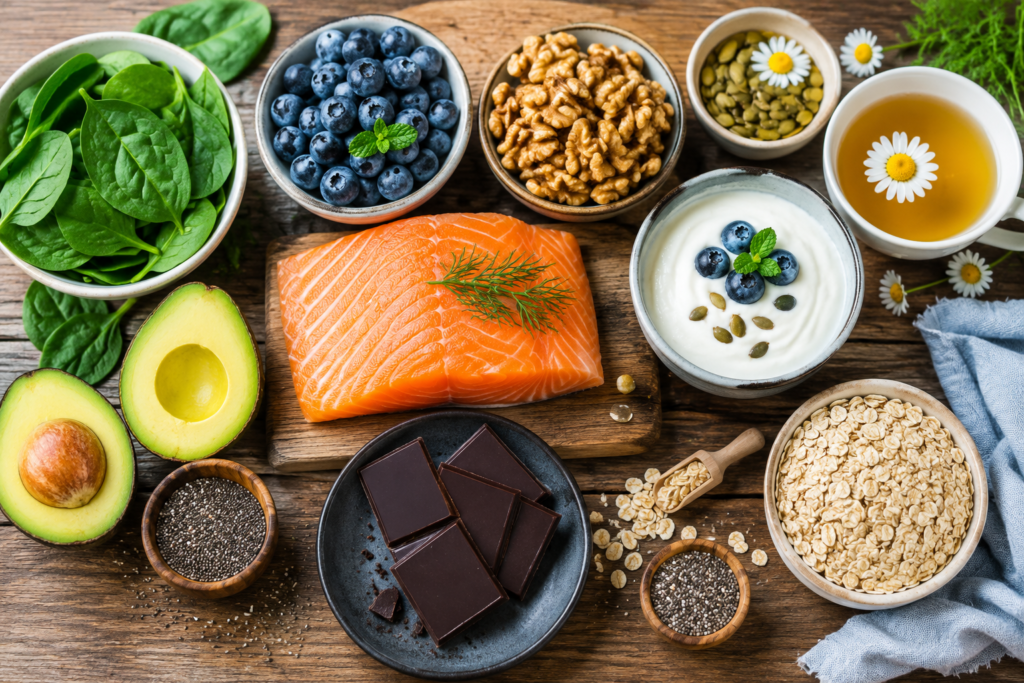
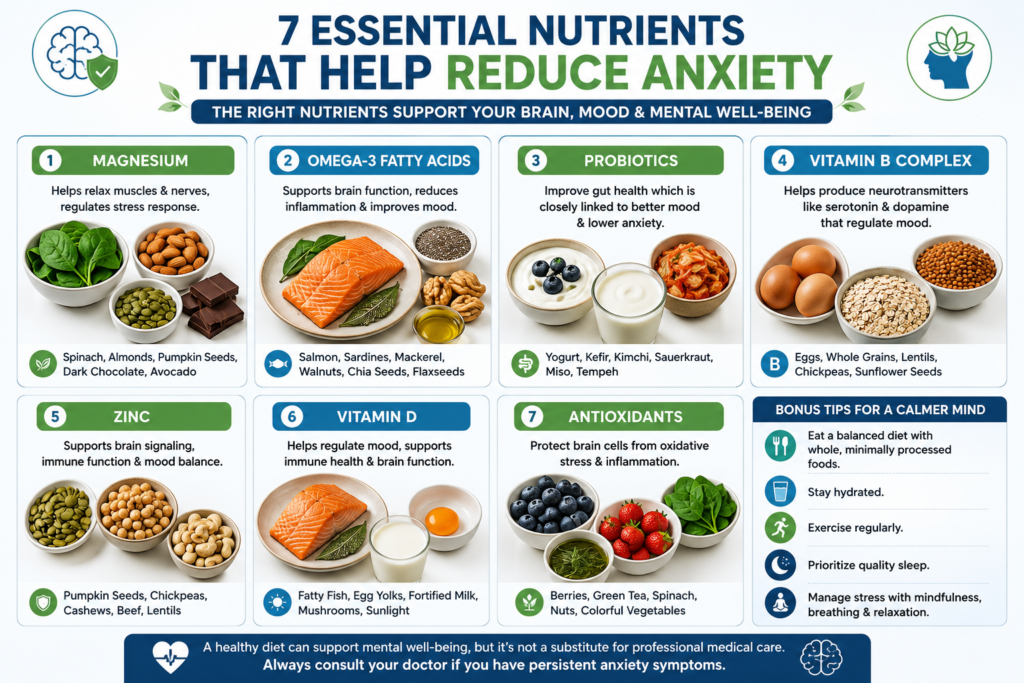
Many everyday foods contain nutrients like magnesium, omega-3 fatty acids, probiotics, vitamin B, zinc, and antioxidants that support healthy brain function and help your body respond better to stress.
In this complete guide, you’ll discover the best foods for anxiety, nutrients that matter most, foods to avoid, and practical tips to build an anxiety-friendly diet.
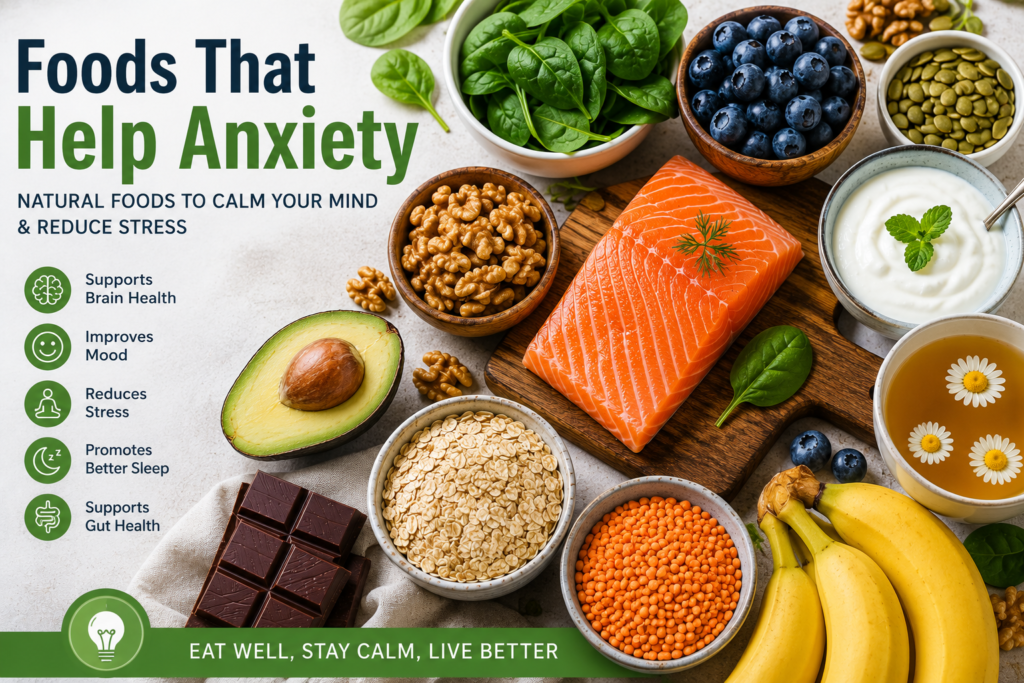
Table of Contents
What Is Anxiety?
Anxiety is your body’s natural response to stress. Everyone feels anxious occasionally before an exam, job interview, or important event.
However, when anxiety becomes frequent, intense, or difficult to control, it can interfere with daily life.
Common symptoms include:
- Constant worrying
- Racing thoughts
- Trouble sleeping
- Fast heartbeat
- Restlessness
- Difficulty concentrating
- Muscle tension
- Digestive problems
- Fatigue
According to the World Health Organization (WHO), anxiety disorders are among the most common mental health conditions worldwide, affecting hundreds of millions of people.
The good news? Lifestyle changes—including nutrition—can play an important role alongside medical care and therapy.
Can Food Really Help Anxiety?
The Science Behind Nutrition and Anxiety
Your brain needs a constant supply of nutrients to produce neurotransmitters such as:
- Serotonin
- Dopamine
- GABA
These chemicals regulate:
- Mood
- Sleep
- Motivation
- Emotional balance
- Stress response
Poor nutrition can increase inflammation, blood sugar fluctuations, and gut imbalance, all of which may worsen anxiety symptoms.
A healthy diet supports:
- Better brain function
- Stable energy levels
- Improved sleep
- Balanced hormones
- Reduced inflammation
- Healthier gut bacteria
Although food alone isn’t a treatment for anxiety disorders, it can be a valuable part of a comprehensive wellness plan.
Nutrients That Fight Anxiety
| Nutrient | Why It Matters | Best Food Sources |
|---|---|---|
| Magnesium | Helps relax muscles and nerves | Spinach, almonds, pumpkin seeds |
| Omega-3 | Supports brain health | Salmon, sardines, walnuts |
| Vitamin B Complex | Helps produce neurotransmitters | Eggs, whole grains, beans |
| Zinc | Supports brain signaling | Pumpkin seeds, chickpeas |
| Probiotics | Improve gut-brain connection | Yogurt, kefir |
| Vitamin D | Supports mood regulation | Fatty fish, fortified dairy |
| Antioxidants | Reduce inflammation | Berries, dark chocolate |
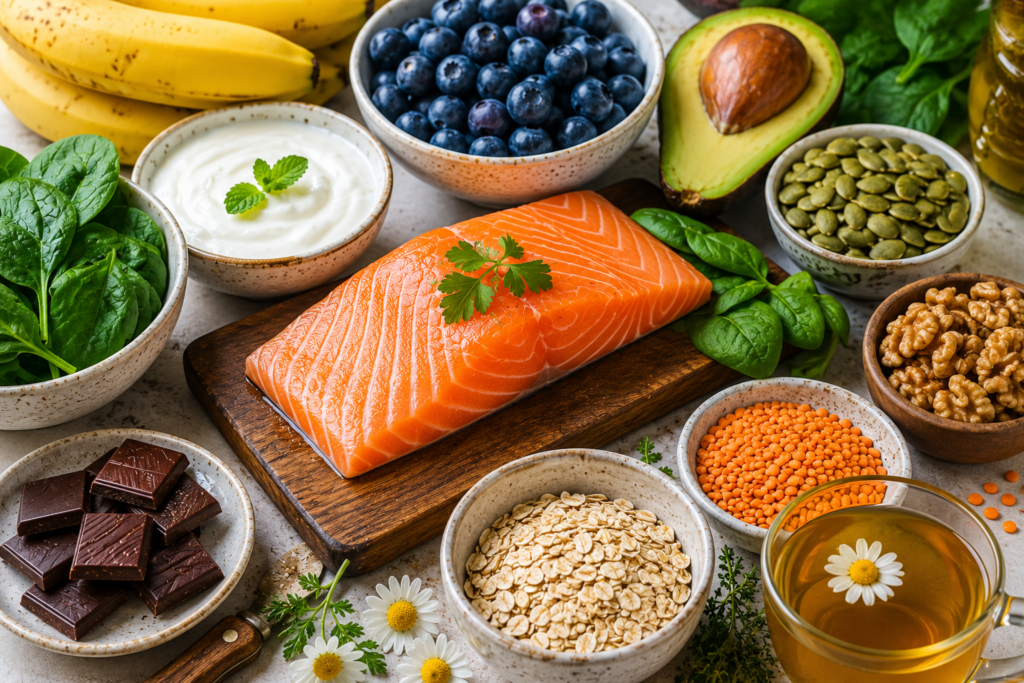
Top 15 Foods That Help Anxiety
1. Fatty Fish
Fatty fish such as:
- Salmon
- Sardines
- Mackerel
- Tuna
are rich in omega-3 fatty acids.
Benefits
- Supports healthy brain cells
- Reduces inflammation
- Improves mood
- May reduce anxiety symptoms
Aim for 2 servings per week.
2. Yogurt
Your gut and brain communicate constantly.
Probiotic-rich yogurt supports healthy gut bacteria, which may positively influence mood and stress levels.
Choose:
- Plain Greek yogurt
- Unsweetened yogurt
- Live culture yogurt
3. Pumpkin Seeds
Pumpkin seeds are packed with:
- Magnesium
- Zinc
- Iron
These nutrients help regulate stress hormones and support healthy nerve function.
Just one handful makes a nutritious snack.
4. Dark Chocolate
Good news for chocolate lovers!
Dark chocolate (70% cocoa or higher) contains:
- Flavonoids
- Magnesium
- Antioxidants
These compounds may help lower stress hormones and improve blood flow to the brain.
Remember to enjoy it in moderation.
5. Blueberries
Blueberries are loaded with antioxidants that protect brain cells from oxidative stress.
Benefits include:
- Better memory
- Reduced inflammation
- Improved mood
Fresh or frozen blueberries are equally nutritious.
6. Spinach
Leafy greens provide:
- Magnesium
- Folate
- Iron
Low magnesium intake has been linked with increased stress in some studies.
Add spinach to:
- Smoothies
- Salads
- Omelets
- Soups
7. Eggs
Eggs provide:
- Vitamin D
- Choline
- Protein
- Vitamin B12
These nutrients help produce important brain chemicals that influence mood.
8. Oats
Complex carbohydrates help maintain stable blood sugar.
Stable blood sugar helps prevent mood swings and energy crashes that can worsen anxiety.
Enjoy oats with:
- Nuts
- Fruits
- Seeds
9. Walnuts
Walnuts are one of the best plant-based omega-3 sources.
Benefits include:
- Brain support
- Heart health
- Reduced inflammation
Eat a small handful daily.
10. Green Tea
Green tea contains L-theanine, an amino acid that promotes relaxation without causing drowsiness.
Many people report feeling calmer after drinking green tea compared to coffee.
11. Chamomile Tea
Chamomile has long been used as a calming herbal tea.
Some research suggests it may help:
- Relax muscles
- Improve sleep quality
- Reduce mild anxiety symptoms
12. Avocados
Healthy fats support brain health.
Avocados also contain:
- Magnesium
- Potassium
- Vitamin B6
These nutrients support nervous system function.
13. Bananas
Bananas provide:
- Vitamin B6
- Potassium
- Natural carbohydrates
They help produce serotonin and provide steady energy.
14. Lentils and Beans
Beans are rich in:
- Plant protein
- Fiber
- Folate
- Magnesium
Fiber supports gut health while protein keeps blood sugar stable.
15. Turmeric
Curcumin, the active compound in turmeric, has anti-inflammatory and antioxidant properties.
Emerging research suggests it may support brain health and mood, although more studies are needed.
Best Drinks for Anxiety
| Drink | Why It Helps |
|---|---|
| Chamomile Tea | Promotes relaxation |
| Green Tea | Contains calming L-theanine |
| Warm Milk | Provides protein and may support relaxation |
| Kefir | Rich in probiotics |
| Water | Prevents dehydration, which can worsen fatigue and concentration |
Foods to Avoid If You Have Anxiety
Certain foods and beverages may trigger or worsen anxiety symptoms in some people.
| Food | Why Limit It |
|---|---|
| Sugary drinks | Blood sugar spikes and crashes |
| Energy drinks | High caffeine content |
| Excess coffee | May increase nervousness and rapid heartbeat |
| Alcohol | Can disrupt sleep and mood |
| Highly processed snacks | Low in essential nutrients |
| Excess refined sugar | May contribute to energy crashes |
Instead, focus on whole, minimally processed foods that provide lasting energy and essential nutrients.
Sample One-Day Anxiety-Friendly Meal Plan
| Meal | Example |
|---|---|
| Breakfast | Oatmeal with blueberries, walnuts, and yogurt |
| Snack | Banana with almond butter |
| Lunch | Grilled salmon, spinach salad, quinoa |
| Snack | Pumpkin seeds and green tea |
| Dinner | Lentil soup with roasted vegetables |
| Evening | Chamomile tea |
Benefits of Eating Foods That Help Anxiety
Following an anxiety-friendly diet may provide several health benefits:
- Supports healthy brain function
- Helps stabilize mood
- Reduces inflammation
- Improves gut health
- Promotes better sleep
- Supports balanced blood sugar
- Encourages steady energy throughout the day
- Supports heart health
- Helps maintain a healthy weight
- Complements therapy and medical treatment
Remember, results vary from person to person, and diet works best as part of an overall healthy lifestyle.
Common Mistakes
Many people unknowingly make dietary choices that can worsen anxiety. Avoid these common mistakes:
- Skipping meals, which can lead to blood sugar drops.
- Drinking too much caffeine throughout the day.
- Depending on sugary snacks for quick energy.
- Ignoring hydration—dehydration may affect mood and focus.
- Eating highly processed foods instead of whole foods.
- Expecting one “superfood” to eliminate anxiety.
- Neglecting sleep, exercise, and stress management while focusing only on diet.
Expert Tips
Here are practical tips to make your diet more anxiety-friendly:
- Eat balanced meals every 3–4 hours to maintain steady energy.
- Include protein, healthy fats, and fiber in every meal.
- Add colorful fruits and vegetables to your plate daily.
- Choose whole grains instead of refined carbohydrates.
- Include fermented foods like yogurt or kefir several times a week.
- Limit caffeine if it makes you feel jittery.
- Drink enough water throughout the day.
- Practice mindful eating to reduce stress during meals.
- Pair healthy eating with regular physical activity and adequate sleep.
- Consult a healthcare professional if anxiety symptoms are persistent or severe.
Conclusion
Choosing the right foods can play an important role in supporting your mental well-being. While foods that help anxiety are not a cure, a nutrient-rich diet can help nourish your brain, reduce inflammation, stabilize blood sugar, and promote a healthier stress response.
Focus on eating a variety of whole foods such as fatty fish, leafy greens, berries, nuts, seeds, legumes, yogurt, and whole grains. At the same time, try to reduce your intake of sugary drinks, highly processed snacks, and excessive caffeine.
For the best results, combine healthy eating with regular exercise, quality sleep, stress-management techniques, and professional guidance when needed. Small, consistent changes to your daily diet can make a meaningful difference in your overall mental and physical health.
Frequently Asked Questions (FAQs)
1. What foods help anxiety the most?
Foods rich in omega-3 fatty acids, magnesium, probiotics, vitamin B, and antioxidants may help support mental well-being. Some of the best choices include salmon, yogurt, spinach, pumpkin seeds, walnuts, blueberries, oats, and dark chocolate.
2. Can diet really reduce anxiety?
A healthy diet cannot cure anxiety disorders, but it may help reduce symptoms by supporting brain function, stabilizing blood sugar, reducing inflammation, and improving gut health.
3. Which vitamin deficiency can cause anxiety?
Low levels of Vitamin D, Vitamin B12, Folate, Magnesium, Iron, and Zinc have been associated with increased anxiety symptoms in some individuals.
4. Is magnesium good for anxiety?
Yes. Magnesium plays an important role in nerve function and muscle relaxation. Foods rich in magnesium include spinach, pumpkin seeds, almonds, and avocados.
5. What foods should I avoid if I have anxiety?
Try limiting:
- Sugary drinks
- Energy drinks
- Excess coffee
- Alcohol
- Highly processed foods
- Excess refined sugar
6. Are bananas good for anxiety?
Yes. Bananas contain Vitamin B6, potassium, and carbohydrates that help support serotonin production and steady energy levels.
7. Does gut health affect anxiety?
Yes. Research suggests the gut-brain connection plays an important role in mental health. Probiotic foods like yogurt, kefir, kimchi, and fermented vegetables may support a healthy gut microbiome.
8. Is dark chocolate good for anxiety?
Dark chocolate (70% cocoa or higher) contains antioxidants and magnesium that may help reduce stress and improve mood when consumed in moderation.
9. Which drink helps calm anxiety?
Some calming beverages include:
- Chamomile tea
- Green tea
- Warm milk
- Water
- Kefir
10. Can eating healthy replace anxiety medication?
No. Healthy eating supports mental health but should not replace prescribed medications or professional treatment. Always consult your healthcare provider before making changes to your treatment plan.
11. Is coffee bad for anxiety?
Some people are sensitive to caffeine. Too much coffee may increase nervousness, rapid heartbeat, and restlessness. If you notice these effects, consider reducing your caffeine intake.
12. How long does it take for diet changes to improve anxiety?
Results vary by person. Many people notice improvements over several weeks to months when healthy eating is combined with exercise, good sleep, stress management, and professional care if needed.
Pingback: Can Walking 10000 Steps a Day Really Change Your Health?
Pingback: Top 15 Omega-3 Benefits for Heart, Brain & Overall Health
Pingback: 25 Healthy Snacks Under 100 Calories for Weight Loss and Healthy Living
Pingback: Morning Habits for a Positive Mind: 7 Routines for Happiness
Pingback: Signs of Stress You Ignore: 15 Hidden Symptoms That Damaging
Pingback: Best Foods For High Iron: Top 25 Iron-Rich Foods List
Pingback: Why You Need Healthy Fats: Bats 9 Foods Benefits, Sources, Myths & How to Add Them
Pingback: Best High Fiber Foods: Top 25 Foods Rich in Fiber for Better Health
Pingback: Which Is the Most Common Mistake to Start a Beginner Workout? 15 Beginner Workout Mistakes You Must Avoid
Pingback: Why You Need Healthy Fats: Benefits, Best Food Sources
Pingback: 15 Daily Foods for a Healthy Lifestyle: Science-Backed Guide
Pingback: Healthy Carbs vs Bad Carbs: Key Differences, Best Foods