
Here are the 3 most common mistakes regards weight loss mistakes that quietly slow down weight loss — and simple ways to fix them:
1. Skipping Breakfast
A lot of people think skipping breakfast will help them cut calories. In reality, it often backfires.
When you skip your morning meal, your body stays in a fasting state longer, which can increase hunger hormones later in the day. By the time lunch or evening comes, you’re more likely to overeat or reach for quick, unhealthy options.
Better approach: Eat a balanced breakfast within 1–2 hours of waking up. Focus on protein and fiber — think eggs with veggies, Greek yogurt with berries and nuts, or a protein smoothie. This stabilizes your blood sugar, keeps you full longer, and sets a positive tone for the rest of the day.
2. Not Eating Enough Protein
Many people focus only on cutting calories and forget about protein. But protein is one of the most important nutrients for weight loss.
It keeps you full, preserves muscle mass (which keeps your metabolism running), and even burns more calories during digestion compared to carbs and fats.
If your meals are mostly rice, roti, or snacks with very little protein, your body won’t feel satisfied — and you’ll end up eating more overall.
Fix it: Aim for a good source of protein in every meal. Add eggs, chicken, fish, paneer, lentils, Greek yogurt, or whey protein. A simple rule: try to have 20–30g of protein per main meal.
3. Not Getting Enough Sleep
This one is huge. If you’re sleeping late and waking up tired, your weight loss efforts can suffer even if your diet is perfect.
Poor sleep increases ghrelin (the hunger hormone), decreases leptin (the fullness hormone), and makes you crave sugary, high-calorie foods. It also raises cortisol, which encourages fat storage — especially around the belly.
Simple solution: Make sleep a non-negotiable priority. Aim for 7–8 hours every night. Try to sleep and wake up at roughly the same time daily. Create a bedtime routine: no screens 30–45 minutes before bed, keep your room cool and dark.
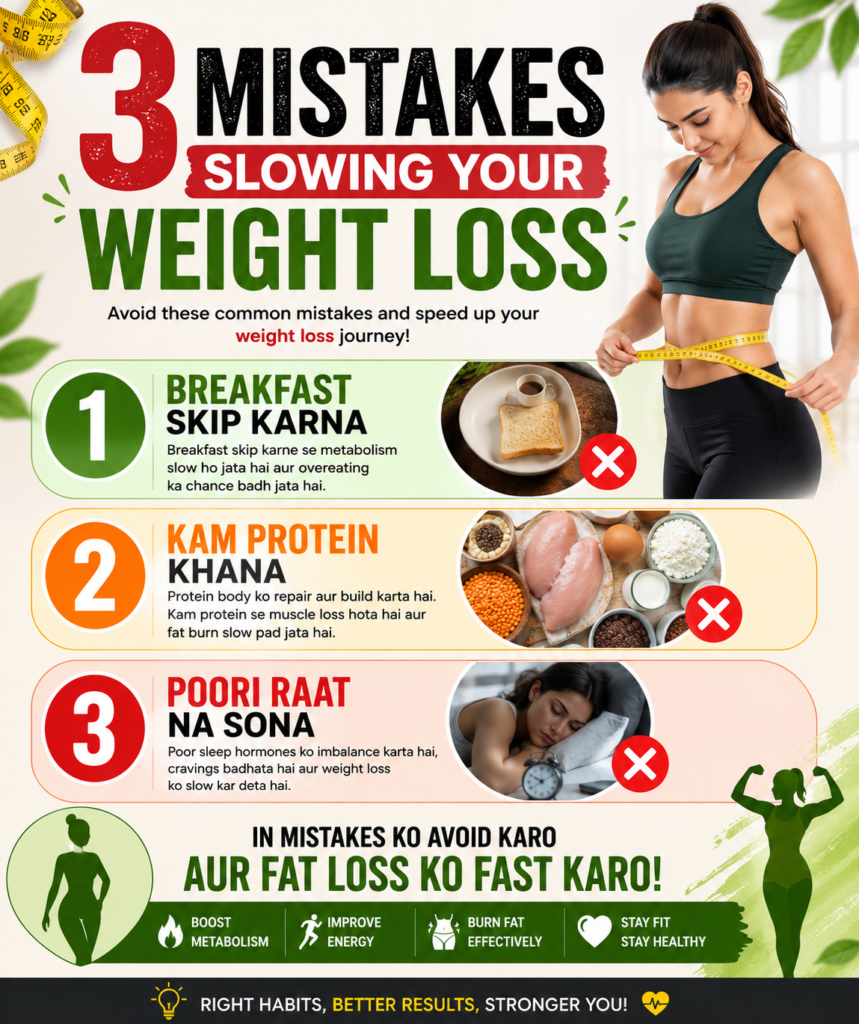
Final Thought:
Weight loss isn’t just about eating less and moving more. It’s about fixing these hidden mistakes that most people ignore.
Start by picking one of these three habits to improve this week. Small, consistent changes always beat trying to fix everything at once.
You’ve got this!
Which of these three mistakes do you relate to the most? Drop a comment below — I’d love to hear from you.
Stay consistent, Your friendly health coach
Frequently Asked Questions (FAQ)
Q1: Can I still lose weight if I’m not a morning person and prefer to eat later? Yes, you can. The most important thing is having a balanced first meal of the day, even if it’s at 10 or 11 AM. Focus on protein and fiber-rich foods rather than worrying about the exact time. Consistency matters more than perfection.
Q2: How much protein should I eat daily for weight loss? A good general target is 1.6 to 2.2 grams of protein per kilogram of body weight. For example, if you weigh 70 kg, aim for roughly 110–150 grams per day. Spread it across your meals rather than consuming it all at once.
Q3: I sleep only 5–6 hours. Will improving my sleep really make a big difference? Absolutely. Even increasing your sleep from 6 to 7.5 hours can significantly reduce cravings, improve hormone balance, and boost fat loss. Many people notice visible changes in their weight and energy levels within 1–2 weeks of better sleep.
Q4: What if I don’t feel hungry in the morning? Should I still force myself to eat breakfast? Not force, but try to have something light and nutritious. Start small — like a protein shake, Greek yogurt, or boiled eggs with fruit. Over time, your body will adjust and you’ll naturally feel hungry in the morning.
Q5: Are these mistakes only for people trying to lose fat, or do they apply to everyone? These mistakes affect anyone trying to improve their body composition — whether you want to lose fat, maintain weight, or even build muscle. Fixing them helps almost everyone feel better and get better results.
Q6: I’m doing everything right but still not losing weight. What should I do? Look beyond just diet and exercise. Check your sleep, stress levels, water intake, and portion sizes. Sometimes tracking your food for a few days (honestly) reveals hidden calories. If needed, consult a doctor or nutritionist to rule out any underlying issues.
Q7: How long does it take to see results after fixing these mistakes? Most people start noticing better energy, reduced cravings, and improved mood within 7–10 days. Visible weight loss usually appears in 2–4 weeks when these habits are followed consistently.
Pingback: Morning Drink for Better Immunity: Benefits, Recipe & Daily Health Tips
Pingback: Signs Your Immune System Is Weak: 10 Warning Signs
Pingback: 5 Foods That Boost Immunity Naturally | Best Foods for a Strong Immune System
Pingback: Which Foods That Burn Fat Naturally and Support Healthy.
Pingback: What Are the Top 7 Health Benefits of Garlic?
Pingback: Running vs Walking: Which Is Better for Fat Loss?
Pingback: Which is the best Healthy Snacks Under 100 Calories
Pingback: Which Is the Best Breakfast for Weight Loss? A Complete Guide to Healthy Morning Meals
Pingback: Habits That Strengthen Immunity: Simple Daily Practices
Pingback: Best Vitamin C Rich Foods for Strong Immunity
Pingback: Turmeric Daily Benefits: 10 Science Add Turmeric Your Diet
Pingback: How Much Water Helps Weight Loss? 5 tips for Water Fat Loss.
Pingback: Which 7 Foods Naturally Boost Gut Health? A Complete Guide.
Pingback: Healthy Breakfast, Lunch, and Dinner to Lose Weight
Pingback: How can you gain weight in a healthy way? 15 Best foods to eat for Healthy weight gain?
Pingback: Daily Habits for Mental Wellness: 10 Simple Practices
Pingback: Protein-Rich Foods for Fat Loss: 15 Best High-Protein Foods
Pingback: 20-Minute Workout at Home for Beginners Without Equipment:
Pingback: 20 Best High-Protein Vegetarian Protein Sources for Health
Pingback: 10 Amazing Top Health Benefits of ginger tea
Pingback: Shah Rukh Khan Morning Fitness Habits: 5 Healthy Ways
Pingback: How Exercise Improves Mood: 8 Science-Backed Mental Health