
Table of Contents
Introduction
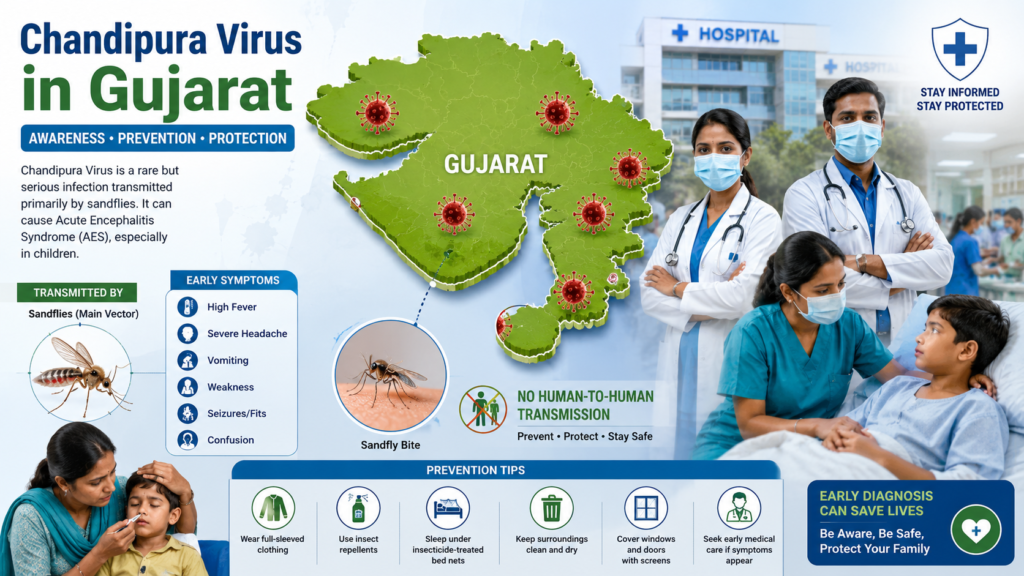
The Chandipura Virus in Gujarat has become an important public health concern because several cases have been reported in different districts over recent years. Although the infection is rare, it can become severe, especially in young children.
Many people confuse Chandipura virus with dengue, malaria, or Japanese encephalitis. However, Chandipura virus is different. It attacks the nervous system and can lead to acute encephalitis syndrome (AES), which is a serious condition affecting the brain.
Early recognition of symptoms and quick medical treatment can improve the chances of recovery. Parents, healthcare workers, and communities should understand how the virus spreads and how to protect themselves.
In this guide, you’ll learn everything about Chandipura virus, including its causes, symptoms, diagnosis, prevention, and expert safety tips.
What is Chandipura Virus?
The Chandipura virus (CHPV) is a virus belonging to the Rhabdoviridae family. It was first identified in 1965 in Chandipura village, Maharashtra, India.
Since then, occasional outbreaks have been reported in several Indian states, including:
- Gujarat
- Maharashtra
- Andhra Pradesh
- Telangana
- Odisha
- Madhya Pradesh
The virus mainly affects children under the age of 15, although adults can also become infected.
Unlike many common viral infections, Chandipura virus can rapidly affect the brain and nervous system, making early diagnosis extremely important.
Quick Facts About Chandipura Virus
| Feature | Information |
|---|---|
| Virus Family | Rhabdoviridae |
| First Identified | 1965 |
| First Location | Chandipura Village, Maharashtra |
| Primary Target | Children |
| Main Disease | Acute Encephalitis Syndrome |
| Spread By | Sandflies (primarily), with mosquitoes also being investigated |
| Human-to-Human Spread | No confirmed evidence |
| Vaccine | Not available |
| Specific Antiviral Treatment | Not available |
Why is Gujarat Reporting Chandipura Virus Cases?
Gujarat has experienced sporadic Chandipura virus cases because environmental conditions in some regions support the breeding of sandflies, which are believed to be the primary vectors.
Several factors may increase the risk:
- Warm temperatures
- High humidity after rainfall
- Rural and semi-rural environments
- Poor sanitation
- Stagnant water and waste accumulation
- Increased vector activity during the monsoon season
Health authorities conduct surveillance and encourage early reporting of suspected encephalitis cases to help reduce the impact of outbreaks.
Areas That May Be More Vulnerable
People living in these environments may face a higher risk:
- Rural villages
- Tribal regions
- Forest-edge communities
- Areas with poor waste management
- Homes with cracks in walls where sandflies may rest
- Places with livestock nearby
How Does Chandipura Virus Spread?
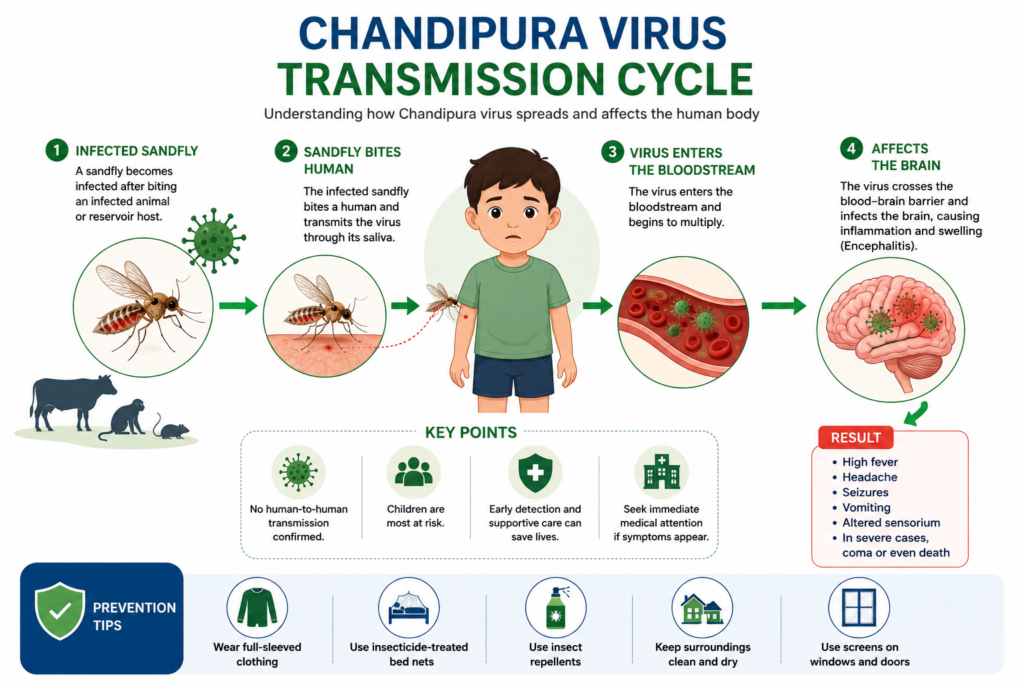
Current evidence suggests that the primary vector is the sandfly, although researchers continue studying the role of mosquitoes in transmission.
The virus is not known to spread directly from one person to another.
Transmission Process
- A sandfly bites an infected animal or reservoir.
- The virus multiplies inside the vector.
- The infected sandfly bites a human.
- The virus enters the bloodstream.
- In some individuals, it reaches the brain and nervous system.
Risk Factors
You may have a higher chance of infection if you:
- Live in rural Gujarat
- Spend time outdoors at dusk or night
- Do not use mosquito/sandfly protection
- Live near livestock
- Have poor sanitation around your home
- Are a child under 15 years of age
Who Is Most at Risk?
Although anyone can become infected, some groups are more vulnerable.
Children
Children account for the majority of reported severe cases because their immune systems are still developing.
Rural Families
People living in villages often have greater exposure to sandflies due to environmental conditions.
Agricultural Workers
Farmers and field workers spend long hours outdoors, increasing exposure to insect bites.
Elderly Individuals
Older adults with weakened immunity may experience more severe illness if infected.
People with Weak Immune Systems
Individuals with chronic illnesses or weakened immunity may be at increased risk of complications.
Symptoms of Chandipura Virus
Symptoms usually appear within a few days after infection and may worsen rapidly.
Early medical attention is essential.
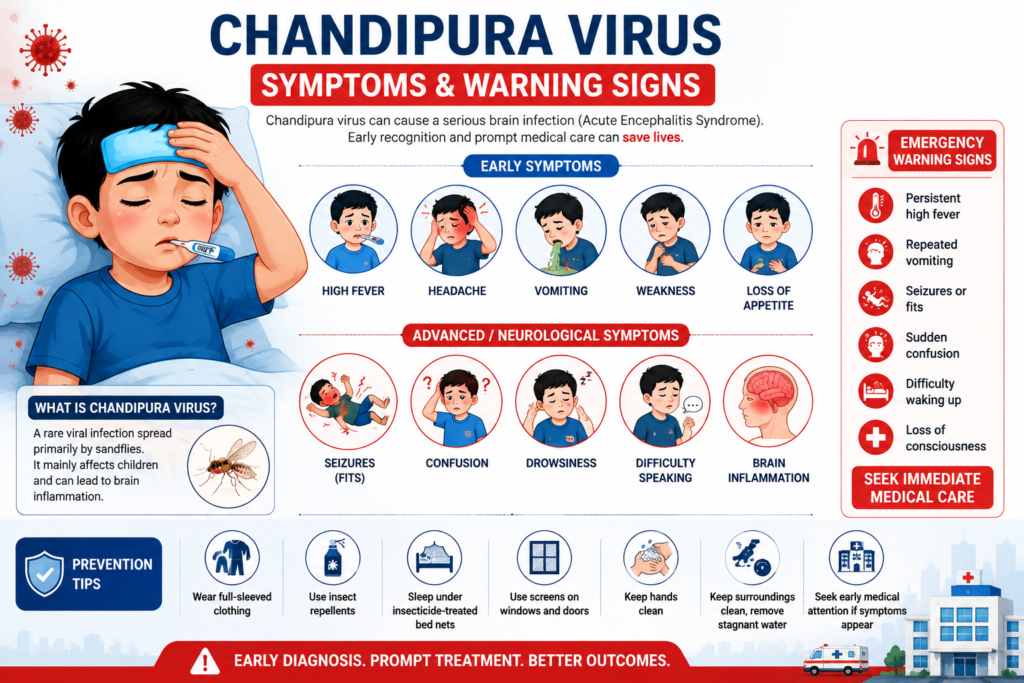
Early Symptoms
- High fever
- Severe headache
- Body pain
- Vomiting
- Weakness
- Fatigue
- Loss of appetite
Advanced Symptoms
If the infection affects the brain, symptoms may include:
- Confusion
- Seizures (fits)
- Drowsiness
- Difficulty speaking
- Muscle stiffness
- Loss of consciousness
- Coma (in severe cases)
Warning Signs Requiring Immediate Medical Care
Seek emergency medical attention if a child or adult develops:
- Persistent high fever
- Repeated vomiting
- Convulsions
- Sudden confusion
- Difficulty waking up
- Unconsciousness
Prompt hospital care can be life-saving.
Chandipura Virus vs Dengue vs Japanese Encephalitis
| Feature | Chandipura Virus | Dengue | Japanese Encephalitis |
|---|---|---|---|
| Vector | Sandfly (primarily) | Mosquito | Mosquito |
| Main Organ Affected | Brain | Blood & Blood Vessels | Brain |
| High Fever | ✅ | ✅ | ✅ |
| Brain Inflammation | Common | Rare | Common |
| Rash | Rare | Common | Rare |
| Bleeding | Rare | Common | Rare |
| Vaccine Available | No | Limited/varies by country | Yes |
| Human-to-Human Spread | No confirmed evidence | No | No |
Featured Snippet Answer
What is Chandipura virus in Gujarat?
Chandipura virus is a rare viral infection that has been reported in Gujarat and other parts of India. It is primarily transmitted by sandflies and can cause acute encephalitis syndrome (brain inflammation), particularly in children. Early diagnosis and supportive hospital treatment are critical because there is currently no specific antiviral treatment or vaccine.
Chandipura virus symptoms,
Chandipura virus Gujarat outbreak,
Chandipura disease,
Chandipura virus children,
Diagnosis of Chandipura Virus
Diagnosing Chandipura Virus in Gujarat can be challenging because its early symptoms often resemble other viral infections such as dengue, malaria, influenza, or Japanese encephalitis. Doctors rely on a combination of medical history, physical examination, and laboratory tests to confirm the infection.
The sooner the virus is identified, the faster supportive treatment can begin, which may improve outcomes.
How Doctors Diagnose Chandipura Virus
A doctor will usually consider:
- Recent high fever
- Neurological symptoms such as confusion or seizures
- Residence in or travel to an affected area
- Age of the patient (children are more commonly affected)
- Possible exposure to sandflies
If Chandipura virus is suspected, the patient is often admitted to a hospital for close monitoring.
Laboratory Tests
Healthcare providers may recommend one or more of the following tests:
| Test | Purpose |
|---|---|
| RT-PCR | Detects viral genetic material in the early stage of infection |
| IgM Antibody Test | Detects the body’s immune response to the virus |
| Blood Tests | Checks for signs of infection and organ function |
| Cerebrospinal Fluid (CSF) Analysis | Evaluates infection or inflammation in the brain and spinal cord |
| MRI or CT Scan | Detects brain swelling or other neurological changes |
Important: Laboratory confirmation is generally performed in specialized public health or reference laboratories.
Diseases That Need to Be Ruled Out
Because the symptoms overlap with several illnesses, doctors may also evaluate patients for:
- Dengue
- Malaria
- Japanese encephalitis
- Scrub typhus
- Viral meningitis
- Bacterial meningitis
- Influenza
- COVID-19 (if respiratory symptoms are present)
Treatment of Chandipura Virus
At present, there is no specific antiviral medicine approved for Chandipura virus infection.
Treatment focuses on supportive medical care, especially for patients who develop neurological complications.
Early hospitalization plays a critical role in improving survival.
Supportive Treatment
Doctors may provide:
- Intravenous (IV) fluids
- Fever-reducing medications
- Oxygen therapy if needed
- Anti-seizure medications
- Electrolyte correction
- Nutritional support
- Close neurological monitoring
Patients with severe illness may require intensive care (ICU).
Home Care: What You Can Do
If a doctor advises home recovery for a mild viral illness while awaiting diagnosis (or after discharge), caregivers should:
- Encourage adequate fluid intake.
- Allow plenty of rest.
- Monitor temperature regularly.
- Follow prescribed medicines exactly.
- Watch for warning signs such as seizures or confusion.
- Return to the hospital immediately if symptoms worsen.
Do not self-medicate with antibiotics unless prescribed. Antibiotics do not treat viral infections.
Prevention of Chandipura Virus
Because there is no vaccine and no specific antiviral treatment, prevention is the best defense.
Reducing exposure to sandflies and maintaining a clean environment are key strategies.
Personal Protection
Protect yourself and your family by:
- Wearing full-sleeved clothing.
- Using insect repellents approved for your age group.
- Sleeping under insecticide-treated bed nets where appropriate.
- Keeping doors and windows screened if possible.
- Avoiding unnecessary outdoor exposure during peak vector activity.
Home Protection
Simple household measures include:
- Cleaning waste regularly.
- Filling cracks in walls where insects may rest.
- Keeping animal shelters clean.
- Removing damp organic waste around the home.
- Improving ventilation and cleanliness.
Community Prevention
Communities can reduce risk by:
- Participating in local sanitation drives.
- Reporting suspected encephalitis cases promptly.
- Supporting vector-control programs.
- Following public health advisories.
- Educating families about early symptoms.
Can Chandipura Virus Be Prevented?
| Prevention Method | Effectiveness |
|---|---|
| Avoid insect bites | ⭐⭐⭐⭐⭐ |
| Use insect repellents | ⭐⭐⭐⭐⭐ |
| Wear protective clothing | ⭐⭐⭐⭐☆ |
| Improve sanitation | ⭐⭐⭐⭐⭐ |
| Early medical care | ⭐⭐⭐⭐⭐ |
| Vaccination | Not currently available |
Benefits of Early Diagnosis
Early recognition and hospital care can make a significant difference.
Benefits include:
- Faster supportive treatment
- Better monitoring for complications
- Early seizure management
- Improved hydration and nutrition
- Reduced risk of severe neurological damage
- Increased chance of recovery
- Better public health reporting and outbreak control
Common Mistakes to Avoid
Avoid these common errors if Chandipura virus is suspected:
❌ Ignoring persistent high fever.
❌ Assuming it is “just viral fever.”
❌ Delaying a hospital visit after seizures.
❌ Treating neurological symptoms at home without medical advice.
❌ Giving antibiotics without a doctor’s prescription.
❌ Not protecting children from insect bites.
❌ Waiting several days before seeking care if symptoms rapidly worsen.
Expert Tips
Healthcare professionals recommend the following:
1. Don’t Ignore Fever with Neurological Symptoms
A high fever combined with confusion, drowsiness, or seizures requires immediate medical evaluation.
2. Protect Children from Insect Bites
Children are among the groups most affected in reported outbreaks, so preventive measures are especially important.
3. Maintain Good Hygiene
A clean home and surrounding environment can help reduce vector breeding and resting sites.
4. Follow Government Health Advisories
Stay informed through trusted public health updates, particularly during periods of increased disease surveillance.
5. Seek Medical Care Early
Prompt evaluation gives healthcare teams the best opportunity to provide supportive treatment before complications develop.
Myth vs Fact
| Myth | Fact |
|---|---|
| Chandipura virus spreads from person to person. | There is no confirmed evidence of direct human-to-human transmission. |
| Antibiotics can cure Chandipura virus. | Antibiotics do not work against viruses. |
| Only children can get infected. | Anyone can be infected, though children appear to be more vulnerable to severe disease. |
| The disease always causes death. | Early diagnosis and supportive treatment may improve outcomes. |
| There is a vaccine available. | There is currently no licensed vaccine for Chandipura virus. |
Who Should Seek Immediate Medical Care?
Go to the nearest hospital immediately if someone develops:
- High fever with confusion
- Seizures
- Loss of consciousness
- Persistent vomiting
- Difficulty speaking
- Difficulty waking up
- Sudden behavioral changes
- Severe headache with drowsiness
These symptoms may indicate serious neurological involvement and should never be ignored.
Conclusion
The Chandipura Virus in Gujarat is an uncommon but potentially serious viral infection that deserves public awareness. Although most people have never heard of it, the disease can progress rapidly, especially in children, making early recognition essential.
At present, there is no specific antiviral treatment or vaccine. The best approach is prevention through protection against insect bites, maintaining a clean environment, and seeking immediate medical care if warning signs develop.
Public awareness, early diagnosis, supportive hospital care, and community participation remain the most effective tools for reducing the impact of Chandipura virus.
Key Takeaways
- Chandipura virus is a rare viral infection reported in Gujarat and other Indian states.
- It is primarily transmitted by sandflies.
- Children are more commonly affected by severe illness.
- Early symptoms include fever, headache, vomiting, and weakness.
- Severe cases can involve brain inflammation, seizures, and altered consciousness.
- There is no specific antiviral treatment or licensed vaccine.
- Supportive hospital care is the main treatment.
- Preventing insect bites and seeking prompt medical attention are the best ways to reduce risk.
Call to Action
If you found this guide helpful, share it with your family and friends—especially those living in areas where Chandipura virus has been reported. Raising awareness can help people recognize symptoms early and seek timely medical care.
For more trusted health information, prevention tips, and evidence-based wellness articles, explore the other resources available on your website and follow updates from your local health authorities.


Frequently Asked Questions (FAQs)
1. What is Chandipura virus?
Chandipura virus (CHPV) is a rare virus from the Rhabdoviridae family that can cause Acute Encephalitis Syndrome (AES), especially in children. It is primarily transmitted by sandflies.
2. Is Chandipura virus contagious?
There is no confirmed evidence that Chandipura virus spreads directly from one person to another. Current evidence suggests transmission mainly occurs through infected sandflies.
3. What are the first symptoms of Chandipura virus?
Early symptoms include:
- High fever
- Severe headache
- Vomiting
- Body pain
- Weakness
- Fatigue
- Loss of appetite
If neurological symptoms develop, seek emergency medical care immediately.
4. Is Chandipura virus dangerous?
Yes. Although it is rare, Chandipura virus can become serious because it may affect the brain and nervous system, leading to Acute Encephalitis Syndrome (AES).
5. Who is most at risk?
People at higher risk include:
- Children under 15 years
- Rural communities
- Agricultural workers
- People exposed to sandflies
- Individuals with weakened immune systems
6. Is there a vaccine for Chandipura virus?
No. There is currently no licensed vaccine available for Chandipura virus.
7. Can antibiotics treat Chandipura virus?
No.
Antibiotics only work against bacterial infections. Chandipura virus is caused by a virus, so treatment focuses on supportive hospital care.
8. How is Chandipura virus diagnosed?
Doctors may use:
- RT-PCR testing
- IgM antibody testing
- Blood tests
- Cerebrospinal fluid (CSF) analysis
- MRI or CT scans (when neurological involvement is suspected)
9. How can I prevent Chandipura virus?
You can reduce your risk by:
- Wearing long-sleeved clothing
- Using insect repellents
- Sleeping under insecticide-treated bed nets where appropriate
- Keeping your surroundings clean
- Seeking prompt medical care if symptoms appear
10. Is Chandipura virus common in Gujarat?
No.
It is considered rare, but Gujarat has reported sporadic cases and outbreaks in recent years. Public health surveillance helps detect and respond to cases quickly.
11. Can adults get Chandipura virus?
Yes.
Although severe disease is reported more often in children, adults can also become infected.
12. When should I go to the hospital?
Seek immediate medical care if you or your child develops:
- High fever
- Repeated vomiting
- Seizures
- Confusion
- Drowsiness
- Difficulty waking up
- Loss of consciousness

Pingback: Cyclospora Outbreak: Symptoms, Causes, Treatment, Prevention
Pingback: 15 Stretching Before Bed Benefits for Better Sleep & Health
Pingback: Morning Habits for a Positive Mind: 7 Routines for Happiness
Pingback: 15 Best Foods That Help Anxiety Naturally
Pingback: 10-Minute Morning Workout to Wake Up Your Body
Pingback: 15 Daily Foods for a Healthy Lifestyle: Science-Backed Guide