
Why Do I Feel Sleepy After Eating? Causes, Solutions, and What You Can Do
Have you ever finished a meal and suddenly felt like you could fall asleep right where you are? Maybe you were productive before lunch, but after eating, your eyes became heavy, your concentration disappeared, and all you wanted was a nap.
If this happens occasionally, it is usually nothing to worry about. Feeling sleepy after eating is quite common and can be influenced by the size of your meal, what you eat, your sleep quality, hydration, activity level, and even your daily biological clock.
However, if you feel extremely tired after almost every meal, or you are wondering “why am I so sleepy all the time?”, there may be more going on than simply eating a large lunch.
In this article, we will explore why you may feel sleepy after eating, which foods can make post-meal tiredness worse, lifestyle habits that may help, and when persistent fatigue deserves medical attention.

Table of Contents
Why Do I Feel Sleepy After Eating?
Feeling sleepy after eating is sometimes called post-meal sleepiness or postprandial somnolence. It can happen because digestion changes the body’s activity and because certain foods and eating patterns can influence blood glucose, hormones, and brain signaling.

Several factors can contribute to that sleepy feeling.
Common reasons include:
- Eating a very large meal
- Consuming a meal high in refined carbohydrates
- Eating foods high in sugar
- Having a meal that is very high in fat
- Poor sleep the night before
- Dehydration
- Drinking alcohol with a meal
- Natural changes in your body’s circadian rhythm
- Blood sugar fluctuations
- Eating too quickly
- Certain medications
- Underlying health conditions
For most people, mild sleepiness after a meal is temporary. The important question is whether the tiredness is occasional or happens frequently and severely.
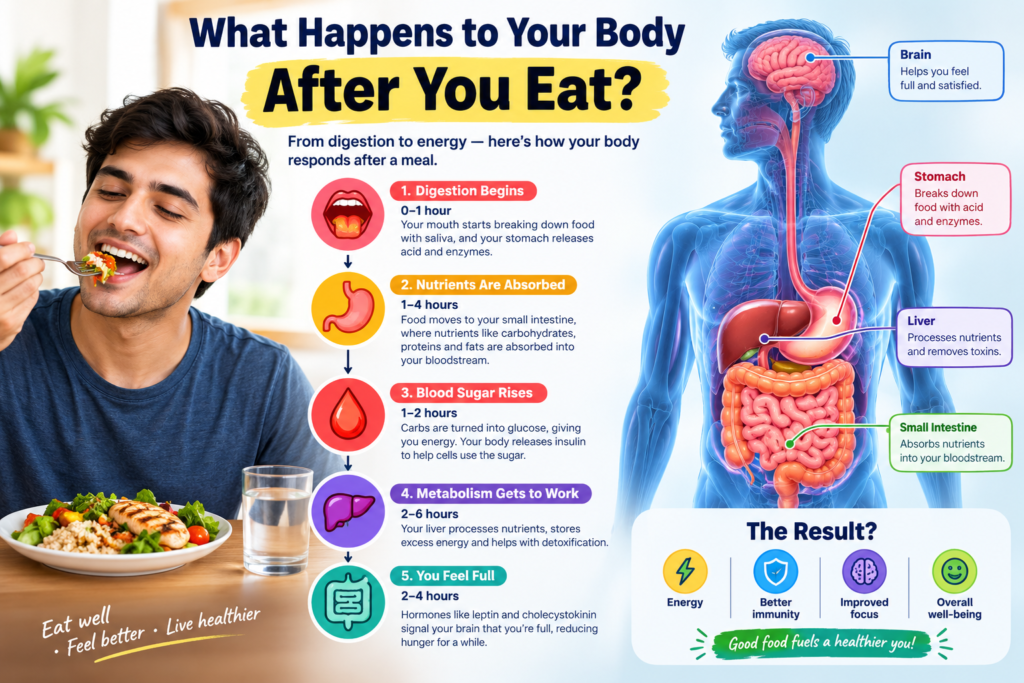
What Happens to Your Body After You Eat?
After you eat, your digestive system becomes active. Your body begins breaking food down into nutrients that can be absorbed and used for energy.
Blood glucose can rise after carbohydrate-containing foods, and your body releases insulin to help move glucose from the bloodstream into cells.
Your body also produces various hormones and signaling chemicals that can influence appetite, alertness, and sleepiness.
This does not mean that your brain suddenly stops receiving blood because your stomach is digesting food. That is a common misconception.
Instead, post-meal tiredness is more likely to result from a combination of:
- Meal composition
- Portion size
- Blood glucose changes
- Hormonal responses
- Digestive activity
- Your natural circadian rhythm
- Your existing level of tiredness
So, if you were already sleep-deprived, a large meal may simply make your underlying fatigue much more noticeable.
10 Common Reasons You Feel Sleepy After Eating
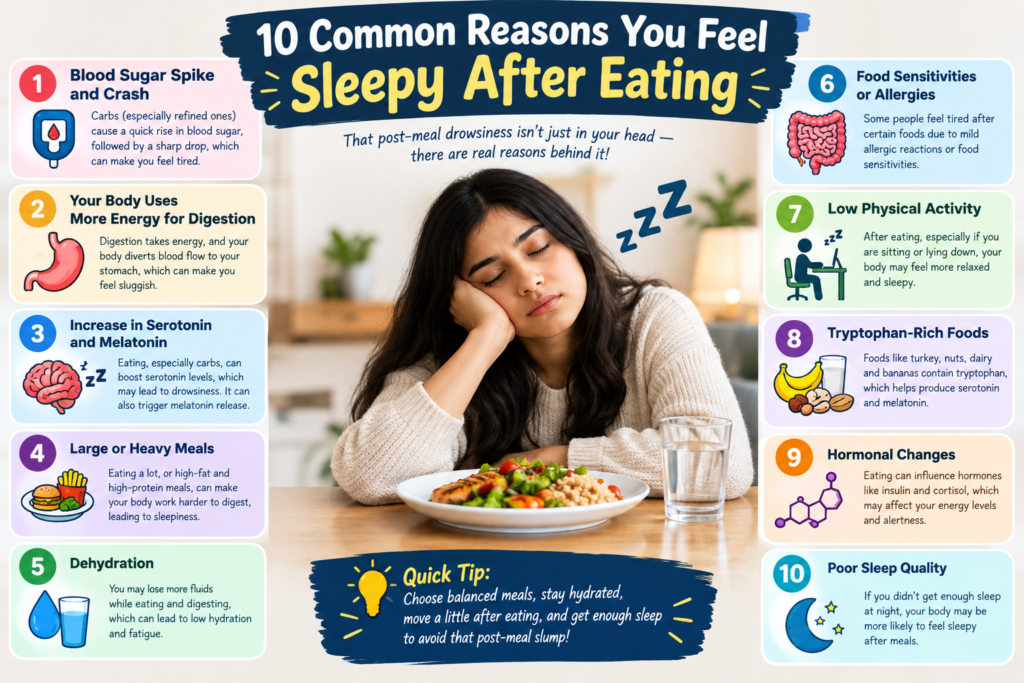
1. You Ate Too Much
One of the simplest explanations is portion size.
A large meal requires more digestive work and can leave you feeling physically heavy and sluggish. If your meal contains large amounts of carbohydrates, fats, and calories, the effect can feel even stronger.
Instead of eating until you are uncomfortably full, try stopping when you feel comfortably satisfied.
Try this:
- Reduce portion sizes slightly
- Eat slowly
- Include vegetables or other fiber-rich foods
- Add a source of protein
- Avoid eating extremely large meals after long periods without food
2. Your Meal Was High in Refined Carbohydrates
Foods such as sugary cereals, pastries, white bread, sweets, sugary drinks, and other highly refined carbohydrates can cause a rapid increase in blood glucose.
Your body responds by releasing insulin. Depending on the meal and your individual metabolism, this can be followed by changes in energy levels that make you feel tired or sluggish.
This doesn’t mean you need to completely eliminate carbohydrates.
Instead, focus on better-quality carbohydrate sources and combine them with protein, healthy fats, and fiber.
Better combinations can include:
- Oatmeal with nuts and yogurt
- Brown rice with vegetables and beans
- Whole-grain bread with eggs
- Fruit with Greek yogurt
- Lentils with vegetables and whole grains
3. You Ate a Very Sugary Meal
A meal or snack packed with added sugar may provide quick energy but may not keep you satisfied for long.
Sugary drinks, desserts, sweetened coffee, cookies, cakes, and candy can make your meal less balanced.
If you frequently experience a noticeable energy crash after sugary foods, try reducing added sugar and choosing foods that provide protein and fiber.
4. You Didn’t Sleep Well
Sometimes the food isn’t the real problem.
If you slept poorly the previous night, you may already have reduced alertness. After eating, your body naturally shifts into a more relaxed state, making your existing tiredness much easier to notice.
This is especially relevant if you frequently think:
or
“Why am I tired after sleeping?”
If you regularly wake up feeling exhausted despite spending enough time in bed, the problem may involve sleep quality rather than simply the number of hours you sleep.
Wake Up Tired After 8 Hours of Sleep: Could Poor Sleep Be the Real Problem?
Getting eight hours of sleep does not automatically guarantee restorative sleep.
You may wake up tired after 8 hours of sleep if your sleep is frequently interrupted or if you have a sleep-related problem.
Possible reasons include:
- An inconsistent sleep schedule
- Frequent nighttime awakenings
- Excessive screen use before bed
- Stress or anxiety
- An uncomfortable sleep environment
- Snoring or breathing problems during sleep
- Certain medications
- Alcohol consumption
- An underlying medical condition
If you consistently experience waking up exhausted, especially when it affects your daily activities, consider discussing it with a healthcare professional.
5. Your Circadian Rhythm Naturally Makes You Sleepier
Your body has an internal biological clock called the circadian rhythm.
This clock influences your sleep-wake cycle throughout the day.
Many people naturally experience a decrease in alertness during the afternoon. If you eat lunch around the same time, it can seem as though the meal itself is causing your sleepiness.
In reality, your meal and your body’s natural afternoon dip may be happening at the same time.
This is one reason why you might feel particularly sleepy after lunch but not necessarily after breakfast or dinner.
Why Am I So Sleepy All the Time?
If you feel sleepy throughout the day rather than just after meals, it is worth looking beyond your diet.
Ask yourself:
- Am I getting enough sleep?
- Do I wake up refreshed?
- Do I snore heavily?
- Do I wake frequently during the night?
- Am I eating balanced meals?
- Am I drinking enough water?
- Am I physically active?
- Am I taking medications that can cause drowsiness?
- Has my stress level increased recently?
- Have I experienced this problem for weeks or months?
If you keep asking “why am I so sleepy all the time?”, persistent daytime sleepiness may be worth discussing with a healthcare professional.
6. Dehydration Can Make You Feel Tired
Even mild dehydration may contribute to feelings of tiredness, headache, and reduced concentration.
If you eat a meal while already dehydrated, you may feel even more sluggish afterward.
Simple habits that may help:
- Drink water regularly throughout the day
- Keep water nearby while working
- Drink water with meals if appropriate for you
- Eat water-rich foods such as fruits and vegetables
- Pay attention to thirst, especially in hot weather
Your fluid needs vary depending on factors such as activity, climate, diet, and health conditions.
7. Alcohol Can Increase Post-Meal Sleepiness
Alcohol can make some people feel sleepy, particularly when consumed with a large meal.
Although it may initially make you feel relaxed or drowsy, alcohol can interfere with normal sleep quality.
This can create a cycle in which you feel tired the next day, even if you spent plenty of time in bed.
If you are already struggling with daytime fatigue, reducing alcohol may help you determine whether it is contributing to the problem.
8. You May Be Experiencing Blood Sugar Fluctuations
Blood glucose naturally changes after eating.
However, some people experience more noticeable symptoms following certain meals. They may feel:
- Sleepy
- Weak
- Shaky
- Hungry again quickly
- Irritable
- Light-headed
- Unable to concentrate
If these symptoms happen regularly, particularly after meals, speak with a healthcare professional. They can determine whether blood sugar problems or another condition could be contributing.
People with diabetes or those taking glucose-lowering medication should be particularly attentive to unusual symptoms.
9. Your Meal May Lack Protein and Fiber
A meal dominated by refined carbohydrates may not provide the same lasting satisfaction as a balanced meal.
Protein and fiber can help make meals more filling and may support steadier energy levels.
A balanced plate can include:
| Food Group | Examples |
|---|---|
| Protein | Eggs, beans, lentils, fish, chicken, tofu, yogurt |
| High-fiber carbohydrates | Oats, whole grains, beans, fruits |
| Vegetables | Spinach, broccoli, carrots, peppers |
| Healthy fats | Nuts, seeds, avocado, olive oil |
| Fluids | Water or unsweetened beverages |
You don’t need a perfect meal every time. The goal is consistency.
10. Certain Health Conditions Can Contribute to Fatigue
Occasional sleepiness after eating is usually not a sign of serious illness.
But persistent or severe fatigue can sometimes be associated with an underlying health condition.
Examples include:
- Anemia
- Diabetes
- Thyroid disorders
- Sleep apnea
- Depression
- Certain infections
- Nutritional deficiencies
- Medication side effects
- Other medical conditions
This is particularly important if your tiredness is accompanied by other symptoms.
Why Do I Feel Tired Even When I Eat Healthy Food?
Healthy eating does not guarantee that you will never feel tired.
You could still feel sleepy after a nutritious meal because of:
- Poor sleep
- Stress
- Circadian rhythm
- Dehydration
- Large portions
- Lack of physical activity
- Illness
- Medication effects
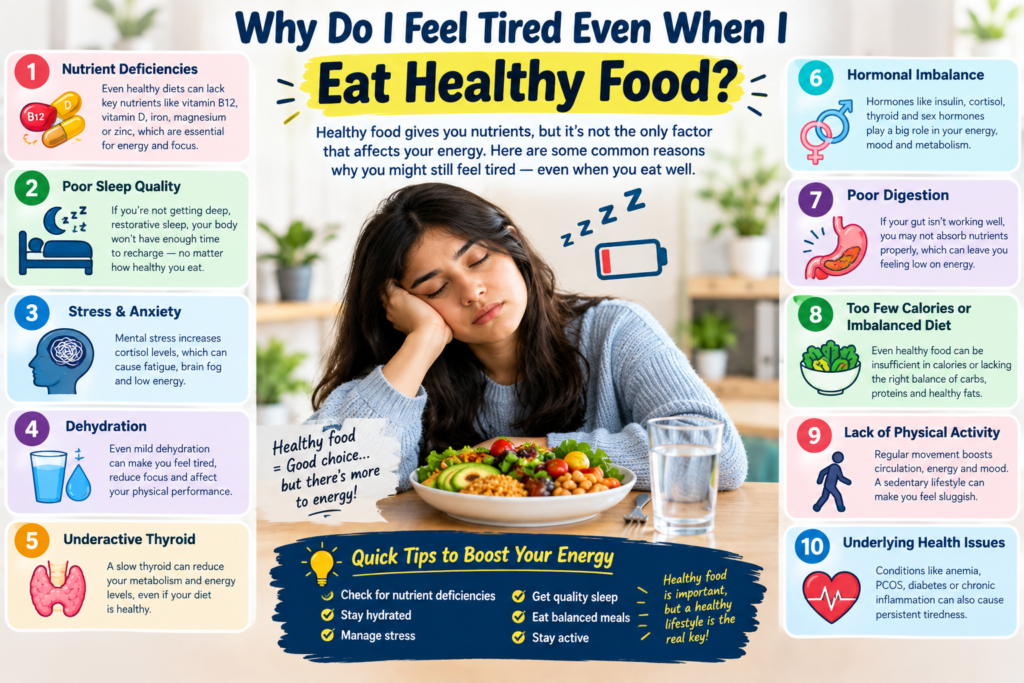
For example, a healthy lunch can still make you sleepy if you slept only five hours the previous night.
This is why it is better to look at your overall lifestyle rather than blaming a single food.
I Have No Energy: What Should I Look At?
If you frequently think “I have no energy”, start by looking at the basics.
Check Your Sleep
Aim for a consistent sleep and wake schedule and create a relaxing nighttime routine.
Check Your Meals
Try to build meals around protein, vegetables, fiber-rich carbohydrates, and healthy fats.
Check Your Hydration
Drink fluids regularly throughout the day.
Check Your Activity
Regular movement can support energy and overall health. Even a short walk can be useful if you have been sitting for a long time.
Check Your Stress
Chronic stress can leave you mentally and physically drained.
Check Your Symptoms
If fatigue continues despite healthy lifestyle habits, medical evaluation may be appropriate.
What Foods Can Make You Sleepy After Eating?
Some meals are more likely to leave you feeling sluggish than others.
Foods that may contribute to post-meal sleepiness include:
- Large portions of white rice
- Refined bread
- Pastries
- Sugary cereals
- Cakes and desserts
- Sugary beverages
- Large fast-food meals
- Very fatty meals
- Large portions of processed foods
This doesn’t mean these foods are automatically unhealthy or forbidden. The overall dietary pattern, portion size, and frequency matter.
What Should You Eat to Avoid Feeling Sleepy After Lunch?
If lunch regularly makes you tired, experiment with a more balanced meal.
Example lunch options:
- Grilled chicken with vegetables and brown rice
- Lentil soup with whole-grain bread and salad
- Eggs with whole-grain toast and vegetables
- Bean and vegetable bowl
- Greek yogurt with fruit, oats, and nuts
- Tofu with vegetables and whole grains
The goal is to avoid making your meal overwhelmingly large or heavily based on refined carbohydrates and added sugars.
Simple Ways to Reduce Sleepiness After Eating
You don’t necessarily need a complicated diet plan.
Try these practical habits:
1. Eat smaller portions
Large meals are more likely to leave you feeling overly full and sluggish.
2. Add protein
Include eggs, yogurt, lentils, beans, tofu, fish, chicken, or another protein source that fits your diet.
3. Increase fiber
Vegetables, fruits, legumes, and whole grains can make meals more balanced.
4. Limit excessive added sugar
Especially avoid relying on sugary drinks and desserts for energy.
5. Stay hydrated
Drink water consistently rather than waiting until you are extremely thirsty.
6. Take a short walk
A gentle walk after eating can help you avoid immediately sitting or lying down and may support healthy blood glucose management.
7. Improve your sleep routine
If you are already sleep-deprived, even a healthy meal may make you feel sleepy.
8. Avoid extremely heavy meals before activities
If you need to work, study, or drive, a very large meal may make staying alert more difficult.
Can a Short Walk Help After Eating?
Yes, a gentle walk after a meal can be a useful habit for many people.
Walking encourages movement instead of immediately sitting or lying down. Physical activity after meals may also help with blood glucose management.
You don’t need an intense workout.
Even a comfortable walk can be a practical addition to your daily routine.
If you feel dizzy, weak, or unwell, however, stop and seek appropriate medical advice.
Sleepiness After Eating vs. Persistent Fatigue
It is important to understand the difference.
| Symptom | Possible Pattern |
|---|---|
| Mild sleepiness after a large meal | Often related to meal size |
| Sleepiness after a sugary meal | May relate to meal composition |
| Afternoon tiredness | May overlap with circadian rhythm |
| Feeling tired every day | May have multiple causes |
| Waking exhausted despite enough sleep | Sleep quality or health factors may need evaluation |
| Severe daytime sleepiness | Should be discussed with a healthcare professional |
| Tiredness plus dizziness or weakness | Medical assessment may be appropriate |
The pattern matters more than one isolated episode.
When Should You Talk to a Doctor?
Occasional sleepiness after eating is generally not a reason for concern.
However, consider speaking with a healthcare professional if:
- You feel extremely sleepy after nearly every meal
- Your fatigue has lasted for several weeks
- You regularly wake up exhausted
- You sleep enough but remain unusually tired
- You frequently feel dizzy or weak
- You have unexplained weight changes
- You experience excessive thirst or frequent urination
- You snore heavily or have nighttime breathing problems
- Your tiredness interferes with work, school, driving, or daily activities
- You are taking medication that may cause drowsiness
A healthcare professional can review your symptoms, medications, sleep habits, diet, and medical history and determine whether further evaluation is needed.
Important Questions and Answers
Why do I feel sleepy after eating?
Sleepiness after eating can be related to meal size, meal composition, blood glucose changes, digestion, circadian rhythm, and your existing level of tiredness. A large meal or one high in refined carbohydrates may make the feeling more noticeable.
Is it normal to feel sleepy after lunch?
Yes. Many people experience some afternoon sleepiness. Your natural circadian rhythm can contribute, and a large lunch may make the feeling stronger.
Why am I so sleepy all the time?
Constant sleepiness can have many causes, including insufficient or poor-quality sleep, stress, medications, nutritional issues, sleep disorders, and certain medical conditions. If it persists, talk with a healthcare professional.
Why do I feel tired even after sleeping?
Sleep duration is only one part of restorative sleep. Poor sleep quality, frequent nighttime awakenings, sleep disorders, stress, medications, and health conditions can all contribute to feeling tired despite spending enough time in bed.
Why am I tired after sleeping 8 hours?
You may wake up tired after 8 hours of sleep if your sleep is fragmented or not restorative. An inconsistent sleep schedule, sleep apnea, stress, alcohol, medications, and other factors can contribute.
Why do I wake up exhausted?
Waking up exhausted can happen when you are not getting restorative sleep. If it happens regularly despite getting enough sleep, consider discussing it with a healthcare professional.
I have no energy. What should I do?
Start with the basics: consistent sleep, balanced meals, adequate hydration, regular physical activity, and stress management. If low energy continues or is severe, seek medical advice.
Can eating sugar make you sleepy?
A meal high in added sugar or refined carbohydrates can contribute to noticeable changes in energy for some people. Combining carbohydrates with protein, fiber, and healthy fats can make the meal more balanced.
Should I take a nap after eating?
An occasional short nap may be fine if your schedule allows it. However, if you regularly need to sleep after meals because you are overwhelmingly tired, look for the underlying cause rather than relying on naps every day.
Does sleepiness after eating mean I have diabetes?
Not necessarily. Feeling sleepy after a meal is common and does not by itself indicate diabetes. However, persistent fatigue accompanied by symptoms such as excessive thirst or frequent urination should be discussed with a healthcare professional.
Final Thoughts: Why Do I Feel Sleepy After Eating?
Feeling sleepy after eating is common, and in many cases it is simply the result of a large meal, a carbohydrate-heavy diet, your natural afternoon energy dip, or inadequate sleep.
The bigger concern is when post-meal sleepiness becomes frequent, severe, or part of a larger pattern of fatigue.
If you regularly ask yourself “why do I feel tired?”, “why am I so sleepy all the time?”, or “why am I tired after sleeping?”, don’t focus only on what you ate.
Look at the complete picture:
- Your sleep quality
- Your meal size
- Your food choices
- Your hydration
- Your physical activity
- Your stress levels
- Your medications
- Other symptoms you may be experiencing
Small changes such as eating balanced meals, reducing oversized portions, staying hydrated, getting consistent sleep, and taking a short walk after meals may help.
Most importantly, persistent or unexplained fatigue should not simply be ignored. If your tiredness continues for weeks, affects your daily life, or comes with other concerning symptoms, a healthcare professional can help identify the underlying cause.
Your body uses food for energy—but how you feel after eating depends on much more than food alone.
Pingback: Why Do I Wake Up Tired After 8 Hours of Sleep?
Pingback: 10 Min Walking vs Running: Which Is Better for Your Health?
Pingback: 10 means Why Do I Always Feel Hungry? Causes & How to Stop