
Waking up feeling weak, tired, or low on energy can be frustrating, especially when you expect to feel refreshed after a full night’s sleep. Instead of starting your day feeling active, you may experience fatigue, dizziness, muscle weakness, or a lack of motivation.
If you frequently wonder, “Why do I feel weak in the morning?”, you are not alone. Morning weakness can happen for several reasons, including poor sleep quality, dehydration, low blood sugar, nutritional deficiencies, stress, or underlying health conditions.
Understanding the possible causes can help you identify what is affecting your energy levels and take the right steps to feel better.
In this article, we will explore the common causes of morning weakness, its symptoms, practical remedies, and when you should consult a healthcare professional.
Table of Contents
Why Do I Feel Weak in the Morning? What Is Morning Weakness?
Morning weakness refers to feeling unusually tired, physically weak, or lacking energy after waking up. It may occur occasionally or become a regular problem.
Some people feel better after drinking water, eating breakfast, or moving around. Others may continue experiencing fatigue throughout the day.
Morning weakness is not a disease itself. Instead, it can be a sign of lifestyle-related issues or an underlying medical condition.

10 Common Reasons Why You Feel Weak in the Morning
Several factors can contribute to low energy levels after waking up. Here are ten common reasons to consider.
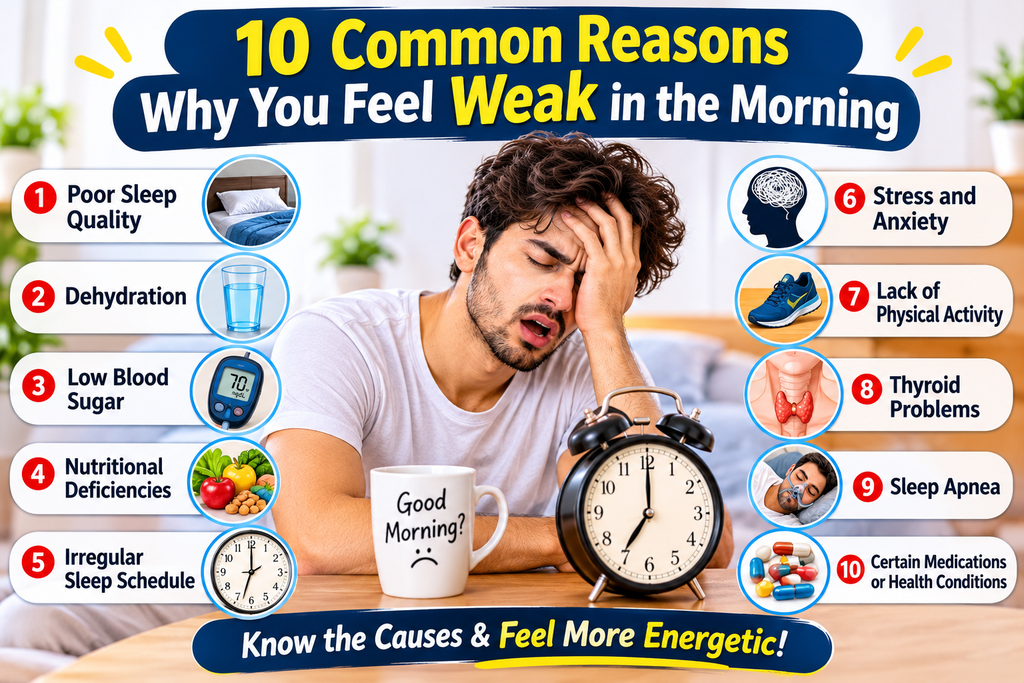
1. Poor Sleep Quality
Getting enough sleep is important, but sleep quality matters just as much as sleep duration.
Even if you sleep for seven to eight hours, frequent interruptions, an uncomfortable sleeping environment, or sleep disorders can prevent your body from getting restorative rest.
Common signs include:
- Feeling tired immediately after waking up.
- Difficulty concentrating.
- Daytime sleepiness.
- Frequent nighttime awakenings.
What can help?
Maintain a consistent sleep schedule, reduce screen exposure before bedtime, and create a comfortable sleeping environment.
2. Dehydration
Your body loses water through breathing and sweating while you sleep. If you do not drink enough fluids during the day, you may wake up feeling dehydrated.
Dehydration can contribute to fatigue, headaches, dizziness, and reduced physical performance.
What can help?
Drink enough water throughout the day. Having a glass of water after waking up can help you restore fluids, especially if you feel thirsty.
3. Low Blood Sugar
Blood glucose provides energy to your body’s cells. Changes in blood sugar levels can sometimes contribute to weakness, shakiness, sweating, or dizziness.
Low blood sugar is particularly important for people with diabetes who use insulin or certain glucose-lowering medications.
What can help?
Maintain regular, balanced meals. If you have diabetes, follow your healthcare professional’s recommendations for monitoring and managing blood glucose.
Do not assume that morning weakness automatically means your blood sugar is low.
4. Nutritional Deficiencies
Your body needs essential vitamins and minerals to support energy production, muscle function, and overall health.
Deficiencies in certain nutrients may contribute to persistent fatigue and weakness.
Some important nutrients include:
- Iron: Low iron levels can lead to iron-deficiency anemia, which may cause fatigue and weakness.
- Vitamin B12: Deficiency can affect red blood cell production and nerve function.
- Vitamin D: Low levels may be associated with muscle weakness and bone discomfort.
- Folate: Important for healthy red blood cell production.
What can help?
Eat a balanced diet containing vegetables, fruits, whole grains, legumes, dairy products, eggs, and other suitable protein sources.
If fatigue continues, consult a healthcare professional about whether blood tests are needed. Avoid taking high-dose supplements without medical advice.
5. Irregular Sleep Schedule
Going to bed and waking up at different times can disrupt your body’s internal clock, also known as the circadian rhythm.
This may make it harder to wake up feeling refreshed.
What can help?
- Go to bed at approximately the same time every night.
- Wake up at a consistent time.
- Avoid excessive late-night screen use.
- Get natural daylight in the morning.
Consistency can improve your sleep-wake cycle over time.
6. Stress and Anxiety
Mental stress can affect your sleep quality and physical energy.
If your mind remains active at night because of work pressure, financial concerns, or personal problems, you may struggle to get restful sleep.
As a result, you might wake up feeling mentally exhausted and physically weak.
What can help?
Try relaxation techniques such as deep breathing, meditation, gentle stretching, or journaling before bedtime.
If stress or anxiety is affecting your daily life, consider speaking with a qualified mental health professional.
7. Lack of Physical Activity
A sedentary lifestyle may contribute to reduced stamina, poor fitness, and low energy levels.
Regular physical activity supports cardiovascular health, muscle strength, and better sleep.
What can help?
Start with manageable activities such as:
- A 15–20-minute walk.
- Light stretching.
- Yoga.
- Gentle strength exercises.
Increase activity gradually according to your fitness level.
8. Thyroid Problems
The thyroid gland helps regulate metabolism and several important body functions.
An underactive thyroid, known as hypothyroidism, can cause persistent tiredness and weakness.
Other possible symptoms include:
- Unexplained weight gain.
- Increased sensitivity to cold.
- Constipation.
- Dry skin.
- Hair thinning.
What can help?
If you experience these symptoms regularly, consult a healthcare professional. A thyroid function blood test may be recommended.
9. Sleep Apnea
Sleep apnea is a sleep disorder in which breathing repeatedly stops and starts during sleep.
These interruptions can reduce sleep quality and cause significant daytime fatigue.
Possible warning signs include:
- Loud, frequent snoring.
- Gasping or choking during sleep.
- Morning headaches.
- Excessive daytime sleepiness.
- Difficulty concentrating.
If you suspect sleep apnea, seek medical evaluation.
10. Certain Medications or Underlying Health Conditions
Some medications may cause fatigue or drowsiness as a side effect.
Conditions such as anemia, diabetes, infections, heart disease, and kidney problems can also contribute to persistent weakness.
If morning weakness is new, unexplained, or getting worse, a medical evaluation can help identify the cause.
Never stop prescribed medication without consulting your healthcare professional.
Common Symptoms Associated With Morning Weakness
Morning weakness can appear differently from person to person.
Some commonly reported symptoms include:
- Feeling tired immediately after waking up.
- Heavy arms or legs.
- Dizziness or lightheadedness.
- Headaches in the morning.
- Muscle weakness.
- Difficulty getting out of bed.
- Lack of concentration.
- Low motivation and energy.
The symptoms, their duration, and any other health changes can help a healthcare professional understand the possible cause.
How to Stop Feeling Weak in the Morning: 8 Practical Tips
Making a few healthy lifestyle changes may help improve your morning energy levels.
1. Follow a Consistent Sleep Routine
Aim for 7–9 hours of sleep each night if you are an adult. Maintain a regular bedtime and wake-up schedule.
2. Drink Water After Waking Up
Start your morning with a glass of water. Continue drinking fluids regularly throughout the day.
3. Eat a Balanced Breakfast
Include protein, fiber, and healthy carbohydrates in your breakfast.
Some nutritious options include:
- Oatmeal with nuts and fruit.
- Eggs with whole-grain toast.
- Greek yogurt with fruit.
- Vegetable poha with peanuts.
- Moong dal chilla.
Choose foods that suit your dietary needs.
4. Get Morning Sunlight
Spend some time outdoors in natural daylight after waking up. Morning light helps regulate your body’s internal clock and supports a healthy sleep-wake cycle.
5. Do Light Morning Exercise
Gentle stretching, walking, or yoga can help you feel more active.
Avoid intense workouts if you are experiencing unexplained or significant weakness.
6. Avoid Excessive Caffeine
Coffee or tea may temporarily improve alertness, but excessive caffeine can interfere with sleep and contribute to an unhealthy sleep cycle.
Avoid relying on caffeine to hide persistent fatigue.
7. Maintain a Balanced Diet
Include foods rich in iron, vitamin B12, folate, protein, and other essential nutrients.
A varied diet supports normal energy metabolism and overall health.
8. Manage Stress
Take time to relax before bedtime. Meditation, breathing exercises, and a calming nighttime routine may improve sleep quality.
When Should You See a Doctor?
Occasional morning tiredness may improve with better sleep, hydration, and lifestyle changes.
However, you should consult a healthcare professional if:
- Morning weakness happens frequently.
- Fatigue continues despite adequate sleep.
- You experience unexplained weight changes.
- You have persistent dizziness or headaches.
- You notice unusual shortness of breath.
- Weakness interferes with your daily activities.
A healthcare professional may recommend appropriate tests based on your symptoms and medical history. These could include a complete blood count (CBC), blood glucose testing, thyroid function tests, or nutrient-level assessments.
Important: Sudden weakness, especially on one side of the body, facial drooping, difficulty speaking, chest pain, or severe breathing difficulty requires immediate emergency medical attention.
Frequently Asked Questions (FAQs)
1. Why do I feel weak immediately after waking up?
Morning weakness can result from poor sleep quality, dehydration, nutritional deficiencies, stress, or certain medical conditions. If it happens regularly, consider consulting a healthcare professional.
2. Can dehydration cause morning weakness?
Yes. Dehydration can contribute to fatigue, dizziness, and headaches. Drinking adequate fluids throughout the day can help prevent dehydration.
3. Can vitamin deficiency make me feel tired in the morning?
Yes. Deficiencies in iron, vitamin B12, folate, and other nutrients can contribute to fatigue and weakness. A healthcare professional can determine whether testing or supplementation is necessary.
4. How many hours should I sleep to avoid morning weakness?
Most adults need approximately 7–9 hours of sleep each night. However, sleep quality and individual health conditions also matter.
5. Is morning weakness a sign of diabetes?
Morning weakness alone does not indicate diabetes. However, blood sugar fluctuations and diabetes-related complications can contribute to fatigue. If you have concerns, consult a healthcare professional about appropriate testing.
6. What should I eat in the morning to improve energy?
Choose a balanced breakfast containing protein, fiber, and complex carbohydrates. Eggs, oats, yogurt, fruits, nuts, and whole grains are useful options.
7. Why do I feel weak even after sleeping for 8 hours?
Sleeping for eight hours does not always guarantee restorative sleep. Sleep apnea, stress, nutritional deficiencies, thyroid problems, and other medical conditions may contribute to persistent tiredness.
8. Is morning weakness normal?
Occasional tiredness can be common, particularly after poor sleep. However, frequent or unexplained weakness should not be ignored.
Conclusion
Feeling weak in the morning can affect your productivity, mood, and overall quality of life. Although poor sleep, dehydration, irregular eating habits, and stress are common contributors, persistent morning weakness may sometimes indicate an underlying health condition.
Start by improving your sleep routine, drinking enough water, eating balanced meals, and maintaining regular physical activity.
Most importantly, pay attention to your body’s signals. If morning weakness continues or comes with other unusual symptoms, consult a healthcare professional to identify the underlying cause.
A healthy morning starts with healthy daily habits. Take small steps today to support better sleep, improved energy, and overall well-being.
Pingback: 10 means Why Do I Always Feel Hungry? Causes & How to Stop
Pingback: Why Do I Wake Up Tired After 8 Hours of Sleep?
Pingback: Vitamin D3 and B12 Deficiency: Symptoms & Foods
Pingback: Best High Protein Foods: Top 25 Protein-Rich Foods
Pingback: Why Do I Feel Dizzy When I Stand Up? 7 Common Causes