
How Much Water Helps Weight Loss? The Complete Hydration Guide for Fat Loss
When people think about weight loss, they often focus on diet plans, calorie counting, and exercise routines. However, one of the simplest and most overlooked factors in successful weight management is drinking enough water.
Water plays a crucial role in nearly every function of the human body, including metabolism, digestion, temperature regulation, and energy production. While water itself does not directly burn fat, staying properly hydrated can support weight loss in several ways, such as reducing hunger, increasing calorie burning, and improving exercise performance.
In this guide, we’ll explore how much water helps with weight loss, the science behind hydration, practical tips for drinking more water, and answers to common questions.
Table of Contents
- Why Water Is Important for Weight Loss
- How Water Supports Fat Loss
- How Much Water Should You Drink Daily?
- Factors That Affect Water Needs
- Best Times to Drink Water for Weight Loss
- Signs of Dehydration
- Can Drinking Too Much Water Be Harmful?
- Water-Rich Foods That Support Hydration
- Weight Loss Tips Using Water
- Frequently Asked Questions (Q&A)
- Conclusion
Why Water Is Important for Weight Loss
Water makes up approximately 60% of the human body and is essential for maintaining good health. Mention below Weight Loss Tips Using Water.
Proper hydration helps:
- Support metabolism
- Improve digestion
- Transport nutrients
- Regulate body temperature
- Improve physical performance
- Remove waste products
Without adequate water intake, the body cannot function efficiently, which may negatively impact weight loss efforts.
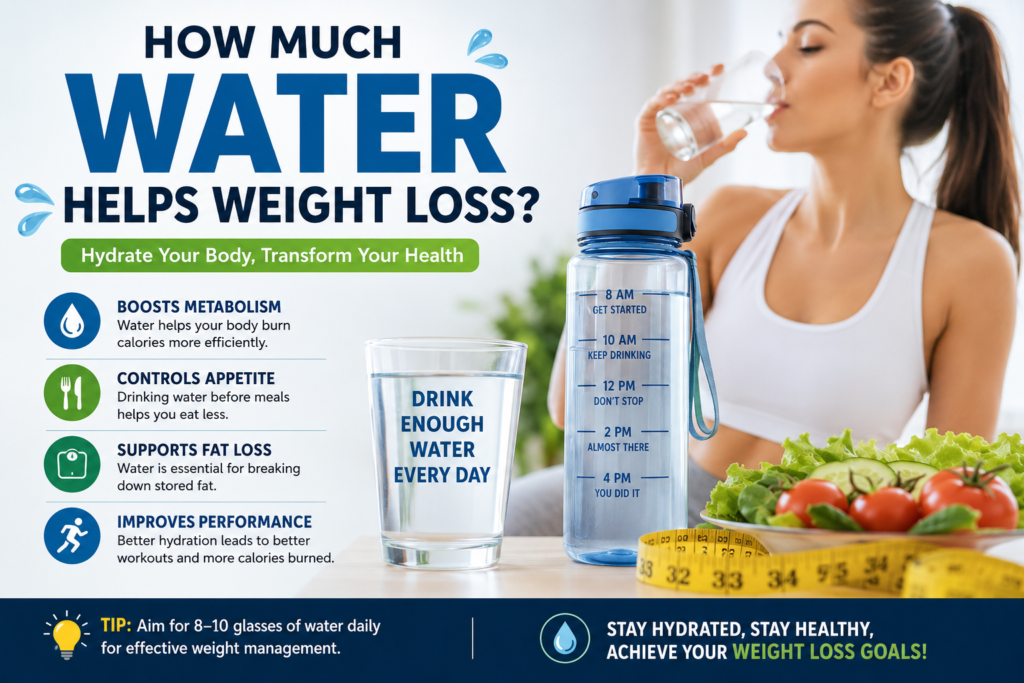
How Water Supports Fat Loss Weight Loss Tips Using Water
1. Water Helps Control Appetite
Many people confuse thirst with hunger. As a result, they may eat when their body actually needs water.
Drinking water before meals can help:
- Reduce calorie intake
- Increase feelings of fullness
- Prevent overeating
A glass of water before meals is a simple strategy that may support weight management.
2. Water Can Slightly Increase Metabolism
Research suggests that drinking water may temporarily boost calorie burning through a process called thermogenesis.
When you drink cold water, the body uses energy to warm it to body temperature.
Although the effect is modest, every small contribution can help support long-term weight loss goals.
3. Water Improves Exercise Performance
Regular exercise is important for fat loss.
Proper hydration can:
- Increase endurance
- Reduce fatigue
- Improve muscle function
- Enhance workout performance
Better workouts often lead to greater calorie expenditure.
4. Water Supports Fat Metabolism
The body requires water to properly break down stored fat.
This process is known as lipolysis.
Without adequate hydration, the body’s ability to metabolize fat may become less efficient.
5. Water Replaces High-Calorie Beverages
One of the easiest ways to reduce calorie intake is by replacing sugary drinks with water.
Instead of:
- Soft drinks
- Sweetened coffee drinks
- Energy drinks
- Sugary juices
Choose:
- Plain water
- Sparkling water
- Lemon water
- Herbal tea
This simple change can save hundreds of calories daily.
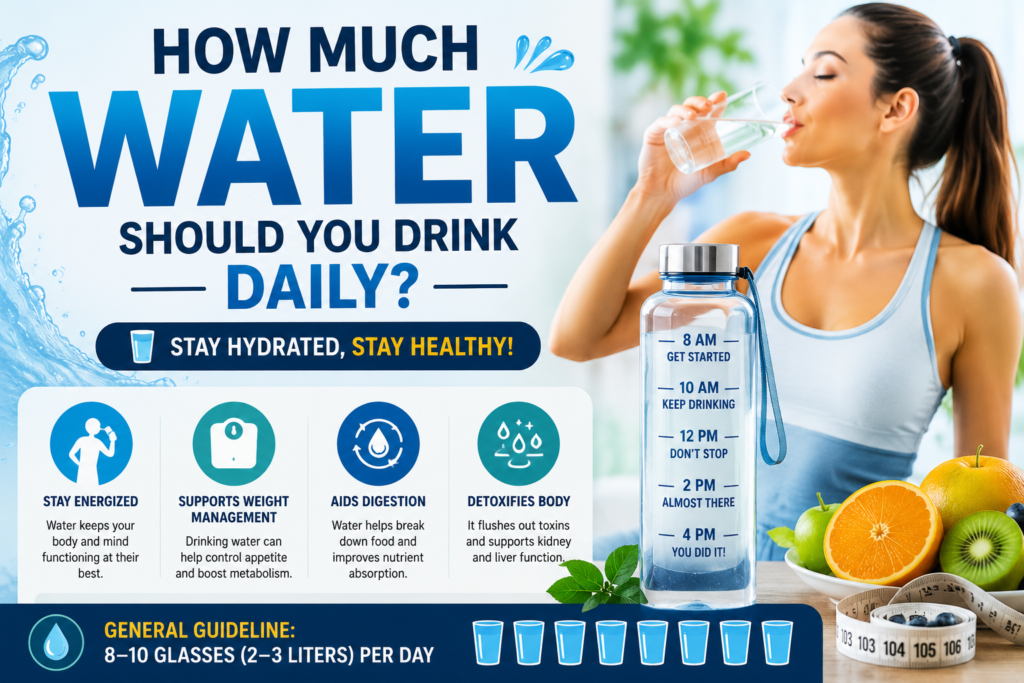
How Much Water Should You Drink Daily?
There is no universal amount that works for everyone.
However, general recommendations include:
For Men
Approximately 3.7 liters (125 ounces) per day.
For Women
Approximately 2.7 liters (91 ounces) per day.
These totals include water obtained from beverages and food.
Water Intake for Weight Loss
Many health experts recommend:
8-10 Glasses Daily
A practical starting point for most adults.
Before Meals
Drink 1-2 glasses of water approximately 30 minutes before eating.
During Exercise
Increase water intake when physically active.
Hot Weather
Drink more water when temperatures are high.
Factors That Affect Water Needs
Several factors influence how much water you need.
Body Weight
Larger individuals typically require more water.
Activity Level
Athletes and active individuals lose more water through sweat.
Climate
Hot and humid environments increase water requirements.
Health Conditions
Certain illnesses and medications may affect hydration needs.
Best Times to Drink Water for Weight Loss
After Waking Up
Helps rehydrate the body after sleep.
Before Meals
May help reduce appetite and prevent overeating.
Before Exercise
Supports physical performance.
During Exercise
Prevents dehydration.
After Exercise
Replaces fluids lost through sweat.
Before Bed
A small amount may help maintain hydration overnight.
Signs of Dehydration
Even mild dehydration can affect energy levels and metabolism.
Common signs include:
- Dry mouth
- Headaches
- Fatigue
- Dark urine
- Dizziness
- Poor concentration
If you experience these symptoms, increase your water intake.
Can Drinking Too Much Water Be Harmful?
Yes, although rare.
Excessive water consumption can lead to a condition called hyponatremia, where sodium levels become dangerously low.
To stay safe:
- Drink consistently throughout the day
- Avoid forcing excessive amounts of water
- Listen to your body’s thirst signals
Moderation is key.
Water-Rich Foods That Support Hydration
Many foods contribute to daily hydration.
Best Choices
Cucumber
Contains over 95% water.
Watermelon
Refreshing and hydrating.
Strawberries
High water content and rich in antioxidants.
Lettuce
Excellent source of hydration.
Celery
Low-calorie and water-rich.
Oranges
Provide both water and vitamin C.
These foods can help support hydration while contributing valuable nutrients.
Weight Loss Tips Using Water
Carry a Reusable Water Bottle
Having water nearby encourages regular drinking.
Set Hydration Reminders
Use smartphone apps or alarms.
Flavor Water Naturally
Add:
- Lemon
- Mint
- Cucumber
- Berries
Drink Water Before Snacks
This may help reduce unnecessary eating.
Track Your Intake
Monitoring water consumption can improve consistency.
Frequently Asked Questions (Q&A)
Q1. Can drinking water alone help me lose weight?
Water supports weight loss but works best when combined with a healthy diet and regular exercise.
Q2. How much water should I drink to lose belly fat?
There is no specific amount that targets belly fat. However, staying hydrated supports overall fat loss.
Q3. Is warm water better than cold water for weight loss?
Both can support hydration. The difference in calorie burning is minimal.
Q4. Can water reduce hunger?
Yes. Drinking water before meals may help increase fullness and reduce calorie intake.
Q5. Does lemon water help with weight loss?
Lemon water can support hydration and may encourage healthier beverage choices, but it does not directly burn fat.
Q6. What happens if I don’t drink enough water?
Dehydration may reduce energy, increase fatigue, affect workouts, and potentially hinder weight loss efforts.
Conclusion
Water is one of the most powerful yet underrated tools for weight loss. While it doesn’t directly burn fat, proper hydration supports metabolism, appetite control, exercise performance, and overall health.
For most adults, drinking 8-10 glasses of water daily is a practical starting point, though individual needs vary based on body size, activity level, and climate.
Combining proper hydration with a balanced diet, regular physical activity, and healthy lifestyle habits can significantly improve your chances of achieving sustainable weight loss success.
Remember, sometimes the simplest habits create the biggest results. Drinking enough water every day is one of them.
Pingback: How can you gain weight in a healthy way? 15 Best foods to eat for Healthy weight gain?
Pingback: Habits That Strengthen Immunity: Simple Daily Practices
Pingback: Running vs Walking: Which Is Better for Fat Loss?
Pingback: Which Is the Best Breakfast for Weight Loss? A Complete Guide to Healthy Morning Meals
Pingback: What Are the Top 7 Health Benefits of Garlic?
Pingback: Which Foods That Burn Fat Naturally and Support Healthy.
Pingback: Morning Drink for Better Immunity: Benefits, Recipe & Daily Health Tips
Pingback: Signs Your Immune System Is Weak: 10 Warning Signs
Pingback: The Importance of Health Awareness - Health With AI
Pingback: Turmeric Daily Benefits: 10 Science Add Turmeric Your Diet
Pingback: Foods That Help Reduce Belly Fat
Pingback: 3 Weight loss Mistakes Slowing Down Your Weight Loss
Pingback: Best Vitamin C Rich Foods for Strong Immunity
Pingback: 5 Foods That Boost Immunity Naturally | Best Foods for a Strong Immune System
Pingback: 10 Amazing Top Health Benefits of ginger tea
Pingback: Which is the best Healthy Snacks Under 100 Calories
Pingback: Foods That Fight Inflammation: The Best Anti-Inflammatory
Pingback: 20-Minute Workout at Home for Beginners Without Equipment:
Pingback: Healthy Breakfast, Lunch, and Dinner to Lose Weight
Pingback: Protein-Rich Foods for Fat Loss: 15 Best High-Protein Foods
Pingback: Which 7 Foods Naturally Boost Gut Health? A Complete Guide.
Pingback: 25+ Age Fitness Secrets: SRK-Inspired Habits for a Health
Pingback: 25 Healthy Snacks Under 100 Calories for Weight Loss and Healthy Living
Pingback: How Exercise Improves Mood: 8 Science-Backed Mental Health