
Table of Contents
Introduction
After a long day of sitting, walking, working, or exercising, your body deserves time to unwind. While many people focus on morning workouts, stretching before bed benefits your body in unique ways that can improve both physical and mental health.
A gentle bedtime stretching routine helps release muscle tension, calm your nervous system, improve flexibility, and prepare your body for restful sleep. Unlike intense workouts that may increase alertness, light stretching encourages relaxation and helps your body transition into recovery mode.
According to the National Sleep Foundation, relaxing activities before bedtime can improve sleep quality by helping the body shift into a restful state. Likewise, the American College of Sports Medicine (ACSM) recommends regular stretching to maintain flexibility and support overall physical health.
Whether you struggle with stiffness, stress, or restless nights, adding just 10 minutes of stretching before bed can become one of the healthiest habits in your daily routine.
What Is Bedtime Stretching?
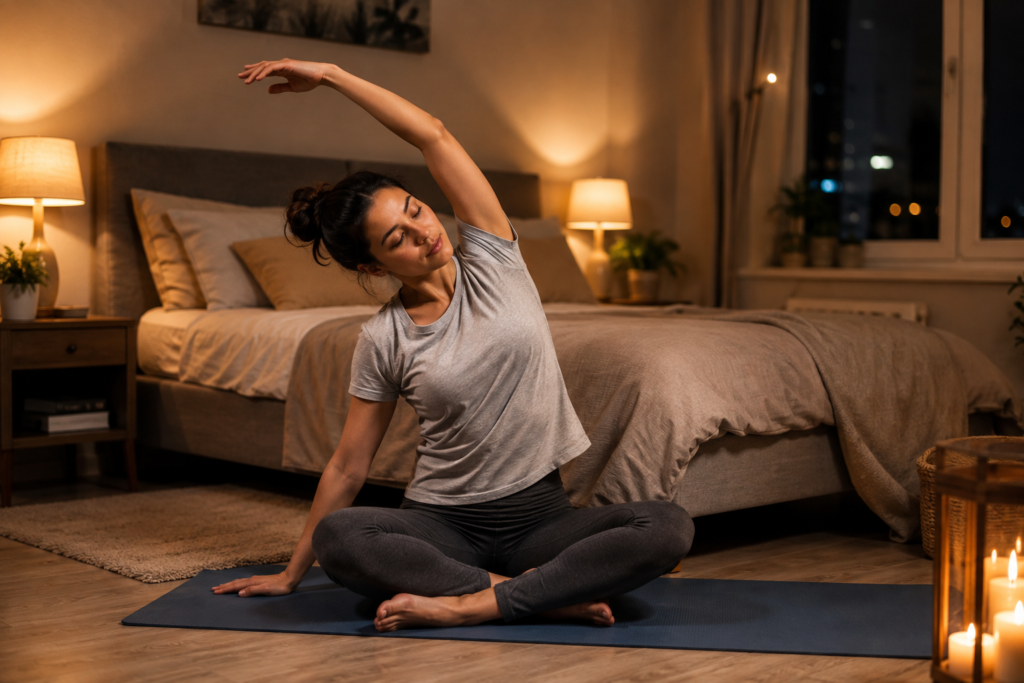
Bedtime stretching consists of slow, gentle movements performed before sleeping to relax muscles and improve mobility.
Unlike vigorous exercise, bedtime stretches should be:
- Slow
- Comfortable
- Controlled
- Relaxing
- Pain-free
Why Stretching Before Bed Works
Your muscles naturally tighten after hours of sitting or physical activity.
Gentle stretching helps:
- Increase blood circulation
- Reduce muscle stiffness
- Improve joint mobility
- Activate the parasympathetic nervous system
- Lower stress levels
- Promote relaxation
Research shows that relaxation techniques before sleep may reduce sleep onset time and improve sleep quality.
15 Science-Backed Stretching Before Bed Benefits
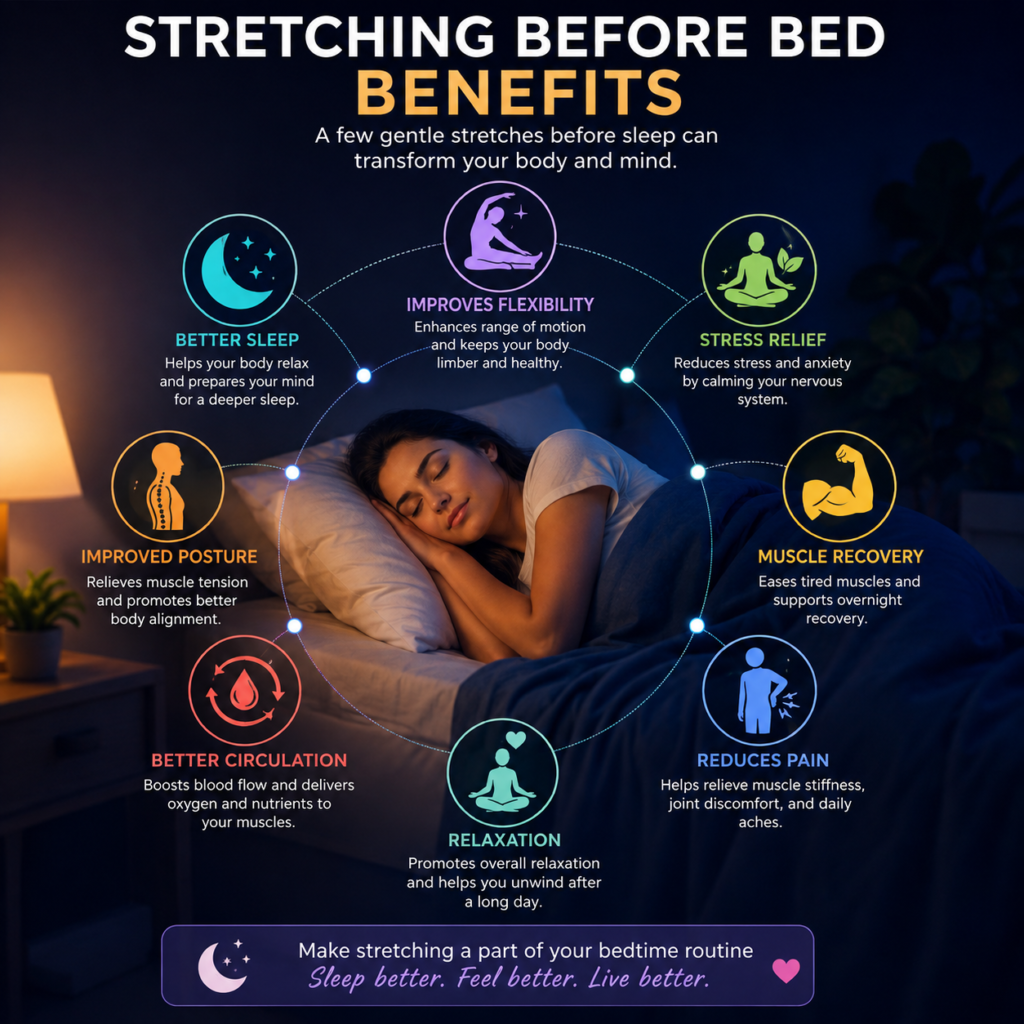
1. Improves Sleep Quality
Stretching relaxes both muscles and the nervous system, making it easier to fall asleep naturally.
2. Reduces Muscle Tension
Long hours at a desk often create tight shoulders, hips, and lower back muscles.
Gentle stretching helps release this tension.
3. Increases Flexibility
Daily stretching gradually improves your range of motion.
Better flexibility also reduces stiffness in everyday activities.
4. Helps Reduce Stress
Stretching encourages slow breathing and mindfulness.
This lowers stress hormones while promoting calmness.
5. Supports Muscle Recovery
Light stretching may help improve circulation after exercise, allowing nutrients to reach recovering muscles more efficiently.
6. Improves Blood Circulation
Better circulation delivers oxygen and nutrients throughout the body while helping remove metabolic waste.
7. May Reduce Nighttime Leg Cramps
Stretching the calves and hamstrings before bed may lower the likelihood of nighttime cramps for some people.
8. Eases Lower Back Discomfort
Many people experience mild lower back stiffness from prolonged sitting.
Stretching the hips and hamstrings can relieve pressure on the lower back.
9. Promotes Better Posture
Stretching tight chest and hip muscles helps counteract poor posture caused by prolonged sitting.
10. Improves Joint Mobility
Healthy joints move more comfortably through their full range of motion.
11. Helps You Relax Mentally
Stretching creates a mindful transition between a busy day and restful sleep.
12. Reduces Neck and Shoulder Tightness
Office workers especially benefit from stretching these areas.
13. Encourages Healthy Movement Habits
Consistency matters more than intensity.
Ten minutes every night creates a sustainable wellness routine.
14. Supports Healthy Aging
Maintaining flexibility becomes increasingly important with age.
Regular stretching helps preserve mobility and independence.
15. Enhances Overall Well-being
Combining movement with deep breathing can improve both physical comfort and emotional wellness.
Best Stretches Before Bed
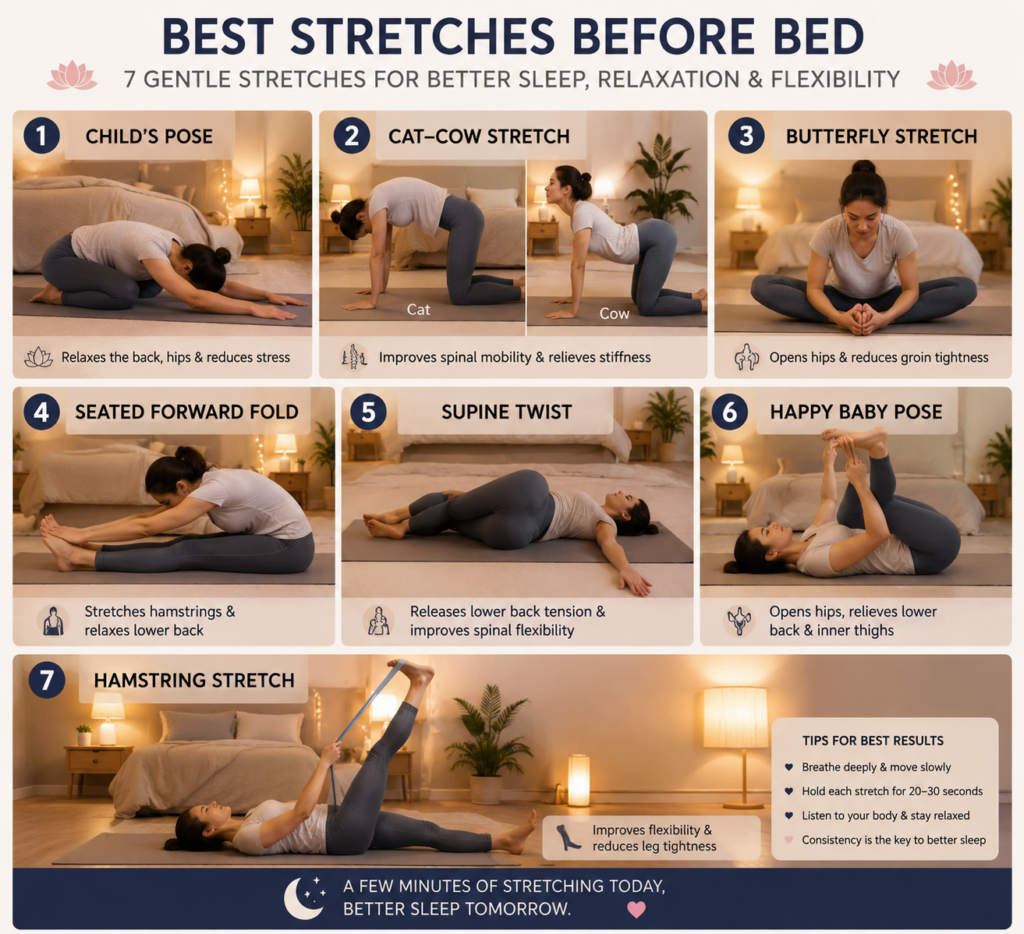
Child’s Pose
- Relaxes the back
- Opens hips
- Reduces stress
Cat-Cow Stretch
- Improves spinal mobility
- Relieves stiffness
Butterfly Stretch
- Opens hips
- Reduces groin tightness
Seated Forward Fold
- Stretches hamstrings
- Relaxes lower back
Supine Twist
- Releases spinal tension
Happy Baby Pose
- Opens hips
- Relaxes lower back
Neck Stretch
- Relieves office-related tension
10-Minute Bedtime Stretching Routine
| Stretch | Duration |
|---|---|
| Neck Stretch | 1 minute |
| Shoulder Stretch | 1 minute |
| Cat-Cow | 2 minutes |
| Child’s Pose | 2 minutes |
| Butterfly Stretch | 2 minutes |
| Forward Fold | 1 minute |
| Deep Breathing | 1 minute |
Comparison Table
| Habit | Benefits | Best Time |
|---|---|---|
| Morning Stretching | Energy, mobility | Morning |
| Bedtime Stretching | Relaxation, better sleep | Evening |
| Intense Exercise | Fitness | Earlier in the day |
| Meditation | Stress reduction | Anytime |
Common Mistakes
- Stretching too aggressively
- Holding your breath
- Bouncing during stretches
- Stretching through pain
- Rushing the routine
- Skipping warm breathing
- Being inconsistent
- Stretching immediately after a heavy meal
Expert Tips
- Stretch for 5–10 minutes every night.
- Breathe slowly during each movement.
- Hold each stretch for 20–30 seconds.
- Never force a stretch.
- Wear comfortable clothing.
- Dim the lights to create a relaxing environment.
- Pair stretching with mindfulness or gentle music.
- Stay hydrated throughout the day.
Frequently Asked Questions
1. Is stretching before bed good for sleep?
Yes. Gentle stretching can help relax muscles and calm the nervous system, making it easier to fall asleep.
2. How long should I stretch before bed?
Five to ten minutes is enough for most people.
3. Can stretching replace exercise?
No. Stretching improves flexibility and relaxation but does not replace strength or aerobic exercise.
4. Is it okay to stretch every night?
Yes, as long as you stretch gently and avoid pain.
5. Does stretching burn calories?
Stretching burns a small number of calories, but it is not an effective weight-loss exercise.
6. Which stretch is best before sleeping?
Child’s Pose is one of the most relaxing bedtime stretches.
7. Can stretching reduce back pain?
Gentle stretching may help relieve mild back stiffness, but persistent pain should be evaluated by a healthcare professional.
8. Should I stretch before or after a shower?
Both are fine, but stretching after a warm shower may feel more comfortable because muscles are warmer.
9. Can seniors stretch before bed?
Yes. Older adults can benefit from gentle, physician-approved stretching to maintain flexibility and mobility.
10. Should I stretch if I’m sore?
Light stretching may help ease mild soreness, but avoid stretching injured muscles or areas with sharp pain.
Conclusion
The stretching before bed benefits extend far beyond flexibility. A consistent bedtime stretching routine can help improve sleep quality, ease muscle tension, reduce stress, support recovery, and promote better mobility over time.
The key is consistency. You don’t need an hour-long workout to experience positive results. Even 10 minutes of gentle stretching each evening can help your body and mind prepare for a more restful night.
If you have a medical condition, chronic pain, or recent injury, consult a healthcare professional or physical therapist before starting a new stretching routine.
Key Takeaways
- Bedtime stretching promotes relaxation and better sleep.
- Regular stretching improves flexibility and mobility.
- Gentle stretching may reduce muscle tension and mild stiffness.
- A 10-minute routine is enough for most people.
- Focus on slow, controlled, pain-free movements.
- Consistency delivers the best long-term results.
Call to Action
Have you tried stretching before bed? Share your favorite bedtime stretch in the comments below. If you found this guide helpful, share it with friends and family, and explore more fitness and wellness articles to build healthier daily habits.
Pingback: 15 Daily Foods for a Healthy Lifestyle: Science-Backed Guide
Pingback: Can Walking 10000 Steps a Day Really Change Your Health?
Pingback: Why You Need Healthy Fats: Bats 9 Foods Benefits, Sources, Myths & How to Add Them
Pingback: Best High Fiber Foods: Top 25 Foods Rich in Fiber for Better Health
Pingback: Chandipura Virus in Gujarat: Symptoms & Prevention Guide
Pingback: Best Foods For High Iron: Top 25 Iron-Rich Foods List
Pingback: 10-Minute Morning Workout to Wake Up Your Body
Pingback: Why Do I Wake Up Tired After 8 Hours of Sleep?