
Looking for the Best High Protein Foods?
If you are trying to build muscle, stay full between meals, support an active lifestyle, or simply improve your everyday diet, protein deserves a place on your plate.
But here is the problem: not every high-protein food is automatically a healthy choice.
A food can be high in protein while also being loaded with sodium, saturated fat, added sugar, or calories. That is why choosing protein-rich foods is not just about finding the biggest number of grams on a nutrition label.
The better approach is to look at the whole food and what comes with its protein.
The good news? You have plenty of options.
From chicken breast, eggs, Greek yogurt, and salmon to lentils, chickpeas, tofu, quinoa, nuts, and seeds, there are high protein foods for almost every diet and budget.
In this guide, we will explore the 25 best high protein foods, explain why they are useful, and show you simple ways to add them to your meals.
Table of Contents
Why Is Protein Important?
Protein is one of the three major macronutrients, along with carbohydrates and fats. Your body uses protein to build and maintain tissues and to make enzymes, hormones, antibodies, and other important compounds.
Protein is also made up of amino acids. Nine of these are considered essential amino acids because your body cannot make enough of them on its own and they need to come from food.
The biggest reason people focus on protein?
Satiety, muscle, and overall nutrition.
A protein-rich meal can be more filling than a meal that contains very little protein. Protein is also particularly important for maintaining and building muscle when combined with appropriate physical activity.
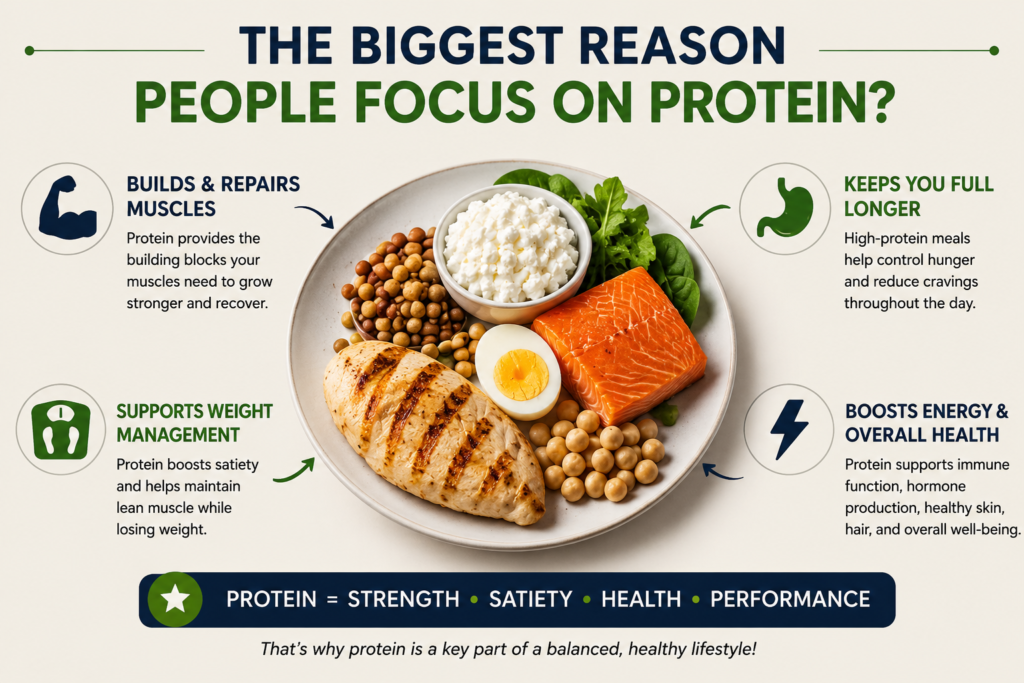
For healthy adults, the commonly cited minimum protein intake is around 0.8 grams per kilogram of body weight per day, although individual needs can be higher depending on factors such as age, activity level, and goals.
Trigger point: If your meals are mostly refined carbohydrates and you feel hungry again shortly after eating, adding a quality protein source may be a simple way to make your meals more satisfying.
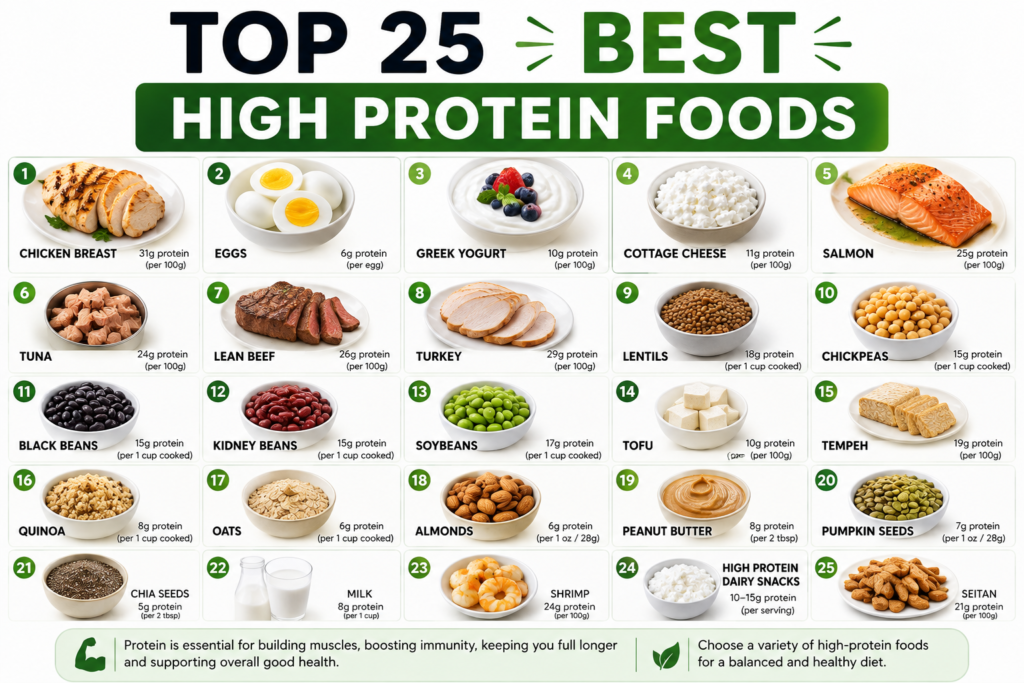
Top 25 Best High Protein Foods
Let’s get to the foods that can make a real difference to your everyday meals.
Note: Protein amounts are approximate because values vary by brand, preparation method, serving size, and food variety. Use nutrition labels or a reliable food database when you need exact numbers.
1. Chicken Breast
Chicken breast is one of the most popular high protein foods for a reason.
It is naturally rich in protein and can be prepared in countless ways without requiring complicated recipes.
You can grill it, bake it, stir-fry it, shred it into wraps, or add it to salads and rice bowls.
Best for: Muscle-focused diets, meal prep, and high-protein lunches.
Easy idea: Combine grilled chicken breast with brown rice, vegetables, and yogurt-based dressing for a balanced meal.
2. Eggs
Eggs are affordable, versatile, and packed with useful nutrients.
One large egg provides roughly 6 grams of protein, making eggs an easy way to increase protein at breakfast.
The protein is distributed between the egg white and yolk, while the yolk also contains several vitamins and minerals.
Best for: Breakfast, snacks, and quick meals.
Easy idea: Make scrambled eggs with vegetables and whole-grain toast.
3. Greek Yogurt
Greek yogurt is thicker than traditional yogurt and is often significantly higher in protein.
A serving can provide a substantial amount of protein while also supplying calcium.
For a healthier everyday option, look for plain Greek yogurt without large amounts of added sugar.
Best for: Breakfast, snacks, smoothies, and desserts.
Easy idea: Add berries, chia seeds, and a small amount of nuts to plain Greek yogurt.
4. Cottage Cheese
Cottage cheese is another convenient dairy-based protein source.
It can be eaten on its own, mixed with fruit, added to toast, or incorporated into savory dishes.
If you are watching your sodium intake, check the nutrition label because some varieties can contain significant amounts of sodium.
Best for: High-protein snacks and breakfasts.
5. Salmon
Salmon combines protein with healthy fats, including omega-3 fatty acids.
A typical 4-ounce serving of cooked salmon provides around 30 grams of protein, according to Harvard’s protein comparison.
That makes salmon an excellent option when you want more than just protein from your meal.
Best for: Heart-conscious eating patterns, dinners, and balanced meals.
Easy idea: Serve baked salmon with roasted vegetables and quinoa.
6. Tuna
Tuna is a convenient source of protein and is especially popular for quick lunches.
You can use canned tuna in sandwiches, salads, wraps, or bowls.
Choose varieties appropriate for your dietary needs and follow local guidance regarding seafood consumption and mercury exposure.
Best for: Quick lunches and meal prep.
7. Lean Beef
Lean cuts of beef can provide a concentrated source of protein, iron, zinc, and vitamin B12.
For example, Harvard lists around 33 grams of protein in 4 ounces of broiled sirloin steak.
However, the overall nutritional package matters. Leaner cuts are generally preferable to fattier cuts, and processed meats such as bacon and many luncheon meats are best limited.
Best for: High-protein dinners and occasional meals.
8. Turkey
Turkey is another lean poultry option that can fit easily into a protein-rich eating pattern.
Turkey breast works particularly well in sandwiches, salads, wraps, and meal-prep bowls.
Best for: Lean meals and meal preparation.
Easy idea: Use sliced roasted turkey in a whole-grain wrap with vegetables and hummus.
9. Lentils
Lentils are one of the best plant-based high protein foods.
One cup of cooked lentils provides approximately 18 grams of protein and 15 grams of fiber, according to Harvard’s nutrition data.
That combination makes lentils especially useful for people looking for plant-based foods that are both filling and nutritious.
Best for: Vegetarians, vegans, budget-friendly meals, and high-fiber diets.
Easy idea: Add cooked lentils to soups, curries, salads, or grain bowls.
10. Chickpeas
Chickpeas, also called garbanzo beans, are another excellent plant protein.
They are easy to add to salads, curries, soups, and homemade hummus.
Their combination of protein and fiber can make meals more satisfying.
Best for: Plant-based meals and snacks.
Easy idea: Roast chickpeas with spices for a crunchy snack.
11. Black Beans
Black beans provide protein along with fiber and several micronutrients.
They work particularly well in Mexican-inspired bowls, salads, soups, wraps, and chili.
Best for: Plant-based meal prep.
12. Kidney Beans
Kidney beans are another affordable source of plant-based protein.
They are especially useful in chili, bean salads, curries, and rice dishes.
Trigger point: If you think eating more protein requires expensive meat or supplements, beans can completely change that equation.
13. Soybeans and Edamame
Soybeans are unusual among plant proteins because soy foods can provide all the essential amino acids needed to make new proteins in the body.
Edamame makes a convenient snack or side dish, while soybeans can be used in a wide range of meals.
Best for: Vegetarians, vegans, and people looking for complete plant protein sources.
14. Tofu
Tofu is made from soybeans and is one of the most versatile plant-based protein foods.
It can be stir-fried, baked, grilled, scrambled, or added to soups and curries.
Because tofu absorbs flavors well, it can easily fit into different cuisines.
Best for: Vegetarian and vegan diets.
Easy idea: Marinate tofu in soy sauce, garlic, ginger, and spices before baking or pan-frying.
15. Tempeh
Tempeh is another soy-based food, but unlike tofu, it has a firmer, denser texture.
It can be sliced, marinated, grilled, or crumbled into stir-fries.
Best for: Plant-based meals where you want a substantial texture.
16. Quinoa
Quinoa is technically a seed, although it is commonly used like a grain.
It contains protein and provides a useful alternative to refined grain side dishes.
Quinoa is also considered a complete plant protein, making it particularly attractive for people following vegetarian or vegan eating patterns.
Best for: Grain bowls, salads, and meal prep.
17. Oats
Oats are not as protein-dense as chicken or fish, but they can contribute meaningful protein to breakfast.
The easiest way to make oats more protein-rich is to combine them with Greek yogurt, milk, nuts, seeds, or nut butter.
Best for: Breakfast.
Easy idea: Make overnight oats with Greek yogurt, milk, chia seeds, and berries.
18. Almonds
Almonds provide protein, healthy fats, fiber, and other nutrients.
However, nuts are energy-dense, so portion size matters if you are trying to control calorie intake.
A 1-ounce serving of almonds contains about 6 grams of protein according to Harvard’s protein comparison.
Best for: Snacks and meal toppings.
19. Peanuts and Peanut Butter
Peanuts are technically legumes, but nutritionally they are commonly grouped with nuts.
They can provide protein and healthy fats, while peanut butter is an easy addition to toast, oatmeal, smoothies, and fruit.
Choose peanut butter with a simple ingredient list when possible.
Best for: Breakfast and convenient snacks.
20. Pumpkin Seeds
Pumpkin seeds are small but nutrient-dense.
They can be sprinkled over salads, yogurt, oatmeal, soups, or roasted vegetables.
They are especially useful for people who want to increase protein without relying entirely on meat or dairy.
Best for: Toppings and snacks.
21. Chia Seeds
Chia seeds contain protein, fiber, and healthy fats.
While you probably would not rely on chia seeds alone to meet your protein needs, they can be a useful addition to a protein-rich meal.
Best for: Smoothies, yogurt bowls, and overnight oats.
22. Milk
Milk provides protein as well as calcium and other nutrients.
An 8-ounce serving contains approximately 8 grams of protein, according to Harvard’s protein comparison.
You can add milk to oats, smoothies, coffee, or simply drink it with a meal.
Best for: Breakfast, smoothies, and snacks.
23. Shrimp
Shrimp is a relatively lean seafood option that provides a good amount of protein.
It cooks quickly, making it ideal for busy weeknight meals.
Best for: Quick dinners, salads, stir-fries, and rice bowls.
24. Cottage Cheese or High-Protein Dairy Snacks
High-protein dairy foods can be an easy way to increase protein without completely changing your meals.
Look for options with a favorable balance of protein, added sugar, saturated fat, and sodium.
Best for: People who want quick, no-cook protein options.
25. Seitan
Seitan is a plant-based protein made primarily from wheat gluten.
It has a chewy, meat-like texture and can work well in sandwiches, stir-fries, wraps, and bowls.
However, it is not suitable for people who need to avoid gluten.
Best for: Plant-based diets and people who enjoy meat-like textures.
High Protein Foods Comparison Table
Here is a quick overview of some of the foods discussed above.
| Food | Approx. Protein | Type | Best Use |
|---|---|---|---|
| Chicken breast | High | Animal | Lunch/dinner |
| Eggs | ~6 g/egg | Animal | Breakfast/snack |
| Greek yogurt | High | Dairy | Breakfast/snack |
| Salmon | ~30 g/4 oz | Animal | Dinner |
| Sirloin steak | ~33 g/4 oz | Animal | Dinner |
| Lentils | ~18 g/cup cooked | Plant | Lunch/dinner |
| Almonds | ~6 g/oz | Plant | Snack |
| Milk | ~8 g/cup | Dairy | Breakfast/smoothies |
| Chickpeas | Moderate | Plant | Salads/curries |
| Tofu | Moderate-high | Plant | Lunch/dinner |
| Tempeh | High | Plant | Stir-fries |
| Quinoa | Moderate | Plant | Grain bowls |
| Tuna | High | Animal | Lunch |
| Turkey | High | Animal | Lunch/dinner |
| Cottage cheese | High | Dairy | Snack/breakfast |
Important: Protein values can vary considerably depending on serving size, preparation, brand, and food variety. Use the table as a practical comparison rather than an exact nutrition prescription.
Animal vs. Plant-Based Protein: Which Is Better?
This is one of the most common questions about high protein foods.
The answer is more nuanced than simply saying one category is “better.”
Animal foods such as eggs, dairy, poultry, fish, and meat can provide highly bioavailable protein and, in many cases, all essential amino acids.
Plant foods such as lentils, beans, soy, nuts, seeds, and whole grains can provide protein along with fiber, vitamins, minerals, and other beneficial compounds.
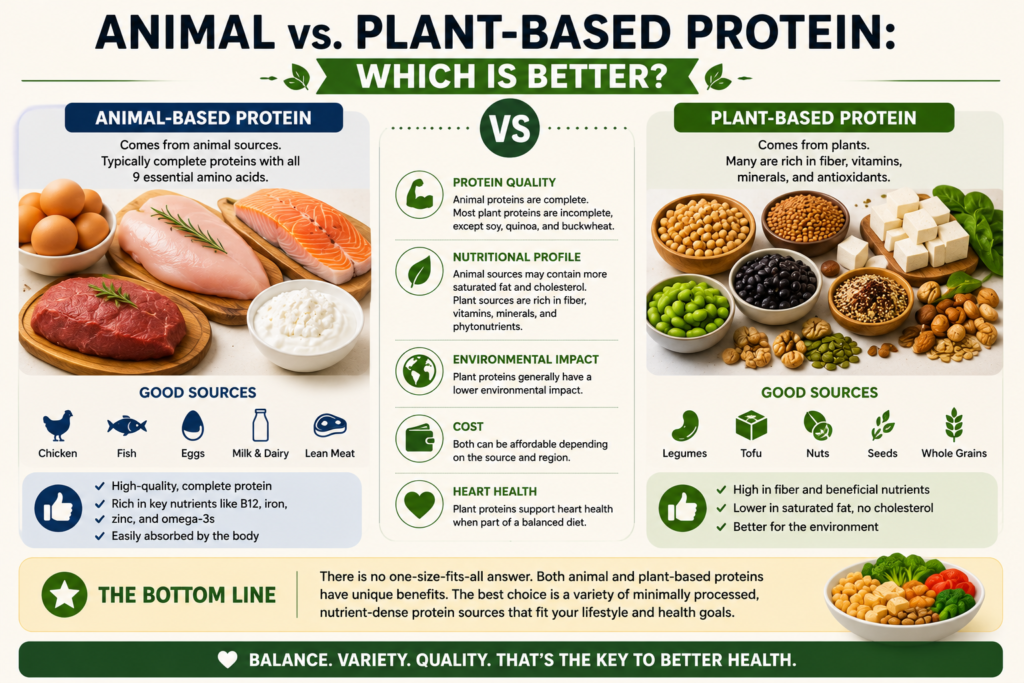
Harvard emphasizes that the protein package matters — meaning you should consider the fats, fiber, sodium, and other nutrients that come with a protein source.
For example, a cup of cooked lentils provides protein and substantial fiber, while some processed meats can provide protein alongside a large amount of sodium.
The practical answer?
Eat a variety.
You do not need to choose between animal and plant protein unless your dietary preferences or health needs require it.
Try rotating:
- Eggs
- Greek yogurt
- Chicken
- Fish
- Lentils
- Beans
- Tofu
- Soy
- Nuts
- Seeds
This creates more variety while making it easier to obtain different nutrients.
How Much Protein Do You Need Per Day?
There is no single protein target that works perfectly for everyone.
For healthy adults, a commonly cited minimum is approximately 0.8 g of protein per kilogram of body weight per day.
However, protein requirements can vary depending on:
- Body size
- Age
- Physical activity
- Strength training
- Overall calorie intake
- Dietary pattern
- Personal health circumstances
People who perform regular resistance training may have higher protein needs than sedentary individuals. Some sports nutrition recommendations for people engaged in intense training are substantially higher than the general minimum.
Trigger point: Don’t assume that “more protein” automatically means “better health.” Your total diet, calorie intake, food quality, and individual needs still matter.
If you have kidney disease or another medical condition that affects protein intake, discuss your individual target with a qualified healthcare professional.
Best High Protein Foods for Muscle Building
If your main goal is building or maintaining muscle, focus on two things:
1. Get enough total protein.
2. Pair your nutrition with appropriate resistance training.
Good choices include:
- Chicken breast
- Turkey
- Eggs
- Greek yogurt
- Cottage cheese
- Salmon
- Tuna
- Lean beef
- Tofu
- Tempeh
- Lentils
- Soy foods
A protein-rich meal after training can be convenient, but your overall daily protein and calorie intake are more important than obsessing over a tiny “anabolic window.”
Best High Protein Foods for Weight Management
Protein can be useful when trying to manage body weight because protein-rich meals can be filling.
But remember: high protein does not automatically mean low calorie.
For example, nuts and seeds contain protein but are also calorie-dense. Processed meats may contain protein but can be high in sodium and saturated fat.
For a filling, balanced meal, combine protein with:
- Vegetables
- Fruit
- Whole grains
- Beans
- Healthy fats
Examples include:
Grilled chicken + vegetables + brown rice
Lentils + vegetables + whole-grain roti
Greek yogurt + berries + chia seeds
Salmon + quinoa + roasted vegetables
How to Add More Protein to Your Diet
You don’t need to completely redesign your diet.
Start with small upgrades.
Breakfast
Instead of plain toast, try:
Eggs + whole-grain toast + fruit
Or:
Greek yogurt + oats + berries + chia seeds
Lunch
Add chicken, tuna, tofu, chickpeas, lentils, or beans to your usual lunch.
Snack
Try:
- Greek yogurt
- Cottage cheese
- Boiled eggs
- Roasted chickpeas
- Nuts
- Milk
- Peanut butter with fruit
Dinner
Build your plate around a protein source, then add vegetables and a quality carbohydrate.
For example:
Salmon + vegetables + quinoa
or
Tofu + mixed vegetables + brown rice
Smoothies
A smoothie can become more protein-rich by adding Greek yogurt, milk, soy milk, nut butter, or another suitable protein source.
5 Common Mistakes People Make With High Protein Foods
1. Focusing Only on Protein Grams
A food containing 30 grams of protein is not automatically healthier than one containing 20 grams.
Look at the entire nutritional profile.
2. Eating Too Much Processed Meat
Processed meats can provide protein, but they can also be high in sodium and other less desirable components.
Choose fresh or minimally processed protein sources more often.
3. Ignoring Plant Protein
You don’t have to eat meat at every meal to get protein.
Beans, lentils, soy foods, nuts, seeds, and whole grains can all contribute.
4. Treating Protein Powder as Mandatory
Protein supplements can be convenient, but they are not required for most people who can meet their needs through food.
Harvard notes that protein powders can contain additional ingredients such as sweeteners, thickeners, vitamins, minerals, and added sugars, so reading the label matters.
5. Forgetting Fiber
A diet focused heavily on protein can sometimes push fruits, vegetables, beans, and whole grains to the side.
Don’t let that happen.
A healthy diet needs more than protein.
Frequently Asked Questions About High Protein Foods
What are the best high protein foods?
Some of the best high protein foods include chicken breast, eggs, Greek yogurt, salmon, tuna, lean beef, turkey, lentils, chickpeas, tofu, tempeh, cottage cheese, soybeans, nuts, seeds, and quinoa.
The best choice depends on your dietary preferences, nutritional needs, budget, and overall diet.
Which food has the most protein?
Protein concentration varies depending on the serving size and preparation method.
Many animal foods such as lean poultry, fish, and meat provide substantial protein per serving. Among plant foods, soy products, legumes, seitan, nuts, seeds, and some grains can provide meaningful amounts.
Instead of searching for a single “highest protein” food, build meals around a variety of quality protein sources.
What are the best high protein foods for vegetarians?
Excellent vegetarian options include:
- Eggs
- Greek yogurt
- Cottage cheese
- Milk
- Lentils
- Chickpeas
- Beans
- Tofu
- Tempeh
- Soybeans
- Quinoa
- Nuts
- Seeds
A varied vegetarian diet can provide plenty of protein.
What are the best high protein foods for vegans?
Vegan-friendly options include:
- Lentils
- Chickpeas
- Black beans
- Kidney beans
- Soybeans
- Edamame
- Tofu
- Tempeh
- Seitan
- Quinoa
- Nuts
- Seeds
- Peanut butter
- Oats
Combining different plant foods across your diet can help provide the amino acids your body needs. Soy and quinoa are examples of plant foods that provide complete protein.
Are eggs a good source of protein?
Yes. Eggs are a convenient and relatively affordable protein source. One large egg contains roughly 6 grams of protein.
They are especially easy to incorporate into breakfast, salads, sandwiches, and snacks.
Is Greek yogurt high in protein?
Yes. Greek yogurt is generally higher in protein than traditional yogurt because of how it is processed.
For the healthiest everyday option, compare labels and consider choosing plain varieties with little or no added sugar.
Are beans high in protein?
Yes. Beans provide plant-based protein as well as fiber and other nutrients.
Lentils are particularly protein-rich among legumes, with about 18 grams of protein in one cup of cooked lentils according to Harvard’s nutrition information.
Can high protein foods help with weight loss?
High protein foods can be useful as part of a weight-management diet because protein can contribute to fullness.
However, eating a high-protein diet does not guarantee weight loss.
Your total calorie intake, food quality, physical activity, sleep, and overall eating pattern also matter.
Is it possible to eat too much protein?
Yes.
More protein is not automatically better, and individual protein requirements vary.
Healthy people should focus on meeting their nutritional needs through a balanced diet rather than consuming extremely large amounts of protein simply because it is popular.
If you have a medical condition that affects protein requirements, ask a healthcare professional for individualized advice.
Do I need protein powder if I eat high protein foods?
Not necessarily.
Many people can meet their protein requirements through foods such as eggs, dairy, fish, poultry, legumes, soy, nuts, and seeds.
Protein powder can be convenient when food-based options are difficult to fit into your routine, but it is a supplement rather than a requirement.
Final Thoughts: Choose Quality, Not Just Quantity
Protein is important, but building a healthy diet is not about chasing the biggest protein number.
The smarter strategy is to choose a variety of protein-rich foods and consider everything that comes with them.
Prioritize foods such as fish, poultry, eggs, beans, lentils, soy foods, nuts, seeds, and minimally processed dairy products. Harvard’s Healthy Eating Plate similarly emphasizes healthy protein sources such as fish, poultry, beans, and nuts while recommending that people limit red meat and avoid processed meats such as bacon and sausage.
And remember the simple rule:
Don’t just ask, “How much protein does this food contain?”
Ask:
“What else am I getting with that protein?”
When you combine quality protein with vegetables, fruits, whole grains, healthy fats, and an overall balanced eating pattern, you can create meals that are not only high in protein but also genuinely nourishing.
Whether you’re trying to build muscle, support an active lifestyle, manage your weight, or simply eat better, the best high protein foods are the ones you can enjoy consistently as part of a balanced diet.
Pingback: 10 Min Walking vs Running: Which Is Better for Your Health?
Pingback: Top 15 Omega-3 Benefits for Heart, Brain & Overall Health
Pingback: Ketogenic Diet: Keto Foods, Benefits, Risks & Meal Plan
Pingback: Sleepy After Eating 10 amazing facts