
Top 15 Omega-3 Benefits for Heart, Brain & Overall Health
Table of Contents
Introduction
Omega-3 fatty acids are among the most important nutrients for maintaining overall health. These essential fats support heart function, brain performance, eye health, joint mobility, and many other bodily processes. Since the body cannot produce enough Omega-3 on its own, it must be obtained through food or supplements.
Whether your goal is improving cardiovascular health, boosting memory, reducing inflammation, or simply following a balanced diet, adding Omega-3-rich foods can make a meaningful difference.
Table of Contents
| Section | Topic |
|---|---|
| 1 | What Are Omega-3 Fatty Acids? |
| 2 | Types of Omega-3 |
| 3 | Top 15 Omega-3 Benefits |
| 4 | Best Food Sources |
| 5 | Daily Recommended Intake |
| 6 | Signs of Omega-3 Deficiency |
| 7 | Safety & Precautions |
| 8 | Frequently Asked Questions |
What Are Omega-3 Fatty Acids?
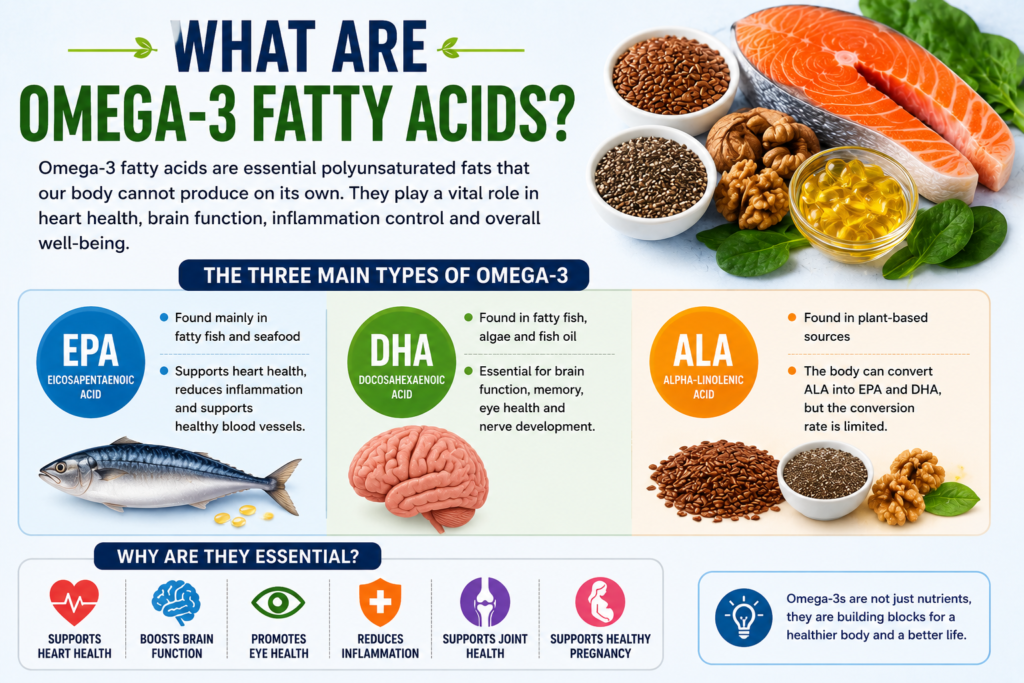
Omega-3 fatty acids are essential polyunsaturated fats that support many important functions in the body. The three primary forms are:
| Type | Main Sources | Primary Role |
|---|---|---|
| EPA | Fatty fish | Heart and inflammation support |
| DHA | Fish and algae | Brain and eye health |
| ALA | Flaxseed, chia seeds, walnuts | Plant-based Omega-3 that the body can partially convert to EPA and DHA |
Top 15 Omega-3 Benefits
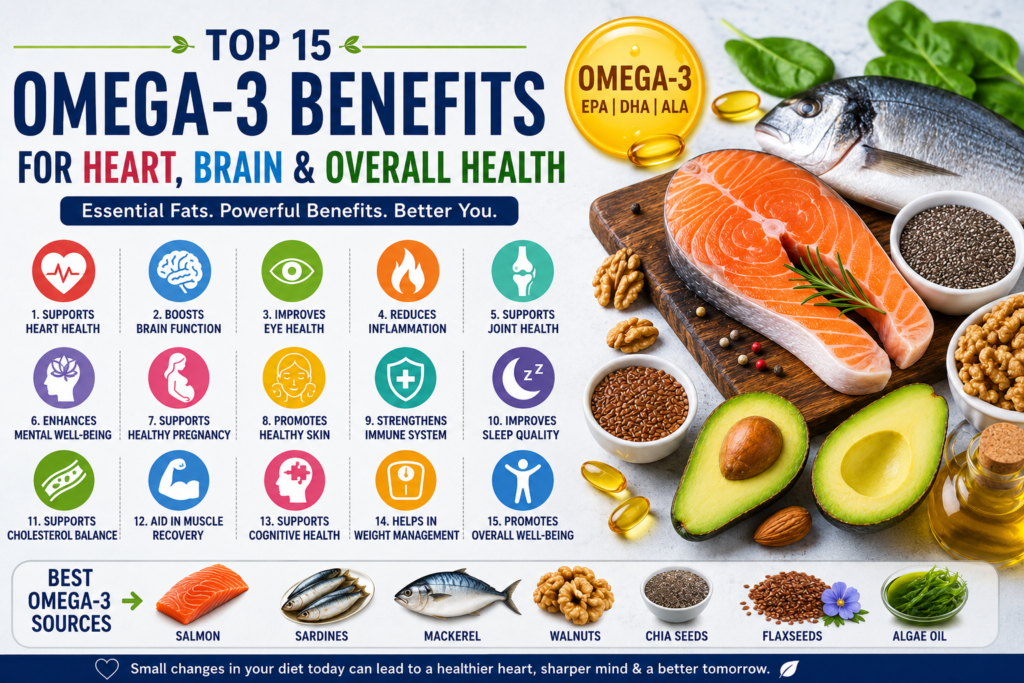
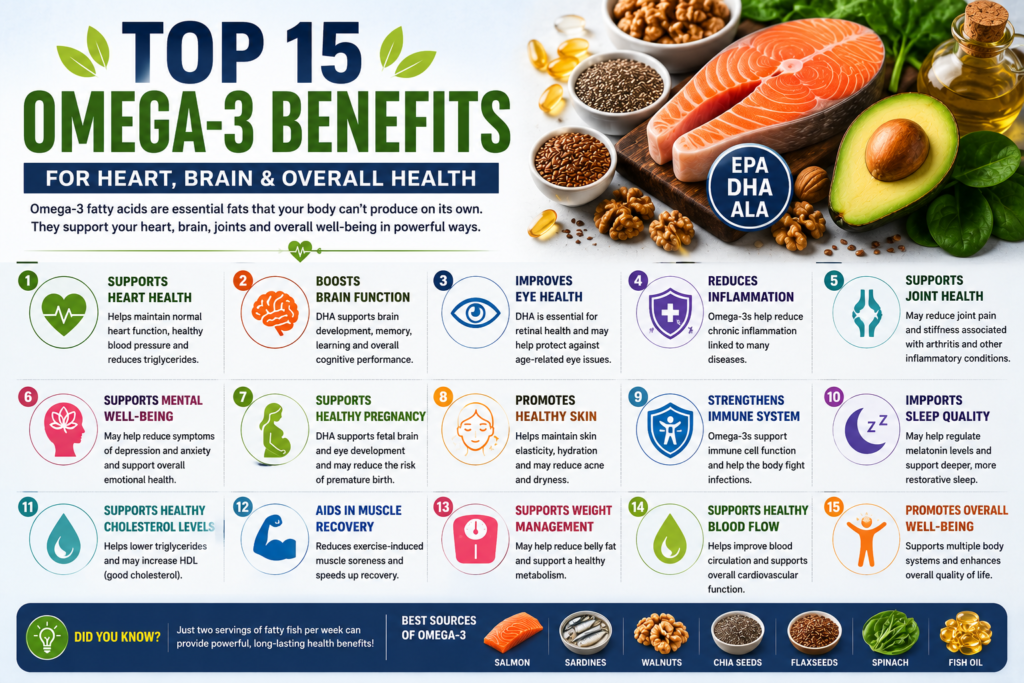
1. Supports Heart Health
Omega-3s help support normal heart function and may reduce triglyceride levels in some people. Regular consumption of fatty fish is associated with better cardiovascular health.
2. Promotes Brain Function
DHA is a major structural component of the brain and contributes to normal brain development and function.
3. Supports Eye Health
The retina contains high levels of DHA, making Omega-3 important for maintaining healthy vision.
4. Helps Reduce Inflammation
Omega-3s play a role in regulating inflammatory processes, which may benefit overall health.
5. Supports Joint Health
Some studies suggest Omega-3 intake may help improve comfort and mobility in people with inflammatory joint conditions.
6. Supports Mental Well-Being
Research suggests Omega-3s may contribute to healthy brain function and mood, although they are not a substitute for professional mental health care.
7. Supports Healthy Pregnancy
Adequate DHA intake is important for fetal brain and eye development during pregnancy. Pregnant individuals should discuss dietary needs with their healthcare provider.
8. Supports Healthy Skin
Healthy fats help maintain the skin’s natural barrier and hydration.
9. May Support Cognitive Health with Aging
Regular intake of Omega-3-rich foods is associated with healthy aging and cognitive function.
10. Supports Healthy Cholesterol Balance
Omega-3s may help lower triglycerides while supporting overall cardiovascular health.
11. Supports Immune Function
Healthy fats are involved in normal immune system regulation.
12. Supports Exercise Recovery
Omega-3s may help reduce exercise-related muscle soreness in some individuals.
13. Supports Healthy Sleep
Emerging research suggests a possible connection between Omega-3 status and sleep quality, though more evidence is needed.
14. Helps Build a Balanced Diet
Including Omega-3-rich foods encourages a more nutrient-dense eating pattern.
15. Supports Overall Wellness
Omega-3s contribute to multiple body systems, making them an important part of a healthy diet.
Best Omega-3 Foods
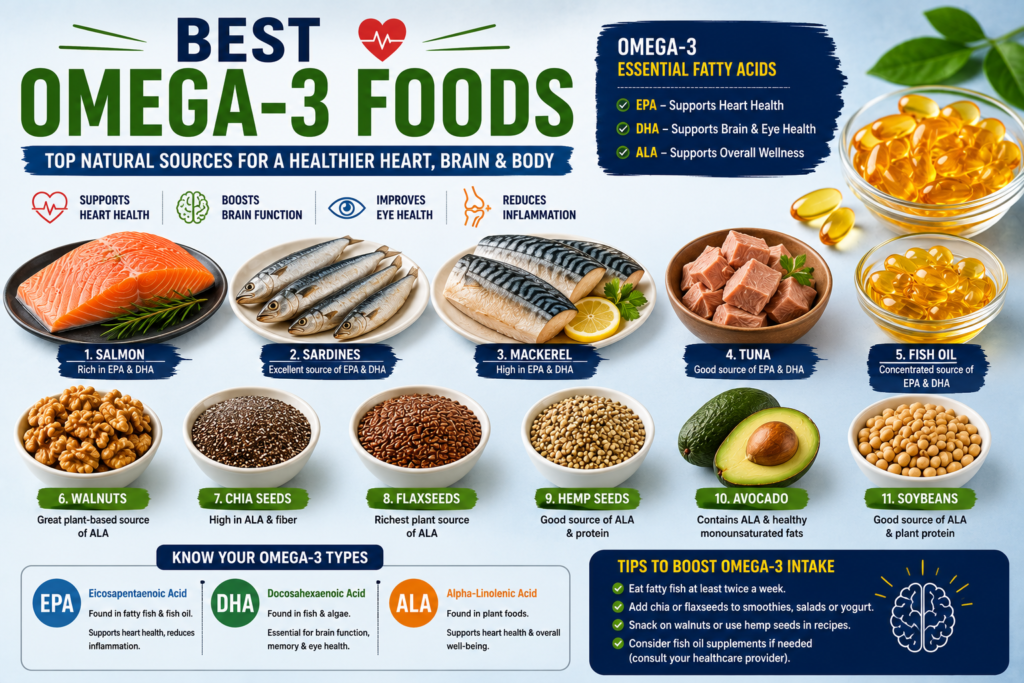
| Food | Type of Omega-3 |
|---|---|
| Salmon | EPA & DHA |
| Sardines | EPA & DHA |
| Mackerel | EPA & DHA |
| Herring | EPA & DHA |
| Tuna | EPA & DHA (varies by species) |
| Chia Seeds | ALA |
| Flaxseeds | ALA |
| Walnuts | ALA |
| Hemp Seeds | ALA |
| Algae Oil | DHA (plant-based) |
Daily Intake Tips
While there is no single universal recommendation for everyone, many health organizations encourage eating at least two servings of fatty fish per week. Individual needs vary based on age, health conditions, and pregnancy status. Consult a healthcare professional before taking high-dose Omega-3 supplements.
Signs You May Not Be Getting Enough Omega-3
Possible signs can include:
- Dry skin
- Brittle hair
- Fatigue
- Poor concentration
- Low intake of fish or plant-based Omega-3 foods
These symptoms are not specific to Omega-3 deficiency and can have many causes, so they should not be used for self-diagnosis.
Tips to Increase Omega-3 Intake
- Eat fatty fish twice per week.
- Sprinkle chia or flax seeds on oatmeal or yogurt.
- Add walnuts to snacks or salads.
- Use algae-based Omega-3 if you follow a vegetarian or vegan diet.
- Discuss supplements with your healthcare provider if needed.
Frequently Asked Questions
1. What is Omega-3?
Omega-3 is a group of essential fatty acids that support heart, brain, eye, and overall health.
2. Which foods are highest in Omega-3?
Salmon, sardines, mackerel, chia seeds, flaxseeds, walnuts, and algae oil are among the richest sources.
3. Can vegetarians get enough Omega-3?
Yes. Plant foods such as chia seeds, flaxseeds, hemp seeds, and walnuts provide ALA, and algae oil provides DHA.
4. Is fish oil better than eating fish?
Whole fish provides Omega-3 along with protein and other nutrients. Supplements may be appropriate for some people but should not replace a balanced diet unless recommended by a healthcare professional.
5. Can Omega-3 help with heart health?
Omega-3s support cardiovascular health and may help lower triglycerides in certain individuals.
6. How often should I eat Omega-3-rich foods?
Many dietary guidelines recommend consuming fatty fish about twice per week as part of a balanced eating pattern.
7. Are there any side effects of Omega-3 supplements?
High doses may increase bleeding risk in some people or interact with certain medications. Always follow medical advice regarding supplements.
8. Which Omega-3 is best for the brain?
DHA is the primary Omega-3 associated with brain and eye health.
Conclusion
Omega-3 fatty acids are an essential part of a healthy diet. They support heart function, brain performance, eye health, and overall well-being. By regularly including foods such as salmon, sardines, walnuts, flaxseeds, and chia seeds in your meals, you can improve the nutritional quality of your diet and support long-term health.
Pingback: Why You Need Healthy Fats: Bats 9 Foods Benefits, Sources, Myths & How to Add Them
Pingback: Healthy Carbs vs Bad Carbs: Key Differences, Best Foods
Pingback: Signs of Stress You Ignore: 15 Hidden Symptoms That Damaging
Pingback: Can Walking 10000 Steps a Day Really Change Your Health?
Pingback: 15 Best Foods That Help Anxiety Naturally
Pingback: 25 Healthy Snacks Under 100 Calories for Weight Loss and Healthy Living
Pingback: Morning Habits for a Positive Mind: 7 Routines for Happiness
Pingback: 15 Daily Foods for a Healthy Lifestyle: Science-Backed Guide
Pingback: Best High Fiber Foods: Top 25 Foods Rich in Fiber for Better Health
Pingback: Best Foods For High Iron: Top 25 Iron-Rich Foods List
Pingback: Best High Protein Foods: Top 25 Protein-Rich Foods