
Daily Habits for Mental Wellness: 10 Simple Practices for a Healthier and Happier Mind
Introduction
In today’s fast-paced world, maintaining good mental health is just as important as taking care of your physical health. Stress, anxiety, work pressure, financial concerns, and constant digital distractions can negatively affect your mental well-being. Fortunately, improving your mental wellness doesn’t always require major lifestyle changes. Small daily habits can make a significant difference in how you think, feel, and respond to life’s challenges.
Mental wellness is not merely the absence of mental illness; it is a state of emotional, psychological, and social well-being that enables you to cope with stress, maintain healthy relationships, and make positive decisions.
In this guide, we’ll explore the most effective daily habits for mental wellness, their benefits, and practical ways to incorporate them into your routine.
What Is Mental Wellness?
Mental wellness refers to your overall emotional, psychological, and social health. It influences how you think, feel, behave, and handle stress throughout your daily life.
A mentally healthy person can:
- Manage daily stress effectively
- Build and maintain healthy relationships
- Make informed decisions
- Adapt to change
- Stay productive
- Maintain a positive outlook on life
Why Daily Habits Matter for Mental Health
Mental wellness is built through consistency. Just as daily exercise strengthens your body, healthy mental habits strengthen your mind.
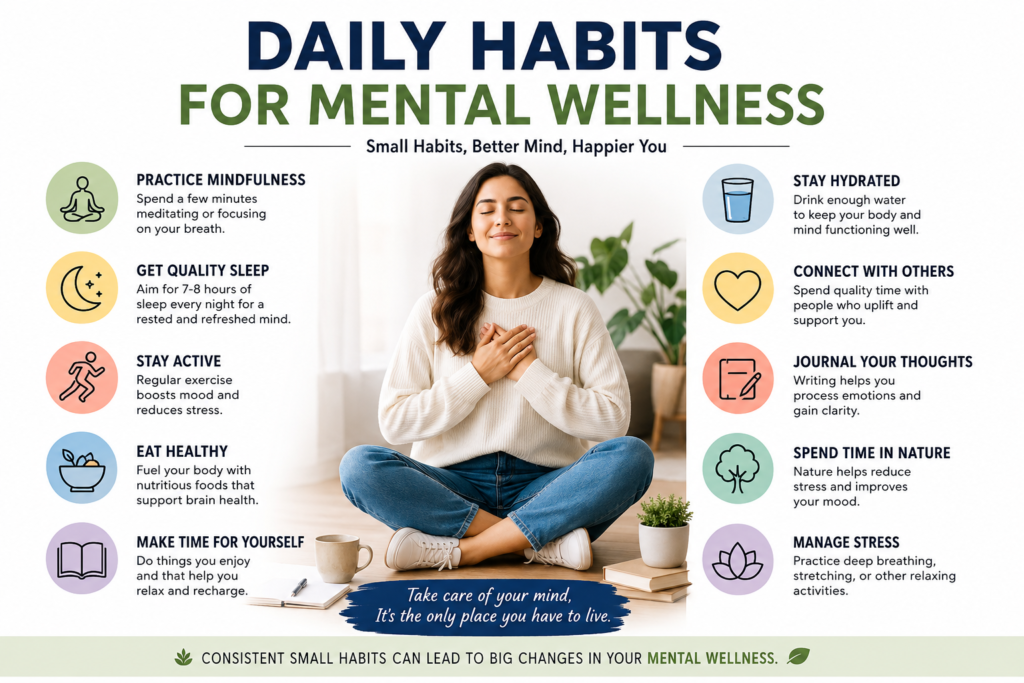
Benefits of Healthy Mental Habits
| Benefit | Impact on Daily Life |
|---|---|
| Reduced Stress | Better emotional balance |
| Improved Focus | Increased productivity |
| Better Sleep | Enhanced energy levels |
| Positive Mood | Greater life satisfaction |
| Stronger Relationships | Improved communication |
| Higher Resilience | Better coping skills |
Top Daily Habits for Mental Wellness
1. Start Your Day with Gratitude
One of the simplest ways to improve mental wellness is to practice gratitude.
How to Practice Gratitude
Every morning, write down:
- Three things you’re grateful for
- One positive goal for the day
- One recent success, no matter how small
Benefits
- Reduces negative thinking
- Increases happiness
- Improves emotional resilience
- Encourages optimism
2. Practice Mindfulness or Meditation
Mindfulness helps you stay present rather than worrying about the future or dwelling on the past.
Simple Meditation Routine
- Sit comfortably.
- Close your eyes.
- Focus on your breathing.
- Observe thoughts without judgment.
- Continue for 5-10 minutes.
Benefits
| Benefit | Result |
|---|---|
| Reduced Anxiety | Calmer mind |
| Better Focus | Improved productivity |
| Emotional Stability | Better decision-making |
| Stress Reduction | Improved mental health |
3. Get Quality Sleep Every Night
Sleep plays a critical role in mental health.
Recommended Sleep Duration
| Age Group | Recommended Sleep |
|---|---|
| Adults | 7-9 Hours |
| Teenagers | 8-10 Hours |
| Older Adults | 7-8 Hours |
Tips for Better Sleep
- Avoid screens before bedtime
- Maintain a regular sleep schedule
- Keep your bedroom cool and quiet
- Limit caffeine in the evening
4. Exercise Regularly
Physical activity is one of the most effective natural ways to boost mood and reduce stress.
Best Exercises for Mental Wellness
- Walking
- Yoga
- Cycling
- Swimming
- Strength training
- Stretching exercises
Mental Health Benefits
Exercise helps release endorphins, often called “feel-good hormones,” which naturally improve mood and reduce stress.
5. Eat a Brain-Healthy Diet
What you eat directly impacts your mental well-being.
Foods That Support Mental Health
| Food | Benefits |
|---|---|
| Fatty Fish | Rich in Omega-3 |
| Nuts & Seeds | Support brain function |
| Leafy Greens | High in antioxidants |
| Berries | Reduce inflammation |
| Whole Grains | Stabilize energy levels |
| Yogurt | Supports gut health |
Foods to Limit
- Excess sugar
- Processed foods
- Excessive caffeine
- Alcohol
6. Stay Connected with Others
Humans are naturally social beings.
Strong social connections can:
- Reduce feelings of loneliness
- Improve emotional support
- Increase happiness
- Strengthen resilience
Daily Connection Ideas
- Call a family member
- Meet a friend for coffee
- Join a community group
- Participate in online support communities
7. Limit Social Media Usage
While social media offers many benefits, excessive use can negatively affect mental health.
Potential Risks
- Comparison and low self-esteem
- Anxiety
- Information overload
- Sleep disruption
Healthy Limits
- Set screen-time boundaries
- Avoid social media before bed
- Follow positive accounts
- Take regular digital detox breaks
8. Spend Time in Nature
Nature has a powerful calming effect on the mind.
Benefits of Nature Exposure
- Reduced stress
- Improved mood
- Better concentration
- Lower anxiety levels
Even a 15-minute walk in a park can improve mental clarity.
9. Practice Self-Care Daily
Self-care isn’t selfish—it’s necessary.
Self-Care Activities
- Reading a book
- Taking a relaxing bath
- Listening to music
- Journaling
- Gardening
- Creative hobbies
Benefits
- Reduces burnout
- Improves emotional balance
- Enhances self-awareness
10. Learn to Manage Stress
Stress is unavoidable, but how you respond to it matters.
Healthy Stress Management Techniques
| Technique | Benefit |
|---|---|
| Deep Breathing | Immediate relaxation |
| Meditation | Long-term stress reduction |
| Exercise | Physical and mental relief |
| Journaling | Emotional processing |
| Time Management | Reduced overwhelm |
Signs You Need to Improve Your Mental Wellness Habits
Watch for these warning signs:
- Constant fatigue
- Difficulty concentrating
- Frequent mood swings
- Increased anxiety
- Sleep problems
- Lack of motivation
- Social withdrawal
- Feeling overwhelmed regularly
If these symptoms persist, seeking professional support may be beneficial.
Sample Daily Mental Wellness Routine
| Time | Activity |
|---|---|
| Morning | Gratitude practice |
| Morning | Healthy breakfast |
| Afternoon | Short walk or stretching |
| Evening | Limit screen time |
| Evening | Meditation or journaling |
| Night | Quality sleep routine |
How to Build Lasting Mental Wellness Habits
Start Small
Focus on one habit at a time.
Be Consistent
Consistency matters more than perfection.
Track Progress
Use a journal or habit tracker.
Celebrate Small Wins
Recognize your improvements and progress.
Stay Patient
Mental wellness is a lifelong journey, not a quick fix.
Frequently Asked Questions (Q&A)
Q1. What are the best daily habits for mental wellness?
Practicing gratitude, exercising regularly, getting quality sleep, eating healthy foods, managing stress, and maintaining social connections are among the most effective habits.
Q2. How long does it take to improve mental wellness?
Many people notice improvements within a few weeks of consistently practicing healthy habits, though long-term benefits develop over months.
Q3. Can exercise improve mental health?
Yes. Exercise releases endorphins, reduces stress hormones, improves sleep, and boosts overall mood.
Q4. Why is sleep important for mental wellness?
Sleep supports emotional regulation, memory, concentration, and stress management.
Q5. How does social media affect mental health?
Excessive social media use can contribute to anxiety, comparison, low self-esteem, and sleep disruption.
Q6. Is meditation necessary for mental wellness?
Meditation is highly beneficial but not required. Other practices such as journaling, deep breathing, and spending time in nature can also support mental wellness.
Conclusion
Mental wellness is built through daily choices and habits. Small actions such as practicing gratitude, exercising regularly, getting enough sleep, eating nutritious foods, and managing stress can significantly improve your emotional well-being over time.
Remember, mental wellness isn’t about being happy every moment—it’s about developing the resilience, balance, and self-awareness needed to navigate life’s challenges effectively.
By consistently implementing these daily habits, you can create a healthier, happier, and more fulfilling life.
Pingback: How Does a Weak Immune System Affect Your Health?
Pingback: Healthy Breakfast, Lunch, and Dinner to Lose Weight
Pingback: Turmeric Daily Benefits: 10 Science Add Turmeric Your Diet
Pingback: Foods That Fight Inflammation: The Best Anti-Inflammatory
Pingback: Foods That Help Reduce Belly Fat
Pingback: What Are the Top 7 Health Benefits of Garlic?
Pingback: 3 Weight loss Mistakes Slowing Down Your Weight Loss
Pingback: Protein-Rich Foods for Fat Loss: 15 Best High-Protein Foods
Pingback: 20-Minute Workout at Home for Beginners Without Equipment:
Pingback: How can you gain weight in a healthy way? 15 Best foods to eat for Healthy weight gain?
Pingback: Running vs Walking: Which Is Better for Fat Loss?
Pingback: Which Is the Best Breakfast for Weight Loss? A Complete Guide to Healthy Morning Meals
Pingback: Which Foods That Burn Fat Naturally and Support Healthy.
Pingback: Which 7 Foods Naturally Boost Gut Health? A Complete Guide.
Pingback: How to Lose Belly Fat Naturally: 5 Simple Exercises
Pingback: Late Night Eating Facts: How Eating Before Bed Affects
Pingback: 10 Amazing Top Health Benefits of ginger tea
Pingback: 25+ Age Fitness Secrets: SRK-Inspired Habits for a Health
Pingback: Weight Loss Myths Busted: 15 Common Myths That Stopping
Pingback: Shah Rukh Khan Morning Fitness Habits: 5 Healthy Ways
Pingback: 20 Best High-Protein Vegetarian Protein Sources for Health
Pingback: Best Vitamin C Rich Foods for Strong Immunity
Pingback: 25 Healthy Snacks Under 100 Calories for Weight Loss and Healthy Living
Pingback: How Exercise Improves Mood: 8 Science-Backed Mental Health
Pingback: Signs of Stress You Ignore: 15 Hidden Symptoms That Damaging
Pingback: Morning Habits for a Positive Mind: 7 Routines for Happiness
Pingback: Best Foods For High Iron: Top 25 Iron-Rich Foods List
Pingback: 15 Daily Foods for a Healthy Lifestyle: Science-Backed Guide