
Introduction
Garlic has been used for thousands of years as both a food ingredient and a natural remedy. Known scientifically as Allium sativum, garlic is a member of the onion family and is valued worldwide for its distinctive flavor and impressive health benefits.
Ancient civilizations, including the Egyptians, Greeks, Romans, and Chinese, used garlic to support overall health and wellness. Today, modern research continues to explore garlic’s powerful compounds, particularly allicin, which is believed to be responsible for many of its beneficial effects.
But what exactly makes garlic so special? In this article, we’ll explore the top 7 health benefits of garlic, how it supports your body, and why you may want to include it in your daily diet.
Table of Contents
| No. | Topic |
|---|---|
| 1 | Introduction |
| 2 | Nutritional Value of Garlic |
| 3 | Boosts the Immune System |
| 4 | Supports Heart Health |
| 5 | Helps Lower Blood Pressure |
| 6 | Rich in Antioxidants |
| 7 | May Improve Athletic Performance |
| 8 | Supports Healthy Digestion |
| 9 | May Help With Weight Management |
| 10 | How to Add Garlic to Your Diet |
| 11 | Frequently Asked Questions |
| 12 | Conclusion |
Nutritional Value of Garlic
Garlic may be small, but it contains an impressive range of nutrients.
Nutrition in One Clove of Garlic
| Nutrient | Amount |
|---|---|
| Calories | 4-5 |
| Carbohydrates | 1 gram |
| Protein | 0.2 grams |
| Vitamin C | Small amount |
| Vitamin B6 | Present |
| Manganese | Present |
| Selenium | Present |
| Fiber | Small amount |
Garlic also contains sulfur compounds such as allicin, diallyl sulfide, and S-allyl cysteine, which contribute to its health–promoting properties.
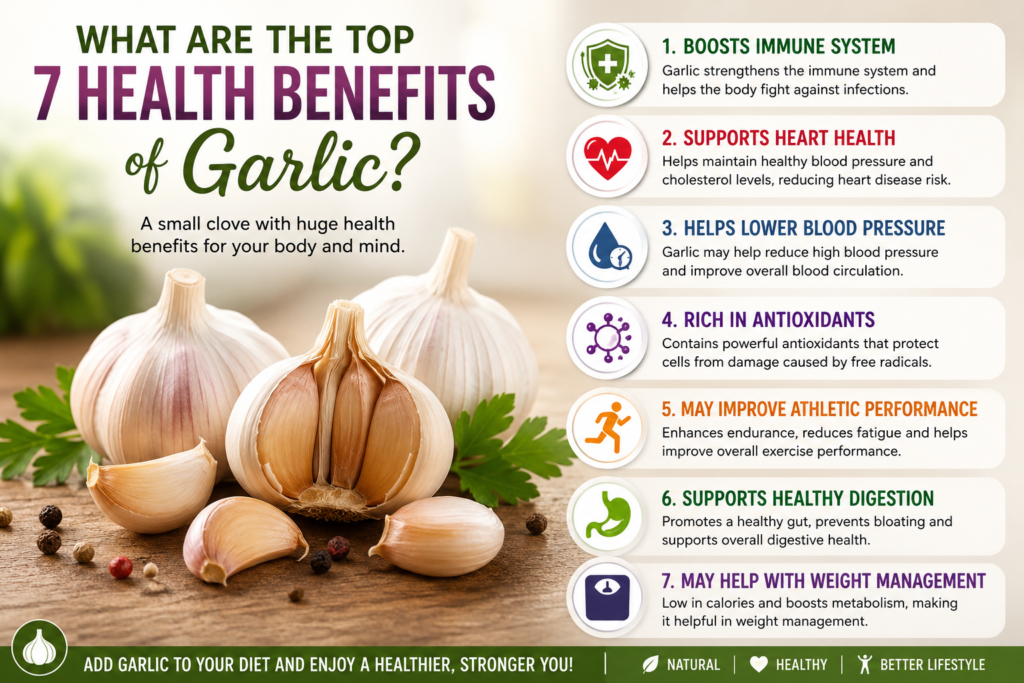
1. Boosts the Immune System
One of the most well-known health benefits of garlic is its ability to support immune function.
Garlic contains bioactive compounds that may help the body defend itself against harmful bacteria, viruses, and fungi. These compounds can enhance the activity of immune cells and help the body respond more effectively to infections.
Many people consume garlic during cold and flu season because it has traditionally been associated with immune support.
How Garlic Supports Immunity
- Supports natural immune defenses
- Contains antimicrobial properties
- May reduce the severity of common illnesses
- Helps the body fight oxidative stress
A stronger immune system means your body is better prepared to handle everyday health challenges.
2. Supports Heart Health
Heart disease remains one of the leading health concerns worldwide. Fortunately, garlic may help support cardiovascular health in several ways.
Research suggests that garlic may contribute to healthy circulation and help maintain normal cholesterol levels when combined with a balanced lifestyle.
Benefits for Heart Health
- Supports healthy blood flow
- May help maintain normal cholesterol levels
- Promotes healthy circulation
- Supports overall cardiovascular wellness
Because cardiovascular health depends on many factors, garlic works best when combined with regular exercise, healthy eating, and proper medical care.
3. Helps Lower Blood Pressure
High blood pressure is often called the “silent killer” because it may not cause obvious symptoms while increasing the risk of serious health problems.
Several studies have suggested that garlic may help support healthy blood pressure levels in some individuals.
Why This Matters
Healthy blood pressure supports:
- Heart health
- Kidney function
- Brain health
- Blood vessel function
Adding garlic to a healthy lifestyle may provide additional support for maintaining healthy blood pressure levels.
4. Rich in Powerful Antioxidants
Oxidative stress occurs when harmful molecules called free radicals damage cells throughout the body.
Garlic contains powerful antioxidants that help protect cells from this damage.
Benefits of Antioxidants
- Protect cells from oxidative damage
- Support healthy aging
- Help maintain brain health
- Support overall wellness
Many experts believe that antioxidant-rich foods should be a regular part of a healthy diet, and garlic is an excellent example.
Why Antioxidants Matter
As we age, oxidative stress can contribute to various health concerns. The antioxidant compounds in garlic may help reduce this burden and support long-term health.
5. May Improve Athletic Performance
Historically, garlic was used by ancient cultures to enhance physical performance and reduce fatigue.
Although modern evidence is still developing, garlic may support endurance and physical activity by promoting healthy circulation and cardiovascular function.
Potential Benefits for Active Individuals
- Supports oxygen delivery
- May reduce feelings of fatigue
- Supports cardiovascular performance
- May improve exercise capacity
While garlic is not a replacement for proper training and nutrition, it can be a valuable addition to a healthy lifestyle.
6. Supports Healthy Digestion
Digestive health plays a critical role in overall wellness, and garlic may help support a healthy digestive system.
Garlic contains compounds that may encourage a balanced gut environment.
Digestive Benefits
- Supports healthy gut bacteria
- Promotes digestive wellness
- Helps maintain gastrointestinal balance
- Supports nutrient absorption
A healthy digestive system contributes to better energy levels, immune function, and overall health.
Tips for Digestive Comfort
Some people find raw garlic strong on the stomach. If this happens, try:
- Cooking garlic before eating
- Using smaller portions
- Mixing garlic with meals
7. May Help With Weight Management
While garlic is not a magic weight-loss solution, it may support healthy weight management when included as part of a balanced diet.
Garlic is low in calories and adds flavor without the need for extra fats, sugars, or high-calorie sauces.
Weight Management Benefits
- Low in calories
- Adds flavor naturally
- Supports healthy metabolism
- Encourages nutritious meal preparation
Combined with exercise and healthy eating habits, garlic can be a useful addition to a weight-management plan.
How to Add Garlic to Your Daily Diet
Adding garlic to your meals is simple and delicious.
Popular Ways to Eat Garlic
| Method | Description |
|---|---|
| Raw Garlic | Strong flavor and aroma |
| Roasted Garlic | Mild and slightly sweet |
| Garlic Powder | Convenient seasoning |
| Garlic Supplements | Alternative option |
| Cooked Garlic | Great for everyday meals |
Easy Meal Ideas
- Garlic roasted vegetables
- Garlic chicken
- Garlic soup
- Garlic bread
- Garlic stir-fry
- Homemade garlic dressing
The key is consistency rather than consuming large amounts at once.
Possible Side Effects of Garlic
Although garlic is generally safe for most people, excessive consumption may cause:
- Bad breath
- Body odor
- Heartburn
- Digestive discomfort
- Stomach irritation
People taking blood-thinning medications should consult a healthcare professional before significantly increasing garlic intake.
Frequently Asked Questions (FAQ)
1. Is it good to eat garlic every day?
Yes, many people safely consume garlic daily as part of a balanced diet. Moderation is important.
2. What happens if I eat raw garlic daily?
Raw garlic contains active compounds that may support immunity, heart health, and overall wellness, but it may also cause digestive discomfort in some individuals.
3. How much garlic should I eat per day?
Many health experts suggest one to two cloves per day as part of a healthy diet, though individual needs may vary.
4. Is garlic good for weight loss?
Garlic alone does not cause weight loss, but it can support a healthy diet and lifestyle.
5. Can garlic boost immunity?
Garlic contains compounds that may help support normal immune function.
6. Is raw garlic better than cooked garlic?
Raw garlic generally contains more active compounds, but cooked garlic still provides nutritional benefits.
7. Can garlic help lower blood pressure?
Research suggests garlic may support healthy blood pressure levels in some individuals when combined with a healthy lifestyle.
8. What is the best time to eat garlic?
Garlic can be consumed at any time of day. Some people prefer eating it in the morning, while others include it in meals.
Conclusion
Garlic is much more than a flavorful kitchen ingredient. From supporting the immune system and heart health to providing antioxidants and digestive support, garlic offers a wide range of potential health benefits.
While no single food can guarantee perfect health, incorporating garlic into a balanced diet may contribute to overall wellness. Whether you enjoy it raw, roasted, or cooked into your favorite dishes, garlic remains one of nature’s most versatile and nutritious foods.
By making garlic a regular part of your meals, you can enjoy both its rich flavor and its impressive health-promoting properties.
Pingback: 3 Weight loss Mistakes Slowing Down Your Weight Loss
Pingback: Morning Drink for Better Immunity: Benefits, Recipe & Daily Health Tips
Pingback: Signs Your Immune System Is Weak: 10 Warning Signs
Pingback: 5 Foods That Boost Immunity Naturally | Best Foods for a Strong Immune System
Pingback: Which is the best Healthy Snacks Under 100 Calories
Pingback: Running vs Walking: Which Is Better for Fat Loss?
Pingback: Best Vitamin C Rich Foods for Strong Immunity
Pingback: Habits That Strengthen Immunity: Simple Daily Practices
Pingback: Foods That Fight Inflammation: The Best Anti-Inflammatory
Pingback: How can you gain weight in a healthy way? 15 Best foods to eat for Healthy weight gain?
Pingback: Which Foods That Burn Fat Naturally and Support Healthy.
Pingback: 10 Amazing Top Health Benefits of ginger tea
Pingback: Healthy Breakfast, Lunch, and Dinner to Lose Weight
Pingback: Which Is the Best Breakfast for Weight Loss? A Complete Guide to Healthy Morning Meals
Pingback: Which 7 Foods Naturally Boost Gut Health? A Complete Guide.
Pingback: How Much Water Helps Weight Loss? 5 tips for Water Fat Loss.
Pingback: Daily Habits for Mental Wellness: 10 Simple Practices
Pingback: How Does a Weak Immune System Affect Your Health?
Pingback: Weight Loss Myths Busted: 15 Common Myths That Stopping
Pingback: How to Lose Belly Fat Naturally: 5 Simple Exercises
Pingback: 20-Minute Workout at Home for Beginners Without Equipment:
Pingback: How Exercise Improves Mood: 8 Science-Backed Mental Health