
Table of Contents
Vegetarian Protein Sources: The Ultimate Guide to High-Protein Plant-Based Foods for Better Health
Introduction
Protein is one of the most important nutrients your body needs every day. It plays a crucial role in building muscles, repairing tissues, supporting the immune system, producing hormones, and maintaining healthy skin, hair, and nails.
Many people believe that getting enough protein is difficult on a vegetarian diet. However, this is a common misconception. A well-planned vegetarian diet can provide all the protein your body needs while also delivering fiber, vitamins, minerals, and antioxidants that support overall health.
Whether your goal is to build muscle, lose weight, improve fitness, or simply eat healthier, there are plenty of nutritious vegetarian protein sources to choose from.
In this comprehensive guide, you’ll discover the best vegetarian protein-rich foods, their nutritional benefits, practical meal ideas, and expert tips to help you meet your daily protein requirements.
Why Protein Is Essential
Protein is made up of amino acids, often referred to as the building blocks of life. Your body uses protein for many essential functions.
Protein helps:
- Build and repair muscles
- Support healthy bones
- Improve immune function
- Maintain healthy skin, hair, and nails
- Produce enzymes and hormones
- Keep you feeling full longer
- Support healthy weight management
- Aid recovery after exercise
Without enough protein, your body may struggle to maintain muscle mass and perform daily functions efficiently.
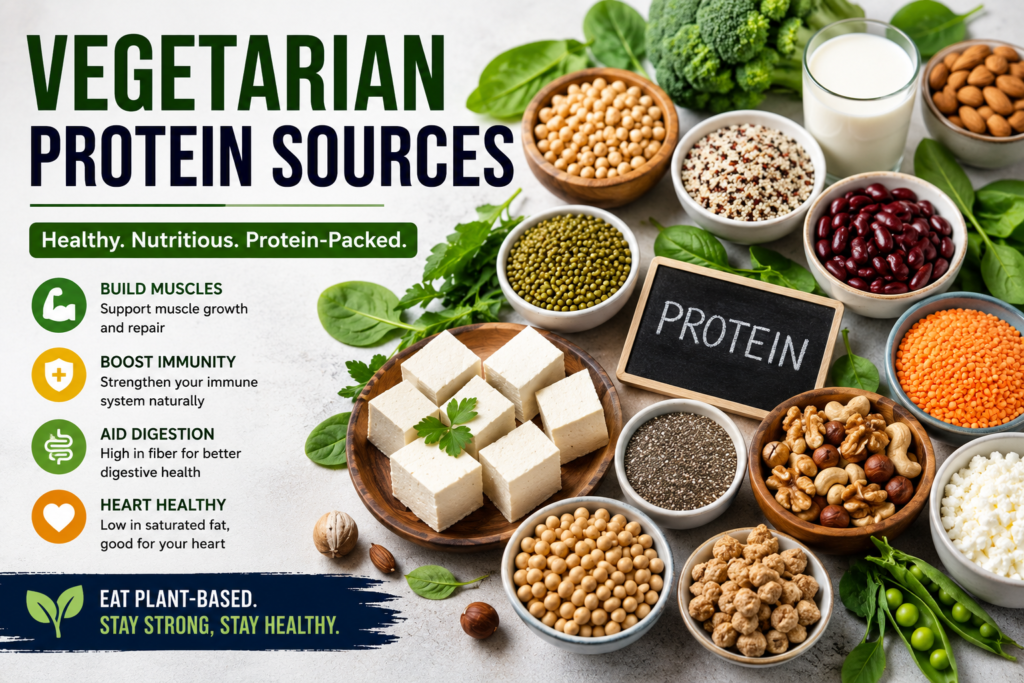
best vegetarian protein foods,
high protein vegetarian foods,
vegetarian muscle building foods,
healthy vegetarian diet,
How Much Protein Do You Need?
Protein requirements vary depending on age, activity level, and health goals.
General Daily Recommendations
| Person | Recommended Protein Intake |
|---|---|
| Sedentary Adults | 0.8 g per kg of body weight |
| Active Adults | 1.0–1.2 g/kg |
| Strength Training | 1.4–2.0 g/kg |
| Older Adults | 1.0–1.2 g/kg |
| Weight Loss | 1.2–1.6 g/kg |
Example: A person weighing 70 kg may need around 56–112 grams of protein daily, depending on activity level.
Benefits of Vegetarian Protein Sources
Plant-based proteins offer more than just protein.
Advantages include:
- Rich in dietary fiber
- Lower in saturated fat
- Support heart health
- Help manage cholesterol
- Promote healthy digestion
- Rich in antioxidants
- May lower the risk of chronic diseases
- Environmentally friendly
Top 20 Vegetarian Protein Sources
1. Lentils
Protein: Approximately 18 g per cooked cup
Benefits:
- High in fiber
- Rich in iron
- Supports heart health
- Helps regulate blood sugar
Best for soups, curries, and salads.
2. Chickpeas
Protein: About 15 g per cooked cup
Great for:
- Hummus
- Salads
- Curries
- Roasted snacks
3. Kidney Beans
Protein: Around 15 g per cooked cup
Rich in:
- Fiber
- Iron
- Potassium
- Magnesium
4. Black Beans
Protein-rich and excellent for:
- Burritos
- Rice bowls
- Soups
- Salads
5. Soybeans (Edamame)
Protein: Around 18–19 g per cooked cup
Soybeans are among the highest-quality plant proteins and contain all nine essential amino acids.
6. Tofu
Protein: Approximately 10–15 g per 100 g
Benefits:
- Complete protein
- Low in saturated fat
- Highly versatile
Use in stir-fries, curries, sandwiches, or grilled dishes.
7. Tempeh
Protein: Around 20 g per 100 g
Tempeh is fermented soy, making it rich in probiotics and easy to digest.
8. Paneer (Cottage Cheese)
Protein: Around 18 g per 100 g
Benefits:
- Rich in calcium
- Supports muscle growth
- Great for vegetarian athletes
Choose low-fat paneer if your goal is weight management.
9. Greek Yogurt
Protein: Around 10 g per 100 g
Provides:
- Protein
- Calcium
- Probiotics for gut health
10. Milk
A glass of milk provides approximately 8 grams of protein along with calcium and vitamin B12.
11. Cottage Cheese
High in protein and excellent as a snack or breakfast option.
12. Quinoa
Protein: Around 8 g per cooked cup
Quinoa is a complete protein and also rich in magnesium and fiber.
13. Oats
Besides fiber, oats provide about 5–6 grams of protein per serving.
Ideal for breakfast.
14. Chia Seeds
Protein: Around 5 g per 2 tablespoons
Rich in:
- Omega-3 fatty acids
- Fiber
- Calcium
15. Flaxseeds
Provide protein, healthy fats, and antioxidants.
Best added to smoothies, yogurt, or oatmeal.
16. Pumpkin Seeds
One of the highest-protein seeds available.
Also rich in:
- Zinc
- Magnesium
- Healthy fats
17. Almonds
Protein: Around 6 g per ounce
Excellent healthy snack rich in vitamin E.
18. Peanuts
Affordable and protein-rich.
Enjoy as roasted peanuts or natural peanut butter.
19. Green Peas
Surprisingly high in protein compared to many vegetables.
Perfect in soups and salads.
20. Seitan
Made from wheat gluten, seitan contains around 25 grams of protein per 100 grams, making it one of the richest vegetarian protein sources.
Note: Seitan is not suitable for people with celiac disease or gluten sensitivity.
How to Combine Plant Proteins for Complete Nutrition
Most plant proteins are lower in one or more essential amino acids. Eating a variety of protein-rich foods throughout the day helps provide a complete amino acid profile.
Great combinations include:
- Rice + Lentils
- Whole Wheat Roti + Dal
- Hummus + Whole Wheat Bread
- Peanut Butter + Whole Grain Toast
- Beans + Brown Rice
- Yogurt + Nuts + Seeds
Sample High-Protein Vegetarian Meal Plan
Breakfast
- Greek yogurt
- Oats
- Chia seeds
- Mixed berries
Protein: ~25 g
Mid-Morning Snack
- Handful of almonds
- Milk
Protein: ~14 g
Lunch
- Brown rice
- Lentil curry
- Mixed vegetables
- Salad
Protein: ~28 g
Evening Snack
- Roasted chickpeas
Protein: ~12 g
Dinner
- Grilled paneer
- Quinoa
- Steamed broccoli
Protein: ~35 g
Total Protein: Approximately 110–115 grams
Common Mistakes to Avoid
- Depending on only one protein source
- Ignoring total daily protein intake
- Eating too few calories
- Skipping legumes
- Avoiding healthy fats
- Not including strength training
- Forgetting vitamin B12 sources if following a strict vegetarian diet
Frequently Asked Questions (FAQs)
1. Can vegetarians get enough protein?
Yes. A balanced vegetarian diet with legumes, soy foods, dairy (if included), whole grains, nuts, and seeds can meet protein needs.
2. Which vegetarian food has the highest protein?
Seitan, tempeh, soybeans, tofu, paneer, and lentils are among the highest-protein vegetarian foods.
3. Is tofu healthier than paneer?
Both can be healthy choices. Tofu is generally lower in saturated fat, while paneer provides more calcium and protein. The better option depends on your dietary preferences and nutritional goals.
4. Do I need protein supplements?
Not necessarily. Most people can meet their protein needs through a balanced diet. Supplements may be useful for some athletes or individuals with higher protein requirements.
5. Can vegetarian protein help build muscle?
Absolutely. Combined with regular strength training and adequate calorie intake, vegetarian protein sources can effectively support muscle growth and recovery.
6. Are nuts enough for protein?
Nuts contribute to protein intake but are also high in healthy fats and calories. It’s best to combine them with legumes, dairy, soy foods, and whole grains.
Final Thoughts
Getting enough protein on a vegetarian diet is easier than many people think. By including a variety of protein-rich foods such as lentils, beans, tofu, tempeh, paneer, Greek yogurt, quinoa, nuts, and seeds, you can support muscle growth, healthy weight management, and overall wellness.
Instead of focusing on a single “superfood,” aim for a diverse, balanced diet that includes different plant-based protein sources throughout the day. Pair this with regular exercise, proper hydration, and sufficient sleep for the best long-term health outcomes.
Pingback: Weight Loss Myths Busted: 15 Common Myths That Stopping
Pingback: 25+ Age Fitness Secrets: SRK-Inspired Habits for a Health
Pingback: Protein-Rich Foods for Fat Loss: 15 Best High-Protein Foods
Pingback: How to Lose Belly Fat Naturally: 5 Simple Exercises
Pingback: How can you gain weight in a healthy way? 15 Best foods to eat for Healthy weight gain?
Pingback: Habits That Strengthen Immunity: Simple Daily Practices
Pingback: Running vs Walking: Which Is Better for Fat Loss?
Pingback: What Are the Top 7 Health Benefits of Garlic?
Pingback: 3 Weight loss Mistakes Slowing Down Your Weight Loss
Pingback: Signs Your Immune System Is Weak: 10 Warning Signs
Pingback: How Exercise Improves Mood: 8 Science-Backed Mental Health
Pingback: Turmeric Daily Benefits: 10 Science Add Turmeric Your Diet
Pingback: How Much Water Helps Weight Loss? 5 tips for Water Fat Loss.
Pingback: Which is the best Healthy Snacks Under 100 Calories
Pingback: 25 Healthy Snacks Under 100 Calories for Weight Loss and Healthy Living
Pingback: 20-Minute Workout at Home for Beginners Without Equipment:
Pingback: Foods That Fight Inflammation: The Best Anti-Inflammatory
Pingback: Which Is the Best Breakfast for Weight Loss? A Complete Guide to Healthy Morning Meals
Pingback: Healthy Carbs vs Bad Carbs: Key Differences, Best Foods
Pingback: Why You Need Healthy Fats: Benefits, Best Food Sources
Pingback: 15 Daily Foods for a Healthy Lifestyle: Science-Backed Guide
Pingback: Best Foods For High Iron: Top 25 Iron-Rich Foods List