
How Exercise Improves Mood: 8 Science-Backed Mental Health Benefits of Physical Activity
Table of Contents
Introduction
Have you ever noticed that you feel happier after a brisk walk, a workout, or even dancing to your favorite song? That’s not just your imagination. Exercise has a powerful effect on your brain and emotional well-being.
Regular physical activity doesn’t just strengthen your muscles and heart—it also improves your mood, reduces stress, increases confidence, and supports better mental health. Whether you’re feeling anxious, overwhelmed, or simply low on energy, exercise can be one of the most effective natural ways to improve how you feel.
In this comprehensive guide, we’ll explore how exercise improves mood, the science behind it, the best workouts for mental health, and practical tips to make physical activity part of your daily routine.
The Connection Between Exercise and Mood
Exercise affects your brain in several positive ways. During physical activity, your body releases chemicals that help regulate emotions and reduce stress.
These include:
- Endorphins: Often called the “feel-good” hormones, they help reduce pain and create feelings of happiness.
- Serotonin: Supports emotional stability, sleep, and appetite.
- Dopamine: Plays a role in motivation, reward, and pleasure.
- Brain-Derived Neurotrophic Factor (BDNF): Supports brain health, learning, and memory.
Together, these changes help improve your mood and promote emotional well-being.
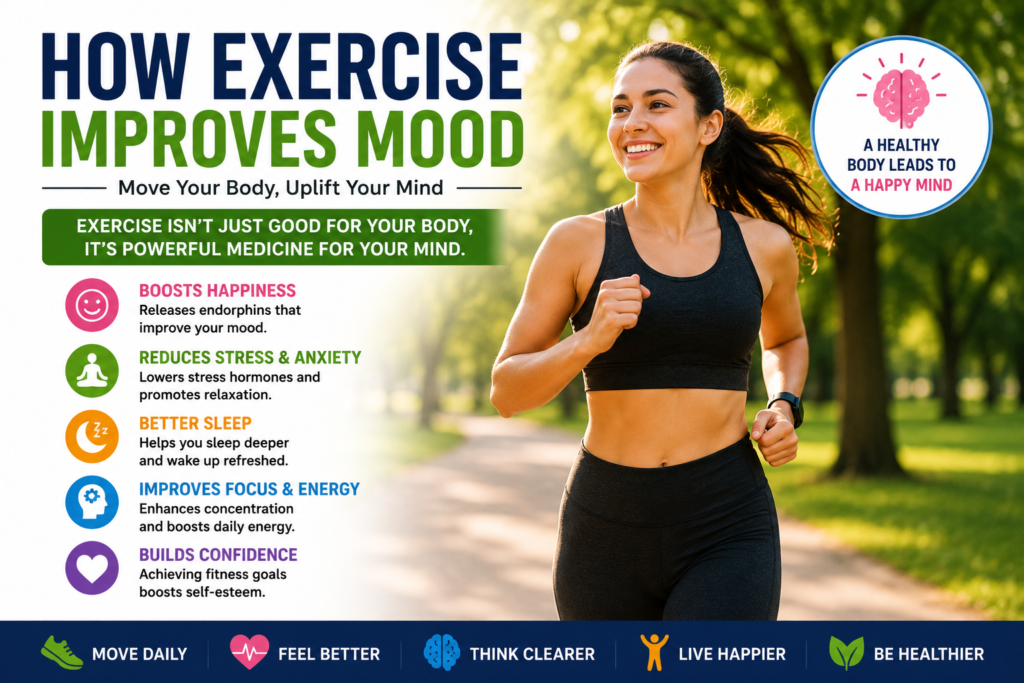
How Exercise Improves Mental Health
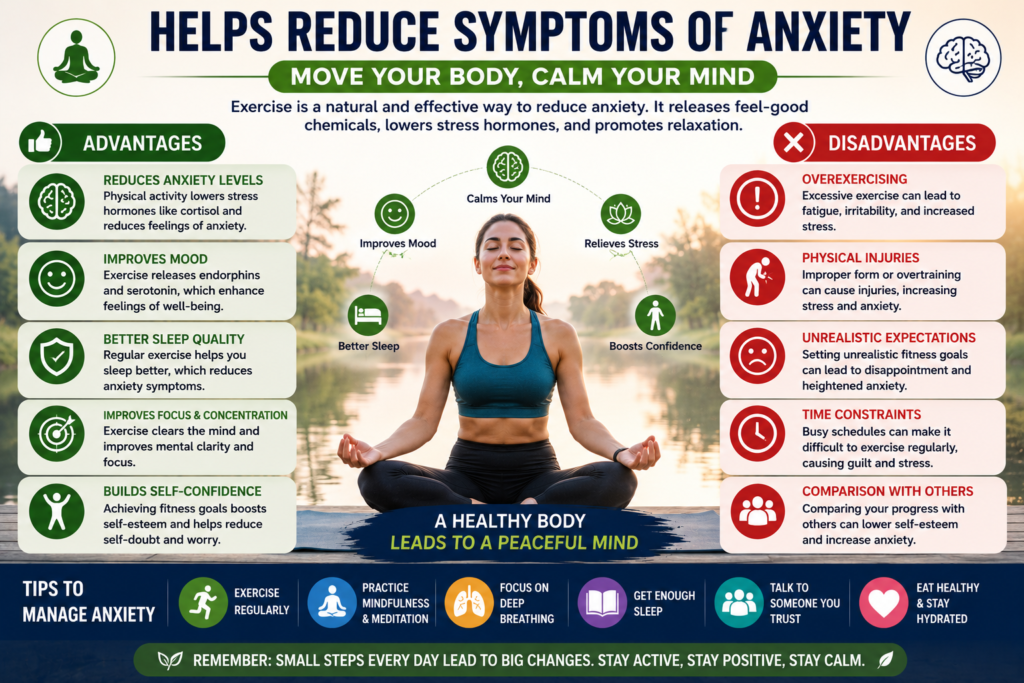
1. Reduces Stress
Physical activity lowers stress hormones like cortisol while increasing chemicals that help you relax.
Benefits include:
- Feeling calmer
- Reduced muscle tension
- Better ability to handle daily challenges
2. Helps Reduce Symptoms of Anxiety
Exercise can distract your mind from worries and promote relaxation through rhythmic movement and controlled breathing.
Activities such as walking, swimming, cycling, and yoga are especially helpful.
3. Supports a Positive Mood
Regular exercise encourages the release of endorphins and serotonin, helping many people feel happier and more emotionally balanced.
4. Improves Sleep Quality
People who exercise regularly often experience:
- Falling asleep faster
- Better sleep quality
- Feeling more refreshed in the morning
Better sleep also contributes to a better mood.
5. Boosts Self-Confidence
Achieving fitness goals—whether it’s completing a workout or becoming stronger—can improve self-esteem and confidence.
6. Increases Energy Levels
Although exercise requires effort, it often leaves people feeling more energized throughout the day by improving circulation and cardiovascular fitness.
7. Improves Brain Function
Exercise supports:
- Better memory
- Sharper concentration
- Improved learning
- Enhanced creativity
8. Encourages Social Connection
Group workouts, sports, or walking with friends can reduce feelings of loneliness and provide emotional support.
Top Benefits of Exercise for Your Mood
Regular exercise may help you:
- Feel happier
- Reduce everyday stress
- Support emotional resilience
- Improve focus and productivity
- Sleep better
- Increase confidence
- Boost energy
- Maintain a healthier lifestyle
- Strengthen overall well-being
Best Types of Exercise for Better Mental Well-Being
1. Walking
A simple 30-minute walk can improve mood and reduce stress.
2. Running or Jogging
These activities can trigger the well-known “runner’s high,” leaving many people feeling energized and positive.
3. Strength Training
Lifting weights or using resistance bands can improve both physical strength and self-confidence.
4. Yoga
Yoga combines movement, breathing, and mindfulness, making it an excellent choice for stress relief and relaxation.
5. Cycling
Cycling is a fun cardiovascular exercise that supports heart health while improving mood.
6. Swimming
Swimming provides a full-body workout while many people find the water calming and relaxing.
7. Dancing
Whether at home or in a class, dancing combines exercise with music, making it enjoyable and uplifting.
8. Team Sports
Sports like football, basketball, volleyball, or badminton encourage physical activity and social interaction.
How Much Exercise Do You Need?
Health experts generally recommend:
- 150–300 minutes of moderate-intensity aerobic activity per week, or
- 75–150 minutes of vigorous-intensity activity per week.
Also include strength training at least two days each week.
Even short sessions of 10–15 minutes can make a positive difference when done consistently.
Simple Ways to Stay Active Every Day
- Take the stairs instead of the elevator.
- Walk during phone calls.
- Stretch after long periods of sitting.
- Ride a bicycle for short trips.
- Take regular movement breaks while working.
- Join a fitness class.
- Dance to your favorite music.
- Walk after meals.
- Play outdoor games with family.
- Set realistic weekly fitness goals.
Common Mistakes to Avoid
- Doing too much too soon
- Skipping warm-up and cool-down exercises
- Ignoring rest and recovery
- Comparing yourself to others
- Exercising inconsistently
- Setting unrealistic goals
- Forgetting proper hydration
- Neglecting balanced nutrition
Frequently Asked Questions (FAQs)
1. Can exercise improve mood immediately?
Many people notice an improvement in mood shortly after moderate physical activity, although individual experiences vary.
2. What is the best exercise for reducing stress?
Walking, yoga, cycling, swimming, and light strength training are all excellent options.
3. How often should I exercise for better mental health?
Aim for most days of the week, with a goal of at least 150 minutes of moderate physical activity each week.
4. Can exercise help with anxiety?
Regular physical activity may help reduce symptoms of anxiety and improve overall emotional well-being. It should complement—not replace—professional care when needed.
5. Does exercise improve sleep?
Yes. Regular exercise is associated with better sleep quality, which also supports mood and mental health.
6. Is walking enough to improve mood?
Absolutely. Even a brisk 20–30 minute walk can provide meaningful mental and physical health benefits.
Final Thoughts
Exercise is one of the most effective natural ways to support a positive mood and overall mental well-being. From reducing stress and improving sleep to boosting confidence and increasing energy, regular physical activity benefits both the body and the mind.
The key isn’t finding the “perfect” workout—it’s choosing activities you enjoy and staying consistent. Whether you walk, cycle, swim, dance, or practice yoga, every step toward a more active lifestyle contributes to better physical and emotional health.
Start small, stay consistent, and let movement become a daily habit for a happier, healthier life.
Pingback: 25 Healthy Snacks Under 100 Calories for Weight Loss and Healthy Living
Pingback: Healthy Carbs vs Bad Carbs: Key Differences, Best Foods
Pingback: 20 Best High-Protein Vegetarian Protein Sources for Health
Pingback: Daily Habits for Mental Wellness: 10 Simple Practices
Pingback: Weight Loss Myths Busted: 15 Common Myths That Stopping
Pingback: Why You Need Healthy Fats: Benefits, Best Food Sources
Pingback: Why You Need Healthy Fats: Bats 9 Foods Benefits, Sources, Myths & How to Add Them
Pingback: Best High Fiber Foods: Top 25 Foods Rich in Fiber for Better Health
Pingback: Which Is the Most Common Mistake to Start a Beginner Workout? 15 Beginner Workout Mistakes You Must Avoid
Pingback: 15 Best Foods That Help Anxiety Naturally
Pingback: Best Foods For High Iron: Top 25 Iron-Rich Foods List
Pingback: 15 Stretching Before Bed Benefits for Better Sleep & Health
Pingback: 15 Daily Foods for a Healthy Lifestyle: Science-Backed Guide
Pingback: Why Do I Feel So Tired All the Time? 10 Common Reasons