
25 Healthy Snacks Under 100 Calories for Weight Loss and Healthy Living
Table of Contents
Introduction
Snacks Under 100 Calories often gets a bad reputation, especially for people trying to lose weight. However, healthy snacking can actually support your fitness goals by preventing overeating, maintaining energy levels, and satisfying hunger between meals.
The key is choosing nutrient-dense snacks under 100 calories that provide fiber, protein, vitamins, and healthy fats instead of empty calories.
Whether you’re working from home, studying, traveling, or simply craving something between meals, this guide will help you discover delicious, satisfying, and guilt-free snacks that fit into a healthy lifestyle.
Why Choose Snacks Under 100 Calories?
Low-calorie snacks can help you:
- Control hunger between meals
- Reduce overeating at lunch or dinner
- Support healthy weight management
- Maintain stable energy levels
- Improve portion control
- Make healthier food choices
- Stay consistent with calorie goals
When chosen wisely, these snacks provide nutrition without adding excessive calories.
Benefits of Low-Calorie Snacking
Healthy snacks can:
- Improve metabolism throughout the day
- Help maintain steady blood sugar levels
- Reduce cravings for sugary foods
- Support weight-loss goals
- Increase daily fruit and vegetable intake
- Improve concentration and productivity
- Keep you feeling satisfied
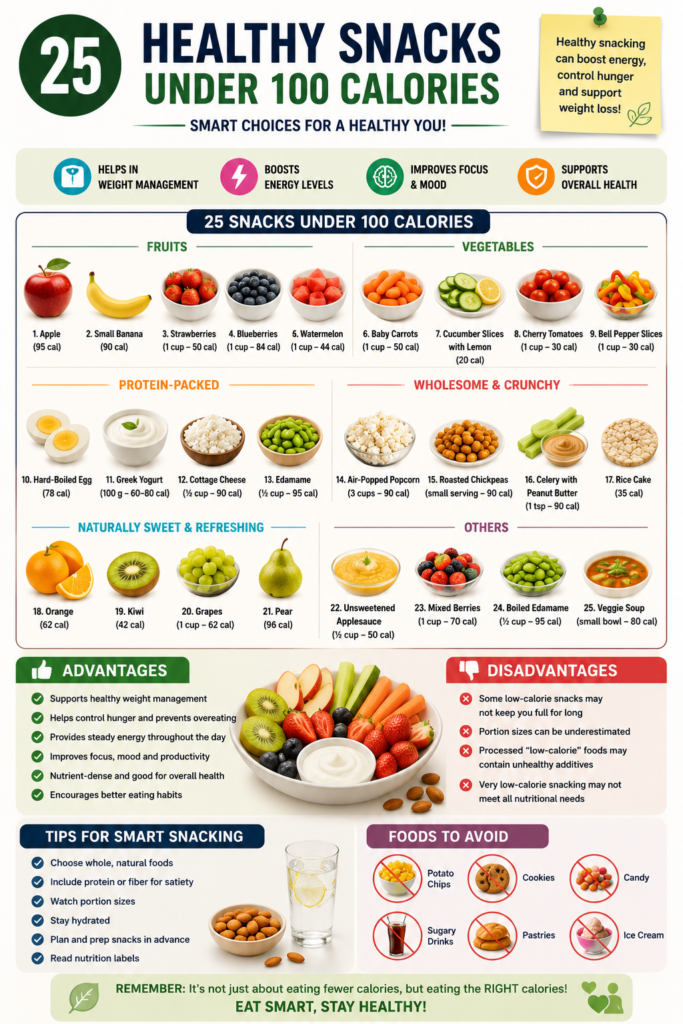
25 Healthy Snacks Under 100 Calories
1. One Medium Apple
Calories: ~95
Rich in fiber and antioxidants.
2. One Small Banana
Calories: ~90
Provides potassium and natural energy.
3. One Cup Strawberries
Calories: ~50
Loaded with vitamin C and antioxidants.
4. One Cup Blueberries
Calories: ~84
Excellent for brain and heart health.
5. Baby Carrots
Calories: ~50 per cup
Crunchy, filling, and rich in vitamin A.
6. Cucumber Slices with Lemon
Calories: ~20
Refreshing and hydrating.
7. Air-Popped Popcorn (3 Cups)
Calories: ~90
High in fiber and surprisingly filling.
8. Hard-Boiled Egg
Calories: ~78
A high-quality source of protein.
9. Plain Greek Yogurt (100 g)
Calories: ~60–80
Provides protein and probiotics.
10. Cottage Cheese (½ Cup)
Calories: ~90
Rich in protein and calcium.
11. Cherry Tomatoes
Calories: ~30 per cup
Packed with vitamins and antioxidants.
12. Watermelon
Calories: ~45 per cup
Hydrating and naturally sweet.
13. Kiwi
Calories: ~42 each
High in vitamin C and fiber.
14. Orange
Calories: ~62
Boosts immunity and hydration.
15. Celery with 1 Teaspoon Peanut Butter
Calories: ~90
A satisfying combination of fiber and healthy fats.
16. Roasted Chickpeas (Small Serving)
Calories: ~90
Crunchy and protein-rich.
17. Edamame (½ Cup)
Calories: ~95
One of the best plant-based protein snacks.
18. Bell Pepper Slices
Calories: ~30
Colorful, crunchy, and vitamin C-rich.
19. Rice Cake
Calories: ~35
Light and versatile.
20. Unsweetened Applesauce
Calories: ~50
Naturally sweet without added sugar.
21. Grapes
Calories: ~62 per cup
Refreshing and naturally sweet.
22. Pear
Calories: ~96
High in fiber for better digestion.
23. Mixed Berries
Calories: ~70 per cup
Rich in antioxidants.
24. Boiled Edamame
Calories: ~95
Supports muscle recovery.
25. Homemade Vegetable Soup (Small Bowl)
Calories: ~80
Warm, filling, and nutrient-dense.
Tips for Choosing Healthy Low-Calorie Snacks
- Prioritize whole foods.
- Include protein or fiber whenever possible.
- Avoid added sugars.
- Watch portion sizes.
- Drink water before snacking.
- Prepare snacks in advance.
- Read nutrition labels carefully.
- Avoid eating directly from large packages.
Foods to Avoid When Snacking
Limit these common high-calorie snack choices:
- Potato chips
- Sugary cookies
- Candy bars
- Sweetened beverages
- Fried snacks
- Packaged pastries
- Ice cream
- Processed snack mixes
- Sugary breakfast cereals
These foods are often high in calories and low in nutritional value.
Sample 100-Calorie Snack Plan
Morning Snack
- Apple
Calories: ~95
Afternoon Snack
- Greek Yogurt
Calories: ~70
Evening Snack
- Air-Popped Popcorn
Calories: ~90
Late Evening
- Cucumber Slices
Calories: ~20
Advantages and Disadvantages of Low-Calorie Snacks
Advantages
- Supports healthy weight management
- Helps reduce overeating
- Improves portion control
- Provides steady energy
- Encourages healthier eating habits
- Can improve blood sugar control when balanced with protein and fiber
Disadvantages
- Some low-calorie snacks may not keep you full for long.
- Portion sizes can be underestimated.
- Highly processed “low-calorie” products may contain excess sodium or artificial ingredients.
- Very low-calorie snacking may not meet nutritional needs if it replaces balanced meals.
The goal is to choose nutrient-rich snacks—not simply the lowest-calorie options.
Frequently Asked Questions (FAQs)
1. Are snacks under 100 calories good for weight loss?
They can be a helpful part of a calorie-conscious eating plan when they are nutrient-dense and fit within your overall daily energy needs.
2. What is the healthiest snack under 100 calories?
Some excellent options include apples, berries, Greek yogurt, boiled eggs, edamame, and air-popped popcorn.
3. Can I snack every day?
Yes. Healthy snacks can be included daily if they complement your meals and don’t lead to excessive calorie intake.
4. Is popcorn a healthy snack?
Air-popped popcorn without excessive butter or sugar is a whole-grain snack that provides fiber and can be quite filling.
5. What snack keeps you full the longest?
Snacks that combine protein and fiber—such as Greek yogurt, boiled eggs, roasted chickpeas, or edamame—tend to be the most satisfying.
6. Should I count snack calories?
If you’re trying to manage your weight, tracking snack calories can help you stay within your overall calorie goals.
Final Thoughts
Healthy snacking doesn’t have to derail your fitness goals. Choosing snacks under 100 calories made from whole, nutrient-rich ingredients can help control hunger, maintain energy, and support long-term weight management.
Instead of reaching for highly processed foods, stock your kitchen with fruits, vegetables, yogurt, eggs, legumes, and other wholesome options. Combined with regular exercise and a balanced diet, smart snacking can become an important part of a healthier lifestyle.
Remember, it’s not just about eating fewer calories—it’s about choosing foods that nourish your body and keep you satisfied.
Pingback: How Exercise Improves Mood: 8 Science-Backed Mental Health
Pingback: Which 7 Foods Naturally Boost Gut Health? A Complete Guide.
Pingback: Late Night Eating Facts: How Eating Before Bed Affects
Pingback: Foods That Fight Inflammation: The Best Anti-Inflammatory
Pingback: How can you gain weight in a healthy way? 15 Best foods to eat for Healthy weight gain?
Pingback: Weight Loss Myths Busted: 15 Common Myths That Stopping
Pingback: Healthy Carbs vs Bad Carbs: Key Differences, Best Foods
Pingback: 25+ Age Fitness Secrets: SRK-Inspired Habits for a Health
Pingback: 10 Amazing Top Health Benefits of ginger tea
Pingback: Turmeric Daily Benefits: 10 Science Add Turmeric Your Diet
Pingback: Which is the best Healthy Snacks Under 100 Calories
Pingback: Why You Need Healthy Fats: Benefits, Best Food Sources
Pingback: Why You Need Healthy Fats: Bats 9 Foods Benefits, Sources, Myths & How to Add Them
Pingback: Best High Fiber Foods: Top 25 Foods Rich in Fiber for Better Health
Pingback: Top 15 Omega-3 Benefits for Heart, Brain & Overall Health
Pingback: Best Foods For High Iron: Top 25 Iron-Rich Foods List
Pingback: Signs of Stress You Ignore: 15 Hidden Symptoms That Damaging
Pingback: 15 Daily Foods for a Healthy Lifestyle: Science-Backed Guide