
25+ Age Fitness Secrets: SRK-Inspired Habits to Stay Fit, Strong, and Healthy Naturally
Table of Contents
Your 20s and early 30s are the perfect time to build Age Fitness Secrets for healthy habits that will benefit you for decades. While many people focus only on career growth during this stage of life, maintaining good physical and mental health is equally important.
One celebrity who inspires millions with his discipline and commitment to fitness is Shah Rukh Khan (SRK). Despite his demanding schedule, SRK is known for maintaining a consistent fitness routine through regular workouts, balanced nutrition, adequate recovery, and dedication.
Although everyone has different fitness goals and body types, adopting healthy habits inspired by SRK’s disciplined lifestyle can help you become stronger, more energetic, and healthier.
Disclaimer: This article is inspired by publicly discussed aspects of Shah Rukh Khan’s fitness lifestyle. It is not an official representation of his exact workout or diet plan, and results will vary from person to person.
Why Fitness Matters After 25
After the age of 25, your metabolism may gradually slow down, and work responsibilities often increase. Many people also become less physically active, making it easier to gain weight and lose muscle if healthy habits are neglected.
Building a fitness routine at this age can help you:
- Maintain a healthy body weight
- Improve muscle strength
- Increase energy levels
- Support heart health
- Reduce stress
- Improve sleep quality
- Boost confidence
- Lower the risk of lifestyle-related diseases later in life
What Makes SRK a Fitness Inspiration?
Shah Rukh Khan’s fitness is often associated with discipline and consistency rather than quick fixes.
His approach highlights the importance of:
- Staying consistent with workouts
- Following a balanced diet
- Prioritizing recovery
- Maintaining focus on long-term health
These principles are valuable for anyone looking to improve their fitness after 25.
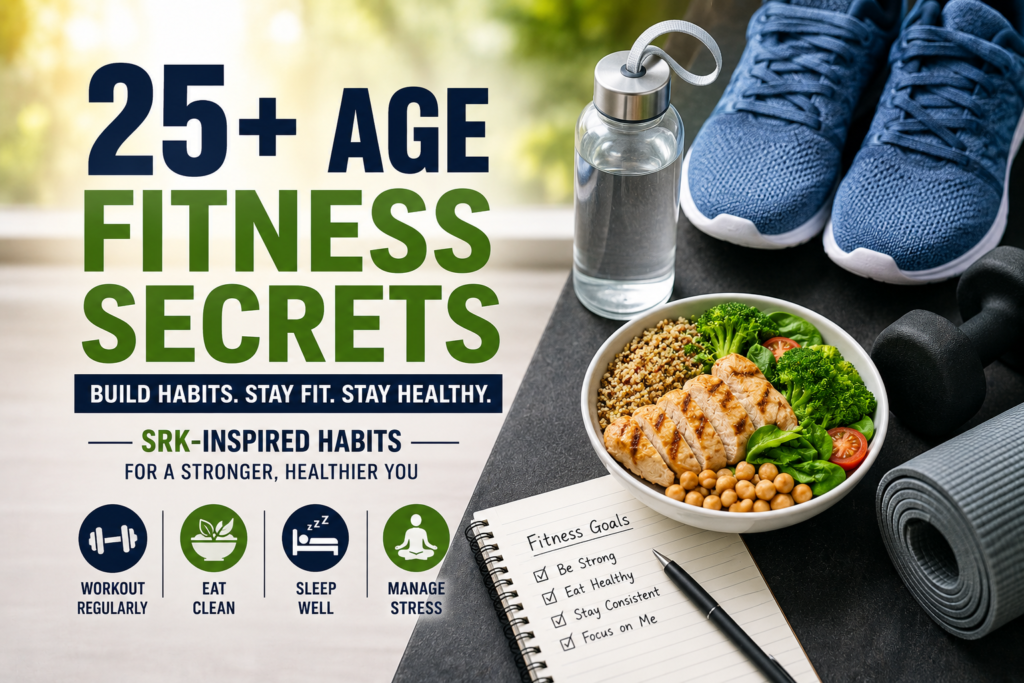
protein foods,
gym routine,
daily fitness habits,
best workout after 25,
Top 10 SRK-Inspired Fitness Habits
1. Stay Consistent
Even a 30–45 minute workout most days of the week is more effective than occasional intense sessions.
2. Strength Train Regularly
Strength training helps:
- Build lean muscle
- Increase metabolism
- Improve posture
- Enhance overall strength
Aim for 3–4 sessions each week.
3. Eat Enough Protein
Protein supports muscle repair and growth.
Healthy protein sources include:
- Eggs
- Chicken
- Fish
- Greek yogurt
- Paneer
- Lentils
- Beans
- Tofu
Try to include protein in every meal.
4. Don’t Skip Cardio
Cardiovascular exercise supports heart health and endurance.
Examples include:
- Brisk walking
- Running
- Cycling
- Swimming
- Jump rope
Aim for 150 minutes of moderate cardio each week.
5. Sleep 7–9 Hours
Sleep is essential for:
- Muscle recovery
- Hormone balance
- Mental performance
- Better workout results
6. Stay Hydrated
Proper hydration helps with:
- Digestion
- Energy
- Joint health
- Workout performance
Drink water consistently throughout the day.
7. Improve Flexibility
Stretching and mobility exercises reduce stiffness and improve movement.
Consider:
- Yoga
- Dynamic stretching
- Foam rolling
8. Limit Processed Foods
Reduce foods high in:
- Added sugar
- Refined flour
- Trans fats
- Excess sodium
Instead, choose whole, nutrient-dense foods.
9. Manage Stress
High stress can affect sleep, eating habits, and motivation.
Healthy stress-relief practices include:
- Meditation
- Deep breathing
- Reading
- Walking outdoors
- Spending time with loved ones
10. Focus on Long-Term Health
Fitness is a lifelong journey. Sustainable habits lead to lasting results.
Best Exercises After 25
| Exercise | Benefits | Recommended Frequency |
|---|---|---|
| Strength Training | Muscle growth | 3–4 days/week |
| Running | Cardio fitness | 2–3 days/week |
| Walking | Active recovery | Daily |
| Cycling | Endurance | 2–3 days/week |
| Yoga | Flexibility | 2–3 days/week |
| HIIT | Fat burning | 1–2 days/week |
Best Foods for Fitness
| Food | Main Nutrient | Benefits |
|---|---|---|
| Eggs | Protein | Muscle growth |
| Chicken Breast | Lean Protein | Recovery |
| Salmon | Omega-3 | Heart health |
| Oats | Complex Carbs | Sustained energy |
| Brown Rice | Carbohydrates | Workout fuel |
| Spinach | Iron | Energy production |
| Greek Yogurt | Protein & Calcium | Bone health |
| Almonds | Healthy Fats | Brain function |
| Bananas | Potassium | Muscle support |
Sample Daily Routine
Morning
- Wake up early
- Drink water
- 20–30 minutes of exercise
- Protein-rich breakfast
Afternoon
- Balanced lunch
- Short walk
- Stay hydrated
Evening
- Gym or outdoor activity
- Healthy dinner
Night
- Limit screen time
- Sleep 7–9 hours
Common Fitness Mistakes
- Skipping warm-ups
- Eating too little protein
- Sleeping less than 7 hours
- Overtraining
- Inconsistent workouts
- Drinking sugary beverages frequently
- Ignoring recovery days
Weekly Workout Plan
| Day | Workout |
|---|---|
| Monday | Chest + Triceps |
| Tuesday | Cardio + Core |
| Wednesday | Back + Biceps |
| Thursday | Yoga or Active Recovery |
| Friday | Legs + Shoulders |
| Saturday | Full Body Workout |
| Sunday | Walking + Stretching |
Frequently Asked Questions (FAQ)
1. Is 25 a good age to start fitness?
Yes. Building healthy habits in your mid-20s can improve long-term health and reduce the risk of many chronic diseases.
2. How much protein should I eat?
Protein needs vary based on body weight and activity level. Many active adults benefit from spreading protein intake across meals. Consult a registered dietitian or healthcare professional for personalized guidance.
3. How many days should I work out?
Aim for at least 150 minutes of moderate physical activity per week, plus strength training on two or more days.
4. Can I build muscle naturally?
Yes. With consistent training, sufficient protein, adequate sleep, and balanced nutrition, many people can build muscle naturally.
5. Is cardio necessary?
Yes. Cardio supports heart health, endurance, and overall fitness. A combination of cardio and strength training is generally recommended.
Final Thoughts
Turning 25 is an ideal time to establish healthy routines that support your body and mind for years to come. Inspired by the disciplined habits often associated with Shah Rukh Khan, focus on consistent exercise, balanced nutrition, quality sleep, and stress management rather than chasing quick results.
Small, sustainable changes made today can lead to a stronger, healthier future.
Pingback: Protein-Rich Foods for Fat Loss: 15 Best High-Protein Foods
Pingback: How Does a Weak Immune System Affect Your Health?
Pingback: How can you gain weight in a healthy way? 15 Best foods to eat for Healthy weight gain?
Pingback: Weight Loss Myths Busted: 15 Common Myths That Stopping
Pingback: 10 Amazing Top Health Benefits of ginger tea
Pingback: Turmeric Daily Benefits: 10 Science Add Turmeric Your Diet
Pingback: Shah Rukh Khan Morning Fitness Habits: 5 Healthy Ways
Pingback: 20-Minute Workout at Home for Beginners Without Equipment:
Pingback: Foods That Help Reduce Belly Fat
Pingback: How Exercise Improves Mood: 8 Science-Backed Mental Health
Pingback: 20 Best High-Protein Vegetarian Protein Sources for Health
Pingback: How to Lose Belly Fat Naturally: 5 Simple Exercises
Pingback: Daily Habits for Mental Wellness: 10 Simple Practices
Pingback: 25 Healthy Snacks Under 100 Calories for Weight Loss and Healthy Living
Pingback: Why You Need Healthy Fats: Benefits, Best Food Sources
Pingback: Which Is the Most Common Mistake to Start a Beginner Workout? 15 Beginner Workout Mistakes You Must Avoid
Pingback: Running vs Walking: Which Is Better for Fat Loss?